Before you go...
We built a free scorecard that shows how your heat pump, ventilation and solar systems are performing. Results are usually surprising.
Get my score
No thanks
We built a free scorecard that shows how your heat pump, ventilation and solar systems are performing. Results are usually surprising.
No thanksWe built a free scorecard that shows how your heat pump, ventilation and solar systems are performing. Results are usually surprising.
No thanks
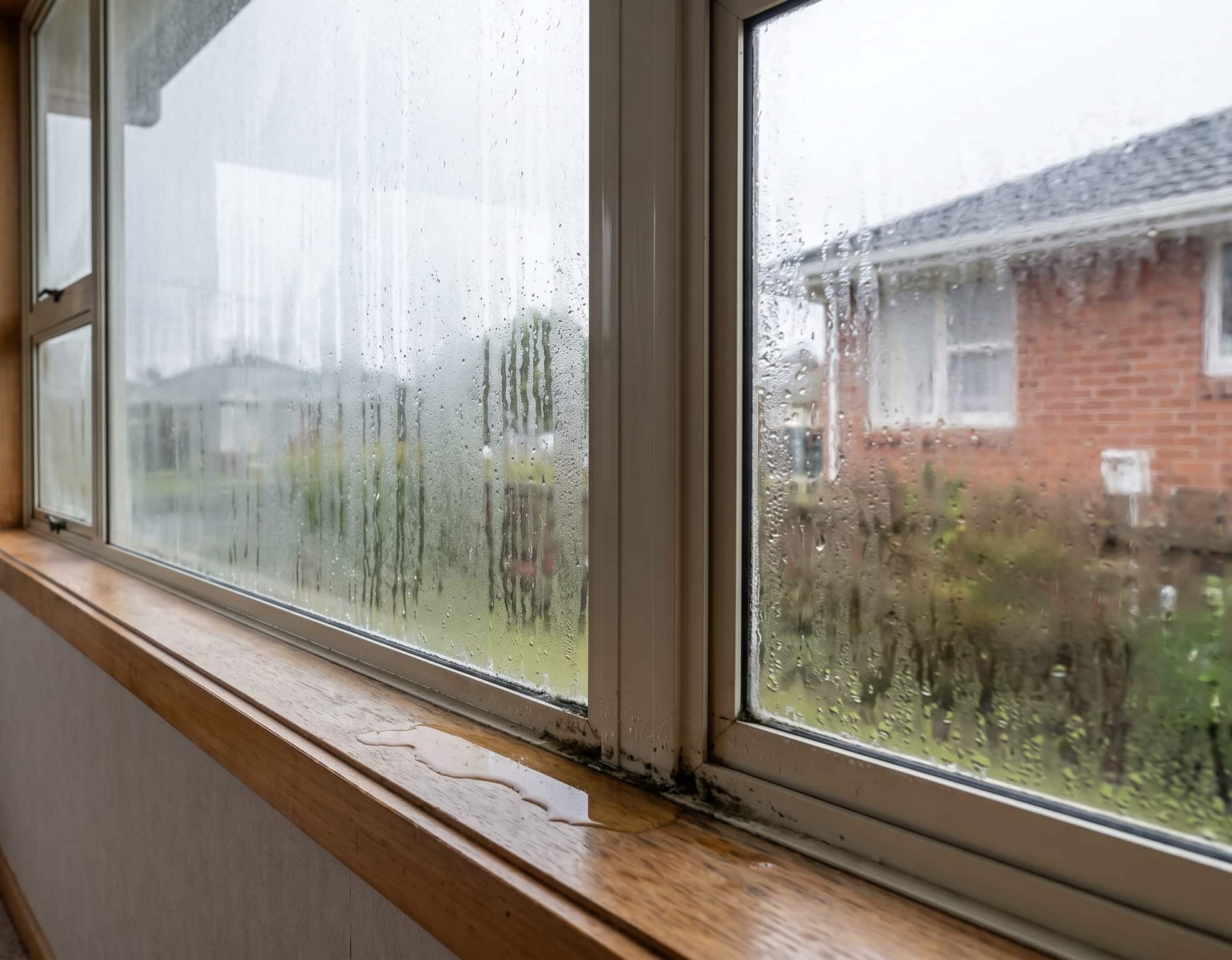
Stopping condensation on your windows starts with understanding why it happens in the first place. Condensation on windows is one of the most common problems in NZ homes, and it's not hard to understand why. New Zealand has some of the least well-equipped housing in the developed world when it comes to managing moisture.
Most homes were built without adequate insulation, without double glazing, without mechanical ventilation, and with heating systems that heat one room at a time rather than the whole house.
The housing itself is often part of the problem. But because most people can't replace their windows, re-insulate their walls, or install central heating overnight, it helps to understand which factors you can actually influence. Changing how you heat the house and how you manage moisture can make a real difference, even in a poorly equipped home.
New Zealand's climate, particularly in Auckland, is mild and humid year-round. Unlike genuinely cold climates where outdoor temperatures drive moisture out of the air before it enters a house, Auckland's winter air arrives already carrying real moisture. Add the moisture generated by people cooking, showering, and breathing inside, and the house has a continuous moisture load to manage.
The type of house matters too. The worst affected are typically homes built from the 1980s through to the mid-2000s, before double glazing became the norm. Double glazing didn't become compulsory in new NZ builds until 2007, so homes built before that date have single glazing as standard. Many of these homes also have aluminium window frames, and aluminium conducts cold very efficiently. In cold weather, an aluminium frame reaches almost the same temperature as the outside air, making it a prime surface for condensation to settle on.
Older homes from the 1940s through to the 1970s, while often colder overall, tend to suffer less from condensation than people expect. Most were built with timber window frames, and timber doesn't conduct cold the way aluminium does. The frame stays slightly warmer, which means less condensation settles on it. These homes are also less airtight, with natural air movement through gaps around windows, doors, and floorboards. That natural leakage isn't ideal for warmth, but it does allow moisture to escape. The 1980s to mid-2000s builds are often the worst combination: tight enough to trap moisture, but not well-insulated enough to stay warm.
Newer homes have a different problem. Modern construction produces very airtight houses, which is good for energy efficiency. But many new homes in New Zealand are completed without a whole-house mechanical ventilation system. The result is a sealed house where moisture from daily living has nowhere to go. Condensation in a house that's only two or three years old is increasingly common for this reason.
There's been a real push in recent years to improve the airtightness of NZ homes, including through the Healthy Homes Standards, which require landlords to address draughts as part of improving the thermal performance of rental properties. Reducing draughts is genuinely good for warmth. It keeps heat in the house longer and reduces heating costs.
The trade-off is moisture. A draughtier house lets moisture escape through those same gaps. When you seal a house up without adding mechanical ventilation, you've made it warmer but potentially damper. This doesn't mean draft proofing is a bad idea. It means draft proofing and ventilation need to be considered together. A well-sealed house without adequate ventilation is more likely to have condensation problems than a draughty one.
One of the most common causes of morning condensation is turning the heat pump off at night.
Through the evening, the heat pump warms the air in the house. That warm air holds moisture from cooking, showering, and breathing. When you turn it off before bed, the temperature drops through the night. As the air cools, it loses its ability to hold moisture, and that moisture settles on the coldest surfaces in the house. By morning, the windows are wet.
Running your heat pump at a lower temperature overnight rather than switching it off makes a real difference. Setting it to 16 or 18 degrees before bed keeps the air temperature stable. The unit uses less energy holding a stable temperature than it does reheating the house from cold each morning, so the overnight running cost is generally lower than people expect.
Leaving any heat pump running overnight in a room also helps reduce condensation in that space, not just ducted systems. A running heat pump keeps air moving, and moving air disrupts the layer of humid air that builds up against cold glass surfaces. That layer is what condenses. A room where a heat pump has been running all night will typically have noticeably less window condensation than a room where the heat pump was switched off. A ducted system does this across the whole house simultaneously, but a wall-mounted unit in a bedroom or living room achieves the same effect in that space.
A whole-house ventilation system, whether that's a DVS, HRV, SmartVent, MoistureMaster, or Sayr, works by drawing air from the roof cavity, filtering it, and pushing it into the living areas. This displaces moist indoor air and forces it out through gaps around windows and doors. Over time it lowers the moisture concentration in the house air.
If you have one of these systems and you're still getting significant condensation, there are a couple of things worth checking.
First, the speed setting. These systems are often installed and left at a default speed suited to a typical older NZ home with some natural air leakage. If your home is newer and more airtight, that default setting may not be moving enough air to make a real difference. Check your system manual for how to adjust the fan speed.
Second, the service history. A system that hasn't been serviced in several years will likely have a blocked or degraded filter. A blocked filter means the system is moving far less air than it was designed to. In some cases it's barely moving air at all. You can read more about what builds up inside an unmaintained system in this article on neglected DVS systems.
If your positive pressure system blows cold air in winter and you're thinking about switching it off, read this article about why ventilation systems blow cold air. Turning off the ventilation removes the system that's actively reducing the moisture load in the house.
Balanced ventilation systems, such as the Mitsubishi Lossnay, Zehnder, and Stiebel Eltron range, work differently. They bring fresh air in and extract stale air simultaneously, passing both through a heat exchanger so the incoming air is tempered by the warmth of the outgoing air. These systems are better suited to airtight homes because they manage moisture without losing heat in the process. If you're in a newer build and considering a ventilation system, a balanced system is worth looking into.
More moisture is generated inside a home than most people track, and some of the biggest sources aren't the obvious ones.
Your rangehood needs to duct to the outside to actually remove moisture from cooking. A recirculating rangehood filters grease but puts the moisture straight back into the kitchen. To check which type you have, hold your hand above it while it's running. A ducted unit pulls air up and out. A recirculating unit pushes air back down toward you. You can find out what a professional rangehood and extractor service involves if yours hasn't been checked in a while.
Bathroom extractor fans need to run during every shower and for at least 15 minutes afterwards. That run time is what clears the moisture before it spreads through the house. Running the fan only during the shower isn't enough. If you don't have a whole-house ventilation system, leaving a continuous-run extractor on at low speed through the day creates negative pressure that draws drier outside air into the house through gaps. It's a practical option for homes without a positive pressure system.
Clothes drying indoors adds a real moisture load. A typical load releases around one and a half to two litres of water vapour as it dries. A dryer that isn't vented to the outside does the same. A condenser dryer with a full collection tank that isn't emptied also releases moisture into the room.
Other sources that are easy to overlook: fish tanks without lids, sinks left full of water overnight, and in older homes, a subfloor without a polythene moisture barrier. Ground moisture vapour rises through the floor structure and into the living areas above. It's a background contribution that adds to everything else.
Double glazing raises the temperature of the inside glass surface, which means the air inside needs to cool further before it reaches the dew point against the glass. In comparable conditions, you'll get less condensation on double-glazed windows than on single-glazed ones.
The moisture load doesn't change with the glass, though. If the house air is humid because of heating habits, ventilation gaps, or moisture generation, double glazing reduces where condensation appears but doesn't stop it. You'll get less on the glass and more on the frames, the window reveals, and cold spots on walls.
This is something a lot of NZ homeowners discover after investing in new windows. The glass stays clearer but the frames are still wet, the sills are still growing mould, and the house still feels damp. The Healthy Home Blindspot at work: the house looks like the problem has been solved, but the underlying moisture load hasn't changed.
Double glazing is worth having for warmth and comfort. It's not a standalone fix for a condensation problem.
Auckland's climate doesn't give homes the seasonal drying that genuinely cold climates do. In countries with cold winters, low outdoor temperatures drive moisture out of the air before it enters a house. The incoming air is dry, and when it warms up inside, relative humidity stays low. Auckland doesn't work that way. The outside air in an Auckland winter is already carrying real moisture. Add what's generated inside the house and you have a continuous moisture load that has to be managed actively, not just in the worst months but year-round.
Homes surrounded by trees or sitting in sheltered sections get less solar gain during the day than exposed properties. A north-facing room that would otherwise warm up and dry out between late morning and mid-afternoon stays cooler and damper when it's in shade. Dense vegetation around the house also keeps the immediate air more humid and reduces airflow across the exterior walls. This doesn't mean removing trees. It does mean being more deliberate about ventilation and overnight heating in shaded homes.
New builds present a specific version of this problem. Modern construction builds airtight houses, which is good for energy efficiency. But a sealed house with no mechanical ventilation means the moisture from cooking, showering, and breathing has nowhere to go. Many new homes in Auckland are being handed over without a whole-house ventilation system, despite being built to a standard where natural air leakage is minimal. The result is condensation and moisture problems in houses that are only two or three years old.
Heat pump efficiency matters here too. A unit that hasn't been serviced in several years isn't delivering the temperature output it should. It may be running without reaching the temperature you've set, which means a cooler house that reaches the dew point more easily. A poorly serviced heat pump affects your power bill and contributes to a damper house. Getting the heat pump properly serviced is part of managing condensation, not a separate concern.
Most of the changes that reduce condensation cost nothing or very little.
These are the changes that actually deal with the problem, not just wipe it away each morning. Whether the goal is to stop it altogether or simply keep it under control, the approach is the same. Manage the moisture load and keep air moving across cold surfaces.
Run your heat pump overnight at a setback temperature of 16 to 18 degrees rather than turning it off. This is the single most effective change most households can make. If condensation in a specific room is the main problem, leaving the heat pump in that room running overnight at a low setting helps considerably, whether it's a wall-mounted unit or a ducted system.
Use your bathroom extractor fan every time you shower and leave it running for 15 minutes after you finish. If you don't have a whole-house ventilation system, leaving the extractor on at low speed during the day creates negative pressure that draws drier outside air into the house through gaps.
Check your rangehood. Run it while cooking and for 10 minutes afterwards. Confirm it vents to the outside rather than recirculating.
If you have a whole-house ventilation system, check when it was last serviced and whether the fan speed setting is appropriate for your home. A professional ventilation service will assess the system's condition, replace filters, and confirm the speed setting is right for the house. For brand-specific filter guidance, see the articles on DVS filter replacement, HRV filter replacement, and SmartVent filter replacement.
Move beds and large furniture away from exterior walls where possible, particularly on the south side of the house. Air needs to circulate across cold surfaces. When furniture blocks that circulation, moisture accumulates behind it.
Condensation complaints from tenants are common, and they're rarely just a behaviour issue. In most cases there's a combination of factors: a ventilation system that hasn't been serviced, extractor fans that aren't ducted correctly, and heating that gets turned off at night. Addressing the systems side of the problem, rather than just advising tenants to ventilate more, tends to get a better result. A full overview of what ventilation maintenance for rental properties involves is worth reading if this is a recurring issue across your portfolio.
Worth noting: if draft proofing work has been done on the property to meet Healthy Homes requirements, and a ventilation system wasn't added at the same time, that may be contributing to the condensation. A tighter house without adequate ventilation is more likely to have moisture problems than the property had before.
The two changes that make the biggest difference are running the heat pump at a low overnight setting instead of switching it off. The second is making sure moisture-generating rooms are properly ventilated. Set the heat pump to 16 to 18 degrees before bed rather than turning it off. Run the bathroom extractor fan through every shower and for 15 minutes afterwards. Confirm the rangehood vents outside rather than recirculating. If a whole-house ventilation system is installed, check the fan speed suits how airtight the home is and confirm the filter has been serviced recently. These changes address the moisture load causing the condensation, rather than just trying to get rid of it each morning.
Condensation forms when warm, moist indoor air meets a cold surface, most often glass or an aluminium window frame, and cools below its dew point. The moisture in the air condenses into water on that surface. In NZ homes this is made worse by a combination of factors. A mild, humid climate doesn't dry the air the way genuinely cold climates do. Moisture is also generated inside from cooking, showering, and breathing. In many homes, there isn't enough heating or ventilation to manage that moisture load.
A whole-house ventilation system reduces the moisture concentration in the house air over time, but it doesn't eliminate condensation on its own. If the system is set to a speed that's too low for how airtight your home is, it won't be moving enough air to make a real difference. It's also worth checking when the system was last serviced. A blocked filter means the system is moving far less air than it was designed to. In some cases it's barely moving air at all.
Condensation itself isn't a direct health risk. What it enables is. Persistent moisture on surfaces creates the conditions mould needs to establish, and mould affects indoor air quality, particularly for people with respiratory sensitivities or asthma. The concern isn't the water on the glass each morning. It's the mould that grows in frames, on reveals, and on walls where moisture sits and doesn't dry out.
The most effective change is to stop turning your heat pump off before bed. Running it at 16 to 18 degrees through the night keeps the air temperature stable and prevents the overnight temperature drops that cause moisture to settle on cold surfaces. Most households notice a clear improvement within a few days of making this change.
Bedrooms generate moisture through breathing and body heat overnight. A person exhales around 300 to 400ml of water vapour during a typical night's sleep. In a closed room with no ventilation, that moisture settles on the coldest available surface. A south-facing bedroom with a bed pushed against an exterior wall is one of the most common scenarios for persistent condensation. Leaving the heat pump running at a low setting overnight, or sleeping with a window slightly open, helps considerably.
A dehumidifier will reduce moisture in the air and reduce condensation. It treats the symptom rather than the cause, and it requires electricity and regular emptying. For most NZ homes, adjusting overnight heating and improving ventilation is a more complete and lower-maintenance solution. A dehumidifier is a reasonable short-term measure while you work on the underlying causes.
Condensation isn't listed as a standalone requirement in the Healthy Homes Standards. The ventilation and heating requirements that do apply, functioning bathroom extraction fans and a compliant heating source, directly affect whether a home can manage its moisture load. If condensation is causing mould growth, the Healthy Homes mould and drainage standard becomes relevant. Most persistent condensation problems in rentals can be addressed through ventilation servicing, confirming extraction fans are ducted and working, and clear guidance to tenants on overnight heating and extractor use.
Wiping the glass removes the visible water but doesn't dry the frame, the reveal, or the wall around it where moisture has already soaked in. Mould grows in paintwork, frame material, and the seal between the frame and the wall, where moisture sits without evaporating. Reducing how often and how heavily condensation forms is the fix, not managing the water after it appears.
Condensation on your windows is showing you what's happening inside the house. In most cases it's manageable, and most of the changes cost nothing.