Solar panel cleaning and maintenance in Auckland
Your solar system has been generating power since the day it was installed. Whether it's still performing as it should is another matter.
What most Auckland solar systems have never had properly checked
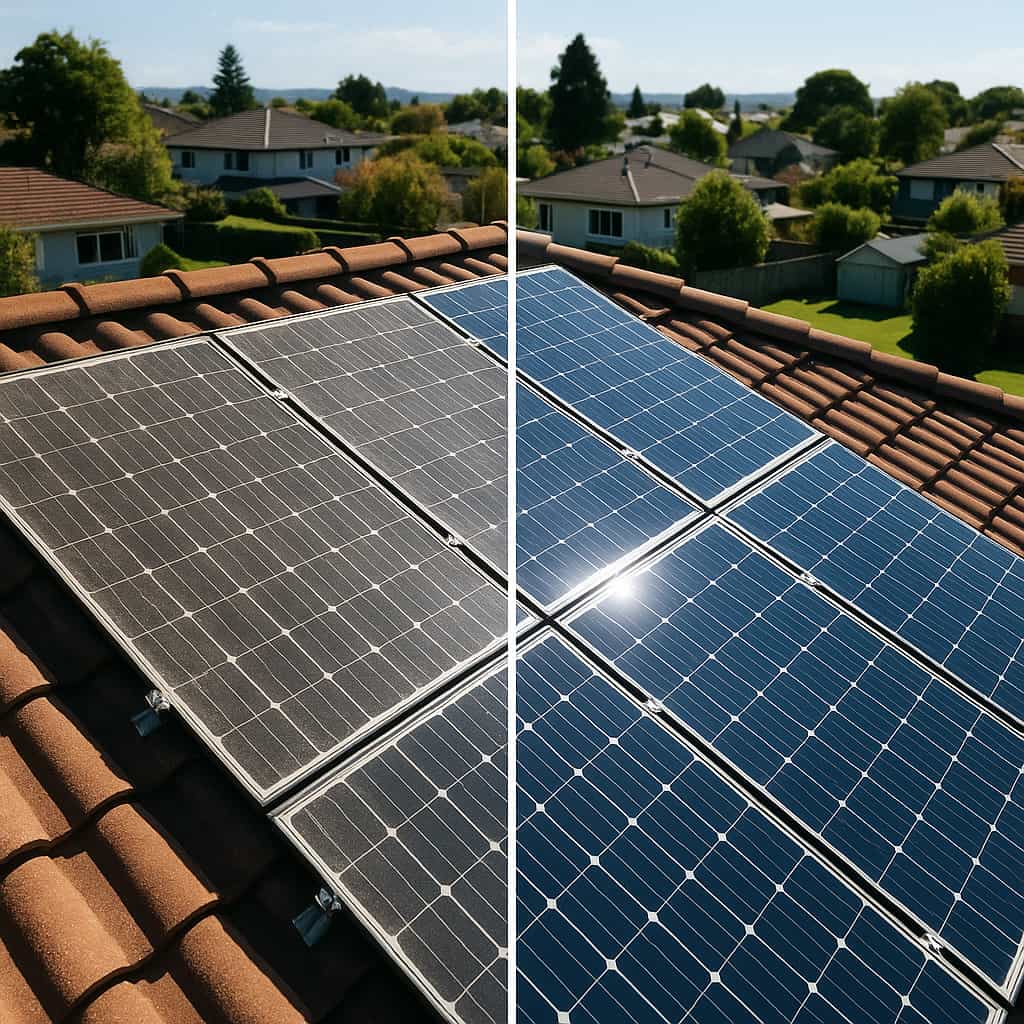
This is what we call Untapped Power. Not just the output lost to contamination on the glass, but the compounding effect of a system no one has looked at since installation. Frames corrode. Cables degrade under UV exposure. Junction boxes accumulate moisture. None of it shows up on the inverter until the damage is already done.
General dust and pollen cause modest losses in Auckland's high-rainfall climate. Lichen and concentrated bird droppings are a different matter. They create localised hotspots over individual cells, reduce output from the affected area and become progressively harder to remove the longer they're left.
But for many Auckland systems, the glass is the least of it. Solar is a 25-year asset. Getting the return you were promised depends on more than clean glass.
Which Auckland solar installations genuinely need regular professional care
How every solar panel service works.
Every visit follows the same five-stage process. It was built around a consistent gap: systems that had been cleaned but never properly assessed, with no record of what was actually found and no baseline to measure future visits against.
PLAN
Tell us how many panels you have and where you're located. Your price is calculated instantly. You see exactly what's included and what it costs before you confirm anything. Pick a time that suits you and book it yourself.
UNCOVER
Before any work starts, your solar array is photographed and its condition recorded. Soiling type, lichen growth, bird activity and visible hardware concerns are all noted. The biological assessment is the key step: lichen on west-facing panels in a shaded property means something different to light dust on a north-facing roof inland. This stage determines what the ongoing cleaning requirment is for your system
RESTORE
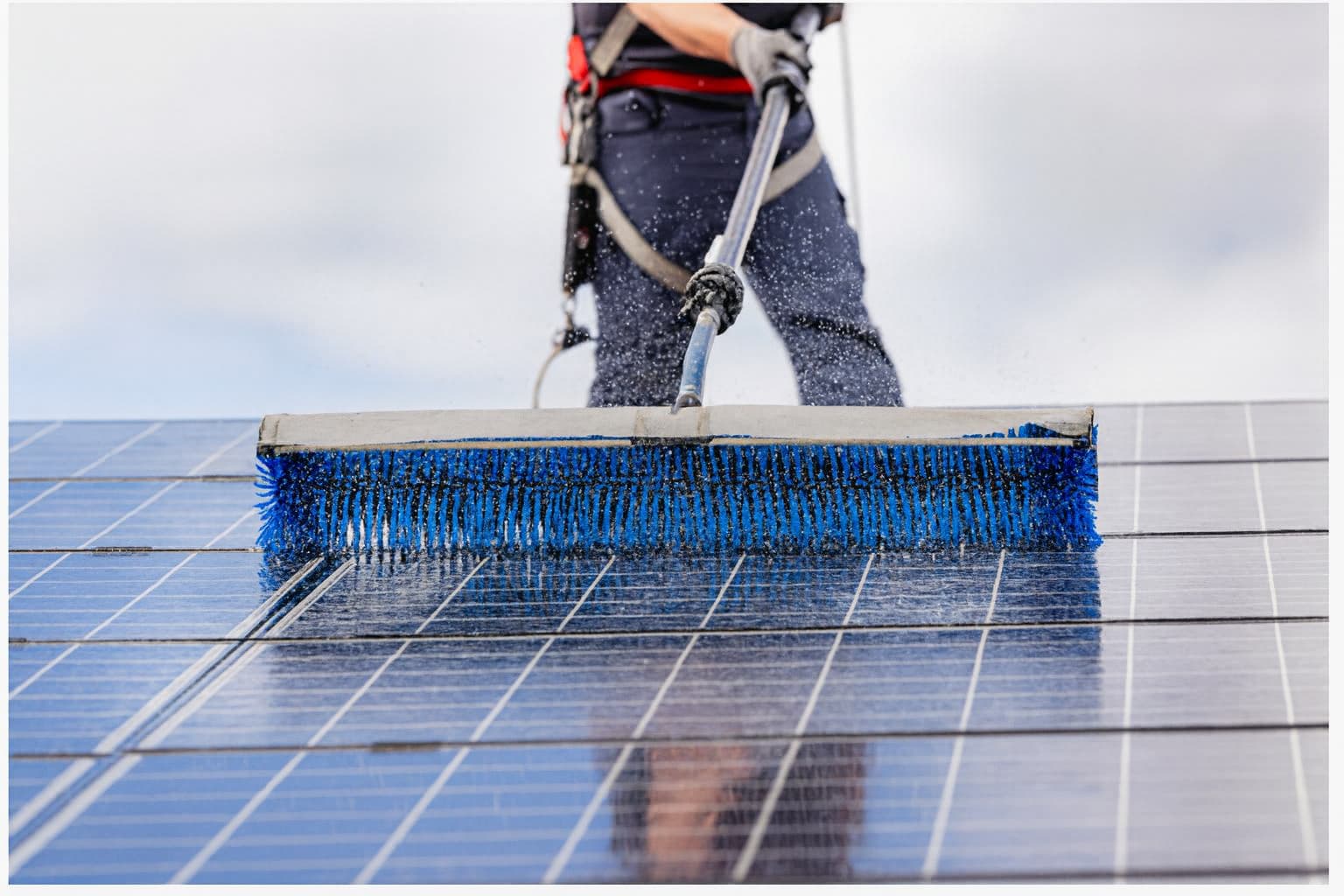
Panels are cleaned using methods appropriate for the conditions found. Purified water and soft-bristle tools are used throughout. Every panel is cleared of dust, pollen, bird droppings and organic growth. Frames, mounts, wiring and drainage areas are inspected for corrosion, loose fittings and wear. After cleaning, a performance check confirms the system is generating correctly.
REVIEW
You receive a written condition report with before and after photos of every panel. The report records soiling levels found, what was removed, hardware condition and anything flagged for follow-up. Any issue outside the scope of the service gets documented and referred to the right provider. It's a complete picture of your system's condition at the time of the visit, and a reference point for every future service.
PROTECT
Annual Care Plan customers have their next solar service automatically scheduled. For one-off customers, a reminder goes out when panels are next due. This reminder is based on the onging service requirment determined by the most recent service. Either way, the system doesn't get forgotten.
Maintenance is all we do.
That changes the conversation. When you ask whether your panels need professional attention, the honest answer is sometimes no. If the roof is well-pitched, inland and away from trees, Auckland rainfall handles most routine dust. Depending on your environment, your system may only need a health check and clean every two to three years.
If the system has never been inspected since installation, that's a different matter. Whatever the glass looks like, a periodic health check is how you confirm the system is running as it was designed to and pick up anything developing before it becomes a problem.
If an inspection identifies a fault outside the scope of the service, it gets documented in your report so you can take it back to the installer.
Maintained, not replaced.
What's included in every solar panel service
System inspection
Every visit begins at the inverter. An initial reading records what the system is producing before any work starts. The inspection then works through every accessible component. Panels are checked for physical damage: cracks, discolouration and delamination. Frames and mounting hardware are checked for corrosion and loose fastenings. Cabling is checked for UV degradation and secure attachment. Isolators and junction boxes receive a visual condition check. Roof penetration seals are checked as part of the mounting assessment. The biological assessment looks at what type of contamination is present and what it means for the right maintenance interval going forward.
Panel clean
Panels are cleaned using purified water and soft-bristle tools, with methods appropriate for the conditions found. Every panel is cleared of dust, pollen, bird droppings and organic growth. A second inverter reading is taken after the work is done.
Condition report
Every visit ends with a written report: before and after inverter readings, before and after photos, a record of contamination found, documentation of work completed and any issues flagged for follow-up. Anything outside the scope of the service is referred to the right provider. The report becomes your maintenance record across multiple visits and the reference point for setting the next service interval.
Not sure if your panels need attention?
Choose the care schedule that suits your installation
A Solar Health Check + Restore is the right starting point for any system that hasn't been professionally assessed since installation. The condition report it produces tells you what the system needs and sets the right interval for future visits.
Solar Health Check + Restore
The starting point for any system that hasn't been professionally assessed since installation.
Every panel is inspected and photographed before any work starts. Soiling type, hardware condition, frames, cabling and mounting are all assessed and recorded. Cleaning follows, using methods suited to what's found. You receive a written condition report with before and after inverter readings and photos.
From $249. Less than 3% of a typical solar system's installed cost. No ongoing commitment required.
Annual Solar Care Plan
For installations where the environment drives consistent contamination: flat or low-angle roofs, significant bird activity, nearby trees or coastal exposure.
An annual visit keeps the system properly examined, catches hardware deterioration before it develops into a fault and prevents output losses from compounding between visits. Includes full system inspection, clean and written condition report. Your next visit is automatically scheduled.
Biennial Solar Care Plan
For steeply pitched roofs with consistent rainfall, low bird activity and no nearby trees or coastal exposure.
Contamination builds more slowly in these environments. A thorough inspection and clean every two years keeps the system properly maintained without over-servicing it. Includes full system inspection, clean and written condition report. Your next visit is automatically scheduled.
Common questions about solar panel cleaning in Auckland
Frequency depends on your property, lichen, bird activity, flat roofs and coastal exposure all point toward more frequent attention. As a starting point, most Auckland installations warrant a visit every one to three years. See solar panel maintenance in NZ for how to work out the right interval for your system.
If your panels have lichen or concentrated bird droppings, the improvement will be measurable on the inverter before and after the visit. If your panels have general dust on a well-pitched Auckland roof, output improvement from cleaning will be modest. The more reliable value from a service visit is the inspection: identifying issues that affect output and system longevity regardless of whether the glass needs cleaning.
Rain helps on steeply pitched roofs with light contamination, but it won't clear flat roofs, lichen, or bird droppings. See Solar Panel Cleaning Service in NZ for the full picture on what rain can and can't do.
Yes, within limits. A soft-bristle brush and clean water every few months keeps light contamination from establishing, but it won't shift established lichen and doesn't include an inspection or condition report. See how to clean solar panels in NZ for the full method.
Before and after inverter readings and photos, a record of contamination found, hardware condition notes, and documentation of anything flagged for follow-up. See solar panel inspection in NZ for a full breakdown of what a proper report covers.