Before you go...
We built a free scorecard that shows how your heat pump, ventilation and solar systems are performing. Results are usually surprising.
Get my score
No thanks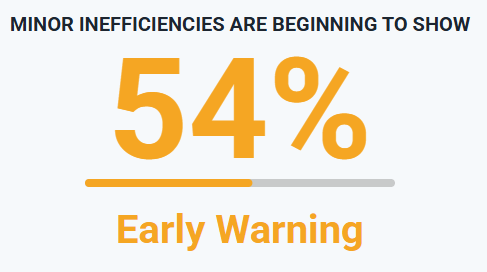
We built a free scorecard that shows how your heat pump, ventilation and solar systems are performing. Results are usually surprising.
No thanksWe built a free scorecard that shows how your heat pump, ventilation and solar systems are performing. Results are usually surprising.
No thanks

Ventilation systems in rental properties are installed to remove moisture. When they're not maintained, they stop doing that. The result is three problems for you as a landlord: ongoing compliance exposure, a property that's harder to keep dry, and tenants who eventually complain.
This article covers the systems most rental properties have, what goes wrong without regular maintenance, what a professional service involves, and what you can check yourself between visits.
Most rental properties in Auckland have at least two types of ventilation system, sometimes more.
Bathroom extraction fans are the most common. These are required under the Healthy Homes Standards and must extract moisture at a minimum airflow rate on an ongoing basis, not just at the start of a tenancy. Most are ceiling-mounted units that vent through ducting to outside. Through-wall fans are also common in some properties, where the fan sits directly in an exterior wall and requires no ducting. These are lower maintenance than ceiling-mounted units, but the grille and fan blades still need periodic cleaning to keep them running properly.
Kitchen rangehoods and kitchen inline fans are also a Healthy Homes requirement. A rangehood sits directly above the cooktop. In properties where that wasn't possible, often because of a window position, many landlords had an inline fan installed in the ceiling near the cooktop instead. Those fans carry specific manufacturer installation requirements, including minimum distances from the cooktop. A number were installed without meeting those requirements.
Positive pressure ventilation systems (whole house ventilation systems llike DVS, HRV, SmartVent) are a different category entirely. These are not required by the Healthy Homes Standards. Landlords install them to push air from the ceiling cavity into the living space, which controls moisture and reduces condensation. They're a worthwhile investment in a rental property. They do need ongoing maintenance to work properly.
Your bathroom extractor and kitchen ventilation are compliance items. Your whole-house positive pressure system is an asset you've chosen to install. Both need attention, for different reasons.
Every ventilation system has one job: move air. When airflow is restricted, the system can't do that, and the consequences build quietly.
Bathroom extraction fans accumulate lint and dust on the grille and inside the housing. The fan has to work harder to pull air through a restricted intake. Over time, it draws less air than it should. Moisture stays in the bathroom. That's where condensation on walls and ceilings starts. For a full breakdown of what drives condensation in NZ homes and what landlords can address, see condensation on windows in NZ: what causes it and how to reduce it.
Kitchen rangehood filters are the most visible maintenance item in any rental property. Grease and cooking residue build up in the filter mesh, blocking airflow and putting extra strain on the fan motor. Most tenants don't clean them. Some don't know how.
Kitchen inline fans carry a specific maintenance risk. A rangehood is designed to sit directly above the cooktop and capture grease and cooking residue before it goes into the system. An inline fan is designed to extract moisture from the room, not to capture grease. That means grease and fat get drawn up through the fan and into the flexible ducting running through the ceiling cavity. Over time, the inside of that ducting accumulates a significant build-up. That's worth keeping on your radar as a landlord, particularly in properties where an inline fan was installed as the kitchen ventilation compliance solution.
Positive pressure systems fail differently. Their filters sit in the ceiling unit and collect dust from the ceiling cavity air. As the filter loads up, the system pushes less air into the property. Many tenants switch these systems off in winter because the air they push into the house feels cold. Why that happens, and what controller settings can reduce it, is covered in why your DVS, SmartVent or HRV system blows cold air in winter. When a system is turned off for extended periods, moisture can build up inside the unit, which increases the chance of organic growth on the filters and inside the housing. That's an additional reason, on top of airflow performance, to keep these units on an annual service schedule.
Once mould takes hold in a rental property, it's expensive to fix. Walls, ceilings, curtains, and flooring can all be affected. The cost of remediation is almost always higher than the cost of keeping the systems maintained.
It's also what the Tribunal weighs most heavily. Our analysis of 348 Healthy Homes decisions found landlords lost every determined primary ventilation claim in the first five months of 2026.
For bathroom extraction fans, a professional service involves removing the grille and cleaning the accessible section of ducting from inside the room. The technician then goes up into the ceiling to access the fan housing, cleans the interior and fan blades, and reconnects the ducting before testing the unit for suction. For through-wall fans, the grille and fan blades can be cleaned directly without ceiling access.
For kitchen rangehoods, the service involves removing the filter mesh and degreasing it, degreasing the interior of the canopy and fan housing, and checking the fan operates correctly at each speed setting. On recirculating models that use a carbon filter, that filter gets replaced. The filter mesh on most rangehoods can also be cleaned in a dishwasher, which is a practical tip worth passing on to your tenants.
For kitchen inline fans, the service involves cleaning the grille and the accessible section of ducting from inside the room, then going up into the ceiling to disconnect the ducting from the fan, clean the fan housing and fan itself, and reattach the ducting. Part of that ceiling inspection involves checking the condition of the flexible ducting for grease build-up along its length. Where build-up is significant, replacing the ducting may be the only practical option. Cleaning the first section from inside the room removes the heaviest accumulation, but grease travels the full length of the duct over time.
For positive pressure systems, a professional service involves replacing the ceiling unit filter, cleaning the fan housing, checking all flexible ducting connections for any tears or disconnections, cleaning the supply grilles in each room, confirming the unit is properly secured, and verifying there is airflow to every room the system serves.
Between professional services, a couple of simple checks at your regular property inspections give you early warning before problems develop.
For bathroom extraction fans and kitchen inline fans, the tissue test is the standard check. Switch the fan on, hold a square of toilet paper against the grille, and let go. If the fan holds the tissue against the grille, it's generating enough suction. If the tissue falls, the unit either isn't working properly or is heavily restricted. That's a service call.
For the rangehood, you don't need the tissue test. Switch it on and you can hear and feel whether it's drawing air. If the filter mesh is visibly greasy or discoloured, it needs cleaning. That's something you can assess in seconds at an inspection.
For positive pressure systems, check that the system is switched on and the indicator light is showing normal operation. Ask your tenants whether it's been running consistently. If there's condensation on windows or dampness appearing on walls, that's a signal the system needs a service. Checking the filter itself requires ceiling access, so leave that to the annual visit. For a full checklist covering heat pumps, ducted systems, and ventilation in a single inspection, the home energy system inspection guide for rental properties covers every system type in one place.
Annual professional servicing for all system types is the standard. That covers your compliance items, your whole-house ventilation, and any through-wall fans in a single visit.
On top of that, a quick check at every property inspection gives you early warning of anything building between services. The tissue test takes thirty seconds. Looking at the rangehood filter takes ten. Both are worth doing every time.
Keep a record of your servicing. A dated service report showing what was checked, what was found, and what was done is straightforward documentation to have on file. It's also useful if a question ever arises about the condition of the property.
Yes. The Healthy Homes Standards require that ventilation systems installed to meet the standard, including bathroom extraction fans, kitchen rangehoods, and kitchen inline fans, are maintained in good working order throughout the tenancy. Installing a compliant system at the start of a tenancy is not enough on its own. The system needs to continue to function at the required airflow rate.
No. Systems like DVS, HRV, and SmartVent are not required by the Healthy Homes Standards. Many landlords install them to control moisture in the property, and they do that job well when maintained. A clogged filter or a system that tenants have switched off is not controlling moisture. Annual servicing keeps them working as intended.
An annual professional service is the standard recommendation. Between services, the tissue test is a practical check any landlord or property manager can do at a regular inspection. Hold a square of toilet paper against the grille while the fan runs. If it holds, the fan is generating sufficient suction. If it falls, the unit needs attention.
Yes. Where a rangehood is the installed kitchen ventilation, it must be kept in good working order to meet the ongoing requirements of the Healthy Homes Standards. A rangehood with a blocked grease filter can't extract air at the required rate. Checking and cleaning the filter is the most important maintenance task for this type of unit.