Before you go...
We built a free scorecard that shows how your heat pump, ventilation and solar systems are performing. Results are usually surprising.
Get my score
No thanks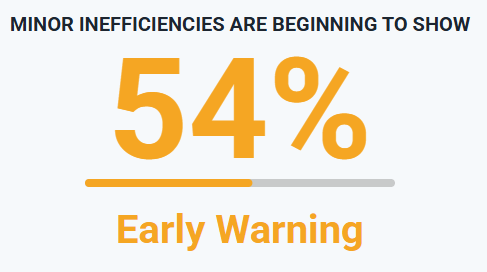
We built a free scorecard that shows how your heat pump, ventilation and solar systems are performing. Results are usually surprising.
No thanksWe built a free scorecard that shows how your heat pump, ventilation and solar systems are performing. Results are usually surprising.
No thanks

Your power bill went up last winter. NZ power prices rose 12 percent in 2025 and are set to keep rising through to 2030, so the market is a real part of the explanation. But if your heat pump hasn’t been professionally serviced in the last year, there’s a second factor on the same bill that’s harder to identify.
Your heat pump is your home’s biggest electricity draw. When its components are dirty, it uses more power to deliver the same warmth. The extra power that your unit is consuming is adding to the increase that you are seeing in your home’s electricity bill.
Space heating accounts for roughly 30 to 34 percent of the average NZ household’s electricity use. That makes it the single largest draw in most homes, ahead of water heating, ahead of the dryer, ahead of everything else.
Your heat pump draws between 1.0 and 2.5 kW of electricity per hour in heating mode, depending on the size of the unit. The bigger the unit, the more it draws. A 5 kW heat pump used year-round costs somewhere between $600 and $800 in electricity annually at current Auckland power prices.
Most Auckland homes with heat pumps as their primary heating and cooling have more than one unit. Two or three units running year-round put heat pump electricity well ahead of anything else on the bill.
Your heat pump’s filter catches dust and particles before they reach the internal coil. When the filter gets clogged, air can’t move through the system freely. Your internal coil, a dense set of metal fins where heat exchange happens, collects a layer of dust and organic growth over months of operation.
The fan that draws air through the coil picks up grime on its blades at the same time. Your compressor has to work harder and run longer to compensate for restricted airflow and reduced heat exchange. More runtime means more electricity drawn on every cycle.
When we clean a system that hasn’t been serviced in a year or more, the water that comes out is black. That’s the accumulated dust, grime and organic matter that has been restricting your system’s ability to run efficiently. Most systems that haven’t been serviced in a year or more produce black wastewater during the clean.
By the way — we built a free scorecard that shows how your heat pump, ventilation and solar are performing. Results are usually surprising.
Blocked components can reduce a system’s efficiency by 10 to 25 percent. On a single unit used mainly in winter heating, that efficiency loss returns somewhere between $30 and $75 in electricity savings after a service. The power saving on its own won’t cover the full service cost for a lightly used single unit.
For homes that use their heat pump year round for heating and cooling, or those with two or more units used year-round for both heating and cooling, the figure shifts significantly. Two units running at 20 percent below efficiency can cost between $300 and $600 in additional electricity each year. At that level, the efficiency saving covers most or all of the service cost.
Your outdoor unit does the same job as the internal coil, but with the air outside. In Auckland, leaves blow into the casing through the ventilation openings and sit against the fins inside the unit. Vegetation grows quickly in Auckland’s mild climate year-round.
It’s common for an outdoor unit to become partially surrounded by plants and shrubs without anyone noticing. A blocked outdoor unit can’t draw in the volume of air it needs to exchange heat efficiently, so the system runs longer to compensate.
For a single unit used mainly in winter, the power saving from a service won’t cover the full cost. The rest of the return comes from three areas that don’t show up on your electricity bill.
Your heat pump running against blocked components accumulates wear on the compressor faster than one that’s maintained properly. The compressor is the most expensive part of the system to repair or replace. A standard residential heat pump costs between $2,500 and $4,000, and a service that keeps it running efficiently pushes that replacement cost further out, saving you money for every extra year you get out of your system. Neglected systems may only last 6 to 10 years, whereas well-maintained systems will last 15 or more.
After a professional clean, the air coming out of your system smells fresher and the unit blows harder. Your internal coil and fan are no longer circulating air past a layer of organic growth on every cycle. For those sensitive to elevated levels of mould, the improvement in air quality will be noticeable.
Your system heats and cools to temperature properly when its components are clean. A well-maintained unit reaches the set temperature faster and holds it more efficiently. The difference in comfort is noticeable, particularly in winter when the system runs for extended periods.
Your heat pump accounts for roughly 30 to 34 percent of your household electricity use in winter. Blocked components can reduce a system’s efficiency by 10 to 25 percent. For a single unit used mainly in winter, the extra cost from reduced efficiency is typically between $30 and $75 per season. A single unit used year round for heating and cooling will double that cost.
For homes with two or more units used year-round, the combined efficiency loss can add between $300 and $600 to the annual electricity bill. A professional heat pump service through MIHT Home Energy Care typically costs less than the annual efficiency loss on a multi-unit home.
Your single unit’s electricity saving from a service probably won’t cover the full service cost on power savings alone. The case for a single-unit home rests on the other returns: a longer system lifespan, cleaner air and better heating and cooling performance.
A heat pump costs between $2,500 and $4,000 to replace. A service that extends the working life of the system by keeping it running efficiently is worth considerably more than the electricity saving alone. A service will improve comfort levels in your home through a unit that heats and cools more efficiently.
Your heat pump needs to move a certain volume of air across the internal coil to heat or cool your home efficiently. A clogged filter restricts that airflow. A dirty coil reduces the heat transfer that happens when air moves across it. Your compressor runs longer to compensate, and longer runtime means higher electricity consumption.
The same applies to the outdoor unit. Blocked fins reduce heat exchange with the outside air, and the system compensates by running more.
Your outdoor unit exchanges heat with the outside air through a coil of metal fins. When those fins are blocked by leaves, debris or vegetation, less heat exchange happens per unit of electricity consumed. In Auckland, leaves blow into the casing through ventilation openings and vegetation grows year-round in the mild climate.
A blocked outdoor unit adds to the same efficiency loss as a dirty internal coil. Both are addressed as part of a professional service. For ducted heat pump owners, the efficiency loss compounds across every room simultaneously rather than a single zone.
Your system is likely running below efficiency if you’re noticing longer warm-up times than usual, a musty smell when the unit starts or a higher hum than before. A power bill that’s crept up without any change in how you use the system is another indicator.