Before you go...
We built a free scorecard that shows how your heat pump, ventilation and solar systems are performing. Results are usually surprising.
Get my score
No thanks
We built a free scorecard that shows how your heat pump, ventilation and solar systems are performing. Results are usually surprising.
No thanksWe built a free scorecard that shows how your heat pump, ventilation and solar systems are performing. Results are usually surprising.
No thanks
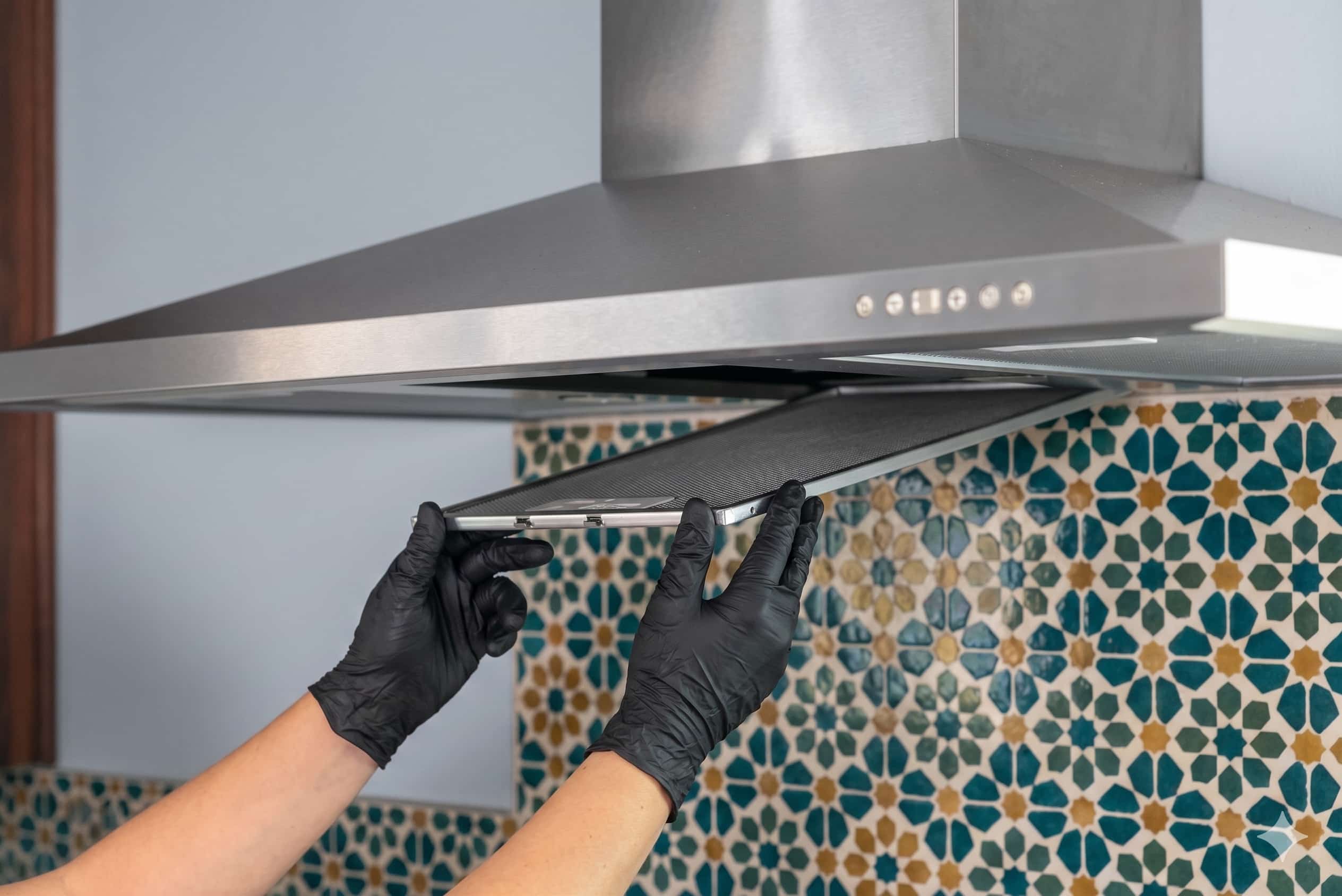
Rangehood and extractor fan cleaning in NZ is one of the most overlooked parts of home maintenance. Your bathroom fan runs every time someone showers. Your rangehood runs every time you cook. Both move air constantly, and both accumulate what that air carries -- moisture, lint, grease, cooking residue -- every single day they run.
Most people clean the part they can see. The grille. The mesh filter. That's usually where it stops.
What sits behind those surfaces is a different picture.
Showering and cooking are two of the biggest sources of moisture in any home. Bathroom extractor fans and rangehoods exist specifically to remove that moisture before it settles on surfaces, gets absorbed into walls, or creates the conditions where mould takes hold.
When these systems stop moving air at the rate they were designed to, moisture stays in the room. It builds up gradually, invisibly, until it becomes visible on ceilings, in grout lines, or behind furniture. The system appears to be working, the fan sounds the same, but the home is quietly accumulating moisture it should be shedding.
Keeping extraction systems in good working order is a core part of how a healthy home manages the moisture that daily living produces.
By the way — we built a free scorecard that shows how your heat pump, ventilation and solar are performing. Results are usually surprising.
Most bathroom extractor fans are ceiling-mounted units sitting in the ceiling cavity, connected to an internal grille by a short section of ducting. Remove the grille on the bathroom ceiling and what's visible is the inside of that duct, not the fan itself. The fan is further along, mounted out of sight in the ceiling space.
What the duct reveals is enough. A grey-brown film lines the inside, the same lint and moisture the fan has been pulling out of the room with every shower cycle. The fan blades themselves carry a felt-like coating of compacted dust, slightly tacky from the moisture they've moved over the years. Both surfaces reduce the airflow path over time.
The fan still runs. It still makes noise. Over time, that becomes the problem. The decline is slow enough that most people don't notice until mould starts appearing regularly on the ceiling, or the bathroom takes noticeably longer to clear after a shower.
By that point the fan has been working at a fraction of its designed capacity for some time.
A rangehood mesh filter does a reasonable job of catching grease. A reasonable job, not a complete one.
Grease travels through a rangehood partly as droplets and partly as aerosolised vapour. The mesh catches the droplets it's designed to catch. The vapour passes through and condenses on the cooler surfaces inside the canopy and fan chamber. Over time those surfaces develop a sticky yellow-brown coating that sets into something closer to varnish. In the corners and seams, where airflow slows, the buildup gets thicker. The fan blades inside the chamber accumulate their own layer.
A rangehood with a visibly overloaded mesh filter almost always has significant buildup in the chamber behind it. The filter is the visible indicator of a problem that extends further into the system.
Accumulated grease inside the chamber and ducting also adds a secondary ignition source that a clean mesh filter alone doesn't address. Heavy grease buildup in the chamber contributes fuel that wouldn't otherwise be there.
If your filters are visibly loaded and it's been a while since anyone's looked behind them, you can book a rangehood service directly rather than waiting for it to become a bigger job.
Some rental properties have a ceiling extraction fan installed in the kitchen rather than a rangehood above the cooktop. This tends to occur where the cooktop sits directly in front of a window, making a wall-mounted rangehood impractical. The Healthy Homes Standards require kitchen extraction. They don't specify what type of unit provides it.
Placement matters significantly with these installations. Most inline fan manufacturers specify that the unit should be offset horizontally from the cooktop rather than mounted directly above it. When a fan is installed directly over the cooktop without a grease filter, it pulls grease-laden air straight into the housing. These units typically have no grease filter, so everything the air carries deposits directly onto the fan blades and into the ducting in the ceiling cavity. That creates a more concentrated grease accumulation problem than a standard rangehood.
Where the ducting has been absorbing grease over years of direct cooktop extraction, cleaning the accessible section is often not enough. The full duct run needs to be assessed, and replacement is sometimes the more practical outcome.
The mesh filter on a ducted rangehood can be cleaned at home. Remove it, soak it in hot water with dish soap or a degreaser, scrub with a soft brush, and let it dry before putting it back. Most mesh filters can go in the dishwasher on a hot cycle. Do this every two to three months if you cook regularly, or monthly if you cook with a lot of oil.
Replacement filter availability varies by brand. Parmco, Robinhood, Falmec and Fisher and Paykel rangehoods all use brand-specific mesh filters, and most are available online or through kitchen appliance suppliers. If the mesh is damaged, warped, or has been soaked so many times the aluminium has darkened beyond recovery, replacement is the right call.
For a recirculating rangehood that uses a carbon filter instead of ducting to the outside, the carbon filter can't be cleaned. It needs replacing, typically every three to six months. A clogged carbon filter means the rangehood is recirculating air through a saturated medium that's doing very little. The motor keeps running, but nothing is actually leaving the room.
The bathroom fan grille is worth removing and rinsing every few months. Five minutes, and it reduces the rate at which buildup transfers inside.
The fan housing, the ducting, the chamber behind the rangehood filter, those require access to components that aren't reachable without disassembly.
For bathroom extractor fans, the grille is removed and cleaned. The fan blades and housing are vacuumed and cleared of buildup where accessible. Before the job is complete, airflow is verified to confirm the fan is moving air at adequate volume.
The ducting between the grille and the fan unit runs through the ceiling cavity and is not accessible during a standard service. What a professional can assess is whether airflow at the grille is adequate. If it isn't, the ducting condition becomes part of the diagnosis.
A professional ventilation service includes a condition report documenting the findings before and after, including the airflow result. For rental properties, that report is the appropriate record for the landlord's property file. For bathroom fans installed after 1 July 2019, the Healthy Homes airflow requirement is around 25 litres per second. For kitchens, the requirement for post-2019 installations is 50 litres per second, or a duct diameter of at least 150mm. Whether a specific fan meets those targets depends on duct length, bends, and back-draft damper condition alongside the fan itself.
For rangehoods, the mesh grease filters are removed and soaked in industrial degreaser. The canopy interior and fan chamber are degreased and cleaned. Carbon filters are replaced where the unit requires them. Fan operation is tested across all speed settings.
When extraction systems are working properly, bathrooms clear faster. Moisture doesn't settle on surfaces between showers. Grease doesn't accumulate to the point where it becomes a concern. The systems become quiet background infrastructure again, which is what they were designed to be.
Bathroom extractor fans: once a year as a baseline. More often in high-occupancy households or where mould has been a recurring problem.
Rangehoods: once a year for most households. If you cook frequently with oil or use a wok, the mesh filter needs attention more often between services, but the professional clean of the chamber and fan should still happen annually.
Yes. Bathroom extraction fans and kitchen ventilation are compliance requirements under the Healthy Homes Standards. For fans installed after 1 July 2019, the requirement is that they meet specific airflow targets and continue to do so throughout the tenancy. Bathroom fans must achieve around 25 litres per second. Kitchen rangehoods and extraction fans must achieve 50 litres per second, or have a duct diameter of at least 150mm.
For fans installed before 1 July 2019, the standard is different. These units don't have to meet the specific airflow targets. They must be in good working order and vent to the outside of the building. A pre-2019 fan that has degraded in performance is a maintenance issue worth addressing, but it isn't automatically a Healthy Homes compliance failure unless it stops working entirely or vents into the ceiling cavity rather than outside.
A dated condition report showing the fan was serviced and verified is the practical documentation for a landlord's property records regardless of installation date.
For homeowners, there's no compliance obligation. A bathroom fan that can't clear moisture means a bathroom that stays damp, and a damp bathroom means mould.
On recirculating rangehoods in rentals: recirculating rangehoods do not meet the Healthy Homes kitchen ventilation standard. The standard requires extraction to the outside of the building. A recirculating unit filters air through a carbon medium and returns it to the room, so moisture and cooking vapour are not removed from the home. A narrow exemption exists where a landlord can demonstrate that installing external ducting is not reasonably practicable due to structural limitations, but this is not a general exemption and it cannot be relied on simply because a recirculating model was installed at the time of construction. If your rental has a recirculating rangehood, check the compliance status with your property manager or a Healthy Homes assessor.
Whole-house ventilation gets attention. Heat pumps get attention. Extractor fans and rangehoods tend to get ignored until something is visibly wrong.
They're smaller systems. Cheaper to service. They run every day and they're directly connected to whether moisture stays in the room or leaves the building. A bathroom where the extractor fan stopped working properly six months ago looks clean right up until the point it doesn't.
Extractor fans and rangehoods sit within the broader ventilation care available across Auckland homes. You can book a rangehood service directly at the extractor fan service page.
By the way — we built a free scorecard that shows how your heat pump, ventilation and solar are performing. Results are usually surprising.
Once a year covers most households. The mesh filter needs cleaning at home every two to three months regardless. A professional service addresses the fan chamber and canopy interior that the mesh filter doesn't protect.
Yes. Range hood cleaning, kitchen exhaust and rangehood cleaning, and rangehood cleaning all describe the same job: removing grease and buildup from the mesh filter, canopy interior and fan chamber above your stove. The spelling varies, the service doesn't.
The mesh filter, yes. The fan chamber and canopy interior behind the filter require disassembly that isn't straightforward for most homeowners, and degreasing built-up cooking residue needs industrial-grade product to be effective.
Yes. For fans installed after 1 July 2019, the fan must vent to the outside and achieve around 25 litres per second of airflow. For fans installed before that date, the requirement is that the fan is in good working order and vents outside, with no specific airflow target applying. A fan that vents into the ceiling cavity rather than outside doesn't meet the standard regardless of installation date.
A ducted rangehood vents air to the outside through ductwork. A recirculating rangehood filters air through a carbon medium and returns it to the kitchen. Ducted is more effective at removing moisture and cooking odours. Recirculating models require carbon filter replacement every three to six months. Recirculating rangehoods do not meet the Healthy Homes kitchen ventilation standard for rental properties, as the standard requires extraction to the outside of the building.
A running fan isn't necessarily a fan that's clearing air at the rate it was designed to. Dust and lint build up on the blades over time, reducing airflow without stopping the motor. The room stays damp longer after each shower. Mould follows.
No. A bathroom ceiling extraction fan is a single-room unit that vents moisture directly to the outside through a short duct run. An HRV, DVS or SmartVent system is a whole-house positive pressure ventilation system that draws air from the roof cavity and distributes it throughout the home. They serve different functions and have different service requirements. If your bathroom has a small ceiling-mounted grille with a single duct, it's an extraction fan. If you have ceiling vents in multiple rooms throughout the house, that's a whole-house system.
Yes. Both can be done in a single visit. You can review options and secure a slot on our extractor fan and rangehood booking page.
Most replacement mesh filters are available through online appliance parts suppliers or directly from the manufacturer. Carbon filters for recirculating models are also widely available online. The service scope across brands is the same: mesh degreasing or replacement, carbon filter replacement where applicable, and a full fan chamber and canopy clean.