Before you go...
We built a free scorecard that shows how your heat pump, ventilation and solar systems are performing. Results are usually surprising.
Get my score
No thanks
We built a free scorecard that shows how your heat pump, ventilation and solar systems are performing. Results are usually surprising.
No thanksWe built a free scorecard that shows how your heat pump, ventilation and solar systems are performing. Results are usually surprising.
No thanks
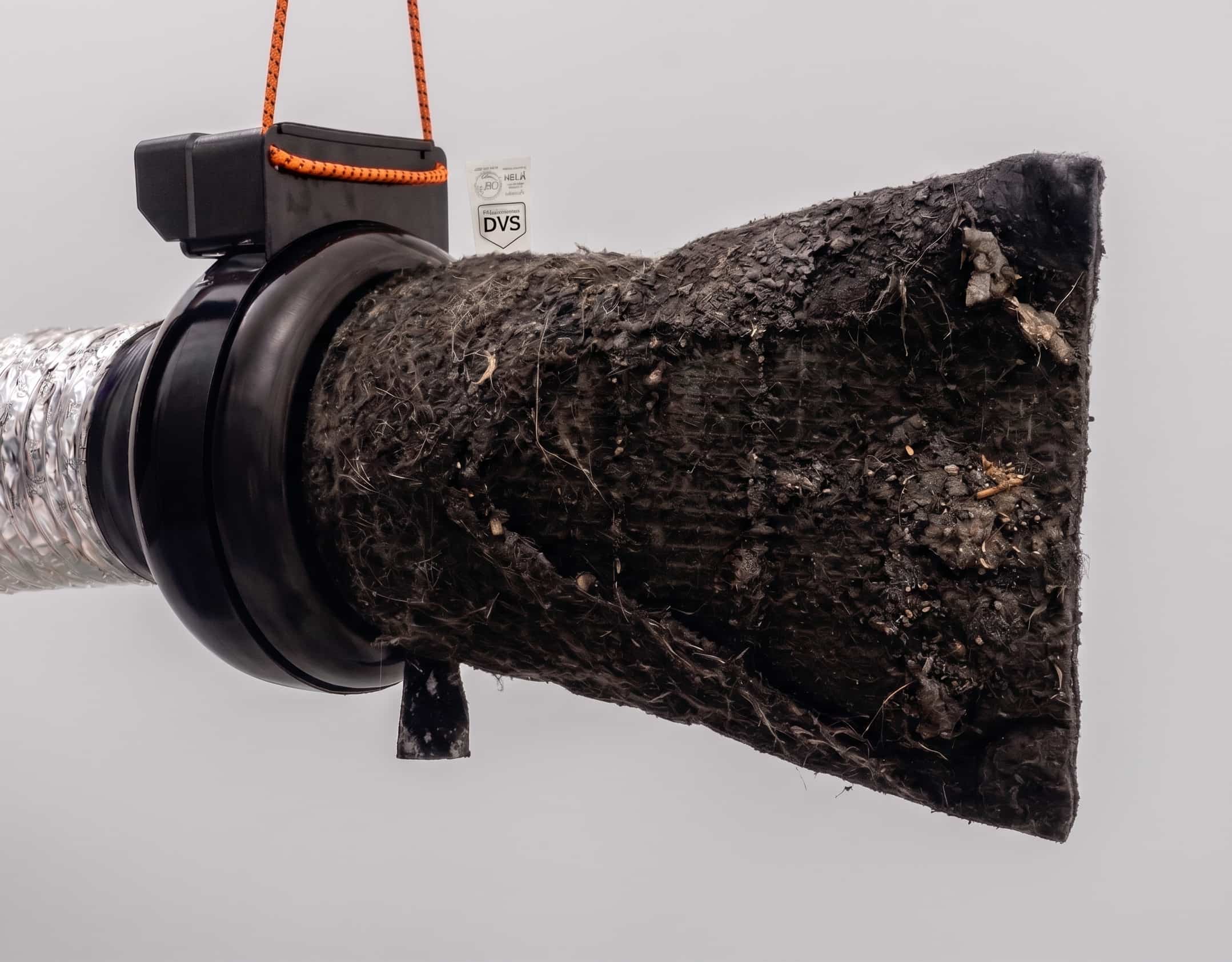
DVS is a brand of positive pressure home ventilation. These systems draw air from the roof cavity, filter it, and push it through ducting into ceiling diffusers in your living areas. The positive pressure they create displaces stale, damp indoor air out through natural gaps in the building. Most NZ homes that have one had it installed during a new build or renovation and haven't thought much about it since.
Inside a DVS unit that hasn't been serviced in a few years, the filter is black. Not dusty grey. Black. It feels damp. It smells musky.
That filter is the only barrier between your roof cavity air and the air circulating through your home. Once it's in that state, it stops doing its job. A damp filter breeds mould and bacteria. The air passing through that filter carries those contaminants into your living areas, through the same diffusers the system uses every day.
Behind the filter, the fan housing shows mould spots on the blades. That's the component that's been moving air through your home continuously.
If the system hasn't been touched for long enough, the contamination reaches the flexible ducting. At that point, the ducting needs replacing.
Your roof cavity is not a clean environment. In a typical New Zealand home, roof cavity air carries dust from old insulation, building paper fibres, wood dust from borer activity, and in some homes, rodent droppings. The filter's job is to catch all of that before the fan pushes air into your rooms.
A filter in that state isn't catching anything. Worse, it has become a source of contamination itself. Mould and bacteria grow in a damp filter and get carried into the air supply.
A neglected system may appear to still be working. But it's underperforming.
Most people assume their ventilation system is working because the windows aren't dripping. That's not the same as the system working properly.
That's the wrong comparison. A clogged filter restricts airflow. Fewer air changes happen through the day. The moisture produced from showering, cooking, and breathing doesn't get pushed out effectively. Condensation slowly returns. And the air that does get through has passed a damp, contaminated filter, through a mould-spotted fan housing, into your living areas.
The system keeps running. The problem compounds quietly.
If your system hasn't been maintained, it's not delivering what it should. And if anyone in your home is sensitive to dust or mould spores, it may be making things worse, not better.
That's the Healthy Home Blindspot. The system appears to be working. There's no obvious failure. But the gap between what it's delivering and what it should deliver has been widening, often for years.
Most people are surprised when a technician shows them what's inside a neglected unit. The system was still running, so they assumed it was fine. Then the connections start: the sneezing that's been getting worse, the condensation that seemed to improve but never fully cleared.
Ventilation systems don't signal when they need attention. They degrade quietly, over years.
Getting the system back to where it should be starts with the filter. If it hasn't been replaced in the last 12 months, that's the first job. DVS filter: when to change it and what to use covers the full replacement process and which grade to buy.
A filter change alone isn't a full service. A proper positive pressure ventilation service covers the roof cavity inspection first, checking the intake area for moisture, vermin activity, and anything affecting air quality at the source. The filter housing gets cleaned and a new filter goes in. The fan blades and motor housing get vacuumed. The ducting gets checked along its full run for tears or disconnected joints. Every ceiling diffuser gets cleaned. Once that's done, airflow should be measured at the outlets to confirm the system is actually pressurising the home.
If the ducting has accumulated mould, it needs replacing.
Many old DVS systems are still running with a G4 filter. It's sold at hardware stores and listed as DVS-compatible, so a lot of homeowners have been using it for years without realising there's a difference. The G4 grade catches larger dust particles but lets finer ones through, mould spores and smaller allergens among them. In most New Zealand roof cavities, those finer particles are present. A G4 filter doesn't stop them reaching your living areas.
Better options exist. The genuine DVS EcoStatic and third-party F7 sock filters both provide finer filtration than G4. If your system has been running on a G4 for a few years, a filter upgrade is worth discussing when you next get it serviced.
A full DVS service checks everything this article covers, the filter, the fan housing, the ducting, and gives you a written report on what's actually going on inside your system. MiHT is maintenance-only, no installs, no upselling to a new system.
A DVS system draws air from the roof cavity, filters it, and pushes it into the living areas through ceiling diffusers. The positive pressure this creates forces stale, damp indoor air out through natural gaps around doors and windows. It's not exchanging air with the outside directly, it's using roof cavity air, filtered, to push moisture-laden indoor air out. That's the mechanism behind the condensation control most owners actually notice.
Age alone doesn't determine whether a system is worth maintaining. Condition does. A system that has been regularly serviced can perform well beyond its warranty period. A system that hasn't been touched since installation may need work to bring back to standard, but that's a condition question, not an age question. A service will tell you what's actually inside it and what it needs. That's the right starting point before making any decisions.
Every 12 months. That's the manufacturer-recommended interval for filter replacement, and it's the right time to inspect the fan housing, ducting, and diffusers in the same visit. Leaving it longer than 12 months is when the problems described above start to develop.
Yes. A clogged or damp filter can become a source of mould and bacteria rather than a barrier against them. For households with members who are sensitive to dust or mould spores, an unmaintained system can cause more harm than good.
Condensation returning to windows is the most common one. Increased dust near ceiling diffusers is another. Some households notice worsening respiratory symptoms that weren't there when the system was newer. The system can also be underperforming with none of these signs present. Regular professional servicing matters whether something obvious has changed or not.
DVS stands for Distributed Ventilation System. It's a brand name that became widely used in New Zealand as a general term for positive pressure home ventilation. Not all positive pressure systems are DVS brand, but the name is commonly used to refer to this type of system.