Before you go...
We built a free scorecard that shows how your heat pump, ventilation and solar systems are performing. Results are usually surprising.
Get my score
No thanks
We built a free scorecard that shows how your heat pump, ventilation and solar systems are performing. Results are usually surprising.
No thanksWe built a free scorecard that shows how your heat pump, ventilation and solar systems are performing. Results are usually surprising.
No thanks
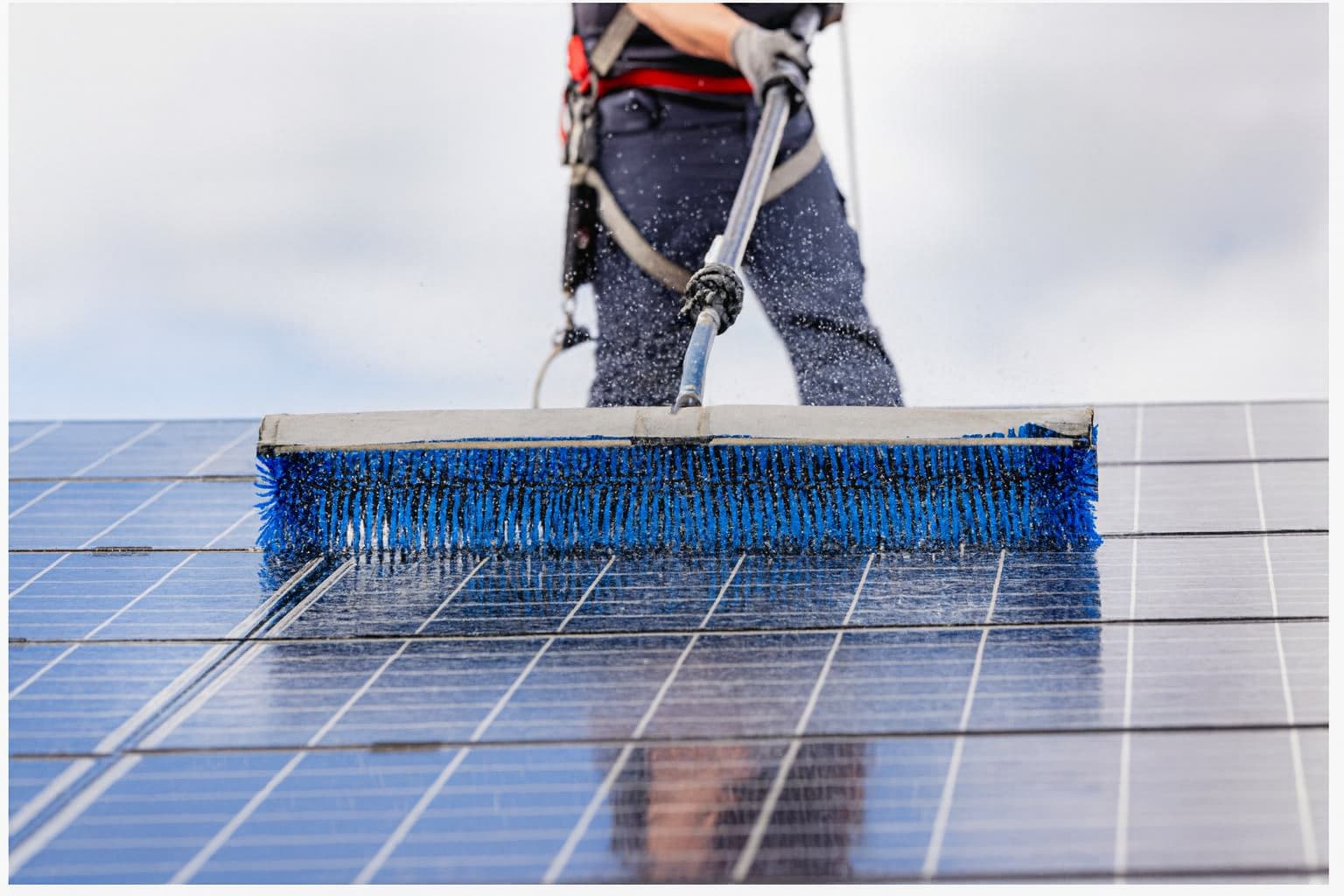
A clean removes what is on the panels. Maintenance looks at the system as a whole with the view to maximise the life of the system.
Solar is a 25-year asset. In Auckland, a residential installation represents a significant investment. Most homeowners expect to pay back that cost through lower power bills over its lifetime. Whether that happens depends on how the system is looked after. The glass is one component. The frames, mounting hardware, cabling, isolators, junction boxes, and inverter all degrade over time. Some degrade faster than they should if nobody is maintaining them.
A solar panel maintenance plan in NZ should include a professional visit every one to two years. Each visit should cover a full visual inspection of the panels, frames, mounting hardware, roof penetration seals, cabling, and electrical components. It should also include a biological assessment of what is on the glass, cleaning appropriate to the conditions found, and a written condition report. Properties with flat or low-pitched roofs, significant bird activity, coastal exposure, or established lichen need more frequent attention. Between professional visits, regular DIY cleaning with a soft brush and clean water helps keep light contamination from establishing. For a breakdown of what a professional visit costs in NZ, see solar panel cleaning services: what's involved and what it costs. For a practical breakdown of exactly what to check yourself, see the solar panel maintenance checklist.
All solar systems need periodic maintenance. How often and what that involves differs between systems. There is a lot of consumer noise around whether panels actually need cleaning. That question misses the point. The real question is how to get maximum life and maximum output from the system you have. For some installations that means regular cleaning and inspections. For others it means periodic inspections with cleaning as the conditions warrant. There is no universal rule. This article sets out what a maintenance plan should include and how to determine the right approach for your property.
A solar cleaning service exists to clean the glass. A full maintenance visit covers considerably more.
A maintenance visit begins with the inverter. The inverter is the box, usually mounted on an external wall, that converts the DC power your panels generate into AC power your home can use. Checking it first records what the system is producing before any work begins, giving a baseline for comparison at the end of the visit.
The inspection then works through every accessible component of the system. The panels are checked for physical damage: cracks, discolouration, and delamination, where moisture works into the panel layers over time and reduces output from the affected area. Frames and mounting hardware are inspected for corrosion and loose fastenings. Roof penetration seals, the weatherproofing around the points where mounting hardware passes through the roof surface, are checked as part of the mounting assessment. A failed seal creates a water ingress path that has nothing to do with power output. Cabling is checked for UV degradation, chafing, and secure attachment. Isolators (safety switches that allow the system to be powered down) and junction boxes (weatherproof enclosures where the wiring connections are made) receive a visual condition check.
The biological assessment is a key part of the inspection. The technician looks at what is on the panels and what type of contamination is present. Lichen established on west-facing panels in a shaded property tells a different story than light dust on a north-facing roof in an inland suburb. This assessment is what determines whether the environment warrants regular cleaning and at what interval. Not every installation needs frequent cleaning. The inspection is how you find out whether yours does.
Once the inspection is complete, the panels are cleaned using appropriate methods for the conditions found. Purified water is used rather than tap water, which leaves mineral residue on the glass when it dries. A second inverter reading is taken after the work is done.
The visit should close with a written condition report: what was found, what was done, what needs referral to a licensed electrician or specialist, and before and after photos. For a full breakdown of what a professional service should cover, see what a professional solar panel service in NZ includes.
By the way — we built a free scorecard that shows how your heat pump, ventilation and solar are performing. Results are usually surprising.
The installer commissioned the system. For many homeowners, that is the last time it received a professional assessment. Solar has been widely installed across Auckland for well over a decade, and a significant number of systems have not been looked at since commissioning.
A solar system on a roof is exposed to Auckland's full range of conditions: UV radiation, salt air in coastal areas, wind, moisture, and temperature cycling across seasons. These conditions degrade specific components over time, whether the glass is clean or not.
Frames and mounting hardware corrode gradually. Aluminium frames and the stainless steel fasteners used in compliant NZ installations carry good corrosion resistance under normal conditions. The risk that develops over time is galvanic corrosion at the contact points where dissimilar metals meet, particularly where the isolation washers between mounting hardware and roofing material have degraded. Caught early, it is a straightforward maintenance observation. Left to advance, it can require replacing the mounting system entirely.
Solar DC cables run from the panels along the outside of the roof surface to the inverter. UV exposure causes the outer sheath to crack and become brittle over years. Where cables are not properly secured, wind movement creates chafing that works through the insulation over time. Damaged cabling is not visible from the ground, and undetected electrical faults on a roof carry serious consequences.
Isolators and junction boxes, described above, are the points in the system most vulnerable to moisture ingress and corrosion. A junction box that has not been checked since installation may look unremarkable from below while the connections inside are deteriorating.
When bird droppings or lichen sit over the same cells for an extended period, those cells stop generating power and start absorbing heat instead. That heat builds in a concentrated area and can permanently damage the cells beneath it. The visible problem is contamination on the glass. The developing problem is cell damage that cannot be reversed.
Shading conditions change. Trees grow. Neighbouring structures go up. An obstruction that did not exist at installation may now be casting shade across panels for part of each day. A maintenance visit is when that gets picked up.
A system that does not need regular cleaning still needs its components checked. The factors that degrade frames, cables, and connections do so regardless of whether the glass is clean.
There is no universal interval that suits every Auckland installation. The right maintenance frequency depends on the environment your panels are exposed to. Four factors carry the most weight.
Roof orientation and pitch
North-facing panels at a good pitch shed dust and light contamination more readily than west or east-facing panels. Flat or low-pitched roofs hold water longer and allow biological growth to establish faster. West-facing panels tend to accumulate lichen at a higher rate because they stay damp longer into the morning. How Auckland's climate affects maintenance timing explains why, with solar path data confirming that west-facing panels in Auckland can stay wet for six or more hours longer than north-facing panels on the same property each winter morning.
Biological growth
Lichen is the primary maintenance concern on Auckland rooftops. It bonds directly to the glass, does not respond to rainfall, and requires specific treatment once established. The longer it is left, the harder it becomes to treat. Properties near water, in significant shade, or with west-facing panels tend to see it establish earlier. A system with visible lichen needs professional attention regardless of when it was last serviced.
Bird activity
Bird droppings cause concentrated shading over individual cells and are not shifted by rain. Properties near trees, water, or with birds nesting nearby accumulate droppings more frequently. High bird activity is a reason to shorten the maintenance interval. For a detailed look at how different types of contamination affect output, see how dirty solar panels affect your output in NZ.
Environmental exposure
Coastal properties face salt spray that deposits on the glass and accelerates frame corrosion over time. Properties near active construction or significant vegetation face consistent contamination from a different source. The local environment shapes the maintenance requirement more than a calendar date does.
As a starting point, most Auckland installations warrant a professional maintenance visit every one to two years. Properties with flat roofs, coastal exposure, significant bird activity, or established lichen need attention more frequently.Any system that has not been assessed since installation should be treated as a priority, regardless of how the glass looks. If you're not sure whether your system is showing signs of underperformance, signs your solar panels aren't performing at their best covers what to check from the ground. For a full picture of what builds up on a never-serviced system and what a first professional visit finds, see solar panels that have never been professionally serviced.
Can I maintain my solar panels myself?
Regular DIY cleaning with a soft-bristle brush and clean water every few months is a useful part of a maintenance approach for panels that can be safely reached from the ground. It keeps light contamination from establishing and reduces the workload at the next professional visit. Using purified water where possible is better practice.
DIY cleaning does not replace a professional maintenance visit. It does not include an inspection, inverter readings, or a condition report. Once lichen has established, brushing and rinsing will not remove it. Roof access on most NZ homes requires proper safety equipment beyond a standard household ladder.
Think of DIY cleaning as what happens between professional visits, not instead of them.
A well-maintained solar system should still be producing meaningfully 25 years after installation. Whether that happens depends on more than the quality of the panels. It depends on whether the frames hold, the mounts stay secure, the cabling stays intact, and the glass stays clear enough to do its job.
A maintenance plan is what gives you that outcome. A scheduled visit that looks at the whole system, documents what it finds, and leaves a record of what was done and what it achieved. That is different from booking a clean when the panels look dirty.
MiHT Home Energy Care provides solar panel maintenance across Auckland.
By the way — we built a free scorecard that shows how your heat pump, ventilation and solar are performing. Results are usually surprising.
A maintenance plan should include periodic professional visits. Each visit should cover a full inspection of the panels, frames, mounting hardware, roof penetration seals, cabling, isolators, and junction boxes. It should also include a biological assessment to determine contamination type and cleaning frequency, cleaning appropriate to the conditions found, inverter readings before and after, and a written condition report. Most Auckland homes warrant a professional visit every one to two years. Properties with higher-risk conditions need more frequent attention. Start with the Home Energy Health Assessment to understand where your system currently stands.
Four factors point toward a shorter service interval: a flat or low-pitched roof, coastal exposure, significant bird activity, and visible lichen or biological growth on the panels. Any one of these is a reason to consider more frequent professional attention. If your system has not been inspected since installation, that is the most pressing reason to book, regardless of how the glass looks or what the inverter is reporting. Book a service to establish the baseline and set the interval from there.
Output drops gradually as contamination builds. Lichen and bird droppings create localised shading, and contamination left in place long enough causes cells to absorb heat rather than generate power, permanently damaging the cells beneath. Beyond the glass, unmaintained systems accumulate undetected hardware problems: frame corrosion, loose mounting hardware, degraded cabling. These are invisible from the ground and do not always appear on the inverter until the damage is done. Take the Home Energy Health Assessment to see where your system currently stands.
A one-off service addresses the current condition of the system. A maintenance plan applies a scheduled interval to the process so the system is regularly assessed rather than only when something looks wrong. The practical difference is that a plan catches problems at an earlier, cheaper stage. A single service is still valuable if the system has not been assessed recently. Scheduling a regular interval after that first visit is good asset management. Book a service to get the baseline, then set the plan from there.
Glass condition is not a reliable indicator of system health. Panels can look clean while carrying lichen not visible from the ground, hardware that is corroding, or cabling that is degrading. Roof penetration seals can also fail without any visible sign on the panels themselves. The inspection component of a maintenance visit assesses what cannot be seen from below. If your system has not been professionally inspected since installation, that is reason enough to book a service and establish the baseline condition.
Inverter readings taken before and after a service visit give a real-time field indicator of what the work achieved. If output is noticeably higher after the clean, the contamination was costing real generation. If it barely moves, the system was already running close to its potential for those conditions, and the inspection findings stand on their own. The comparison is directional rather than exact: solar irradiance and panel temperature shift between readings, so the two snapshots are not taken under identical conditions. When booking any professional solar service, confirm that before and after readings are included as standard.