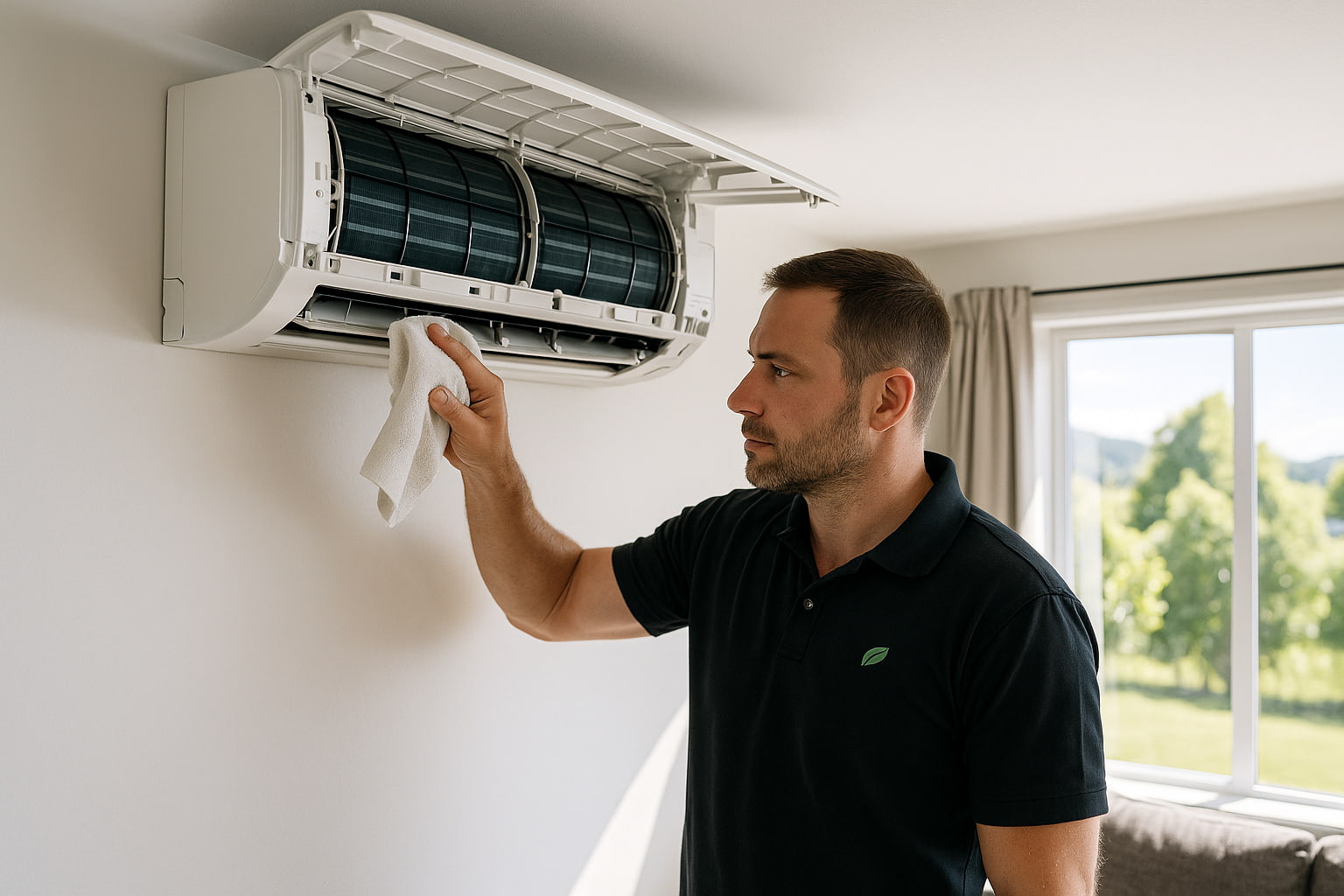
Your heat pump isn't working the way it should. A room that won't heat properly, a sound that wasn't there last winter, or a unit dripping water where it shouldn't be. These symptoms send most people searching for heat pump repair.
Many of those call-outs turn out to be unnecessary. The system doesn't have a fault. It hasn't been maintained, and a professional service resolves it.
This article explains how to tell the difference between a system that needs cleaning and one that has genuinely broken down. It won't replace a professional assessment, but it will help you understand what you're likely dealing with before you spend anything.
A service addresses the condition of the system: cleaning the internal fan, the internal coil, the filters, the drain tray and drain line, and the outdoor unit. It includes a performance check to confirm the system is operating correctly after the clean.
A repair addresses a component that has failed: a motor, a control board, a refrigerant leak, an electrical fault. These are hardware problems a clean won't fix.
The two are often confused because a dirty system produces symptoms that look like faults. A blocked drain line causes water to drip from the indoor unit. A fouled internal fan causes vibration and noise. A coil caked in grime causes the system to run continuously without reaching the set temperature. They can all feel serious. None of them require a repair.
The following symptoms appear regularly in systems that haven't been professionally serviced. A thorough service resolves them in most cases.
If the air from the indoor unit feels noticeably reduced, the most common cause is a blocked filter or a buildup of dust and debris on the internal fan blades. When the filter hasn't been cleaned regularly, particles bypass it and accumulate on the fan itself. The system continues to run but can't move enough air to heat or cool the room effectively.
A musty smell, sometimes described as a dirty sock or vinegar odour, indicates mould or mildew growing inside the indoor unit. This develops on the internal coil or in the drain tray. Mould and mildew inside the unit is a maintenance problem. A clean resolves it.
If the air coming from the unit feels the right temperature but the room takes much longer to get comfortable than it used to, the system is working harder than it should. Dirty filters or a debris-blocked outdoor unit are the usual cause, reducing the efficiency of the heat exchange process.
Water dripping from the unit is one of the most alarming symptoms homeowners report. In most cases it traces to a blocked drain line. Dirt and sludge accumulate in the drain line over time and eventually block it completely. Moisture backs up and overflows from the drain tray. A drain line clear during a professional service resolves it.
If the indoor unit sounds like it's working harder than usual, a blocked filter is the most likely cause. The internal fan is fighting restricted airflow and the added effort produces a noticeable change in sound. The filter needs attention, not the motor.
Technicians responding to repair call-outs frequently find a system that simply hasn't been maintained, rather than one that has actually broken down.
Three scenarios appear repeatedly.
A homeowner reports the system has stopped producing any useful heating or cooling and assumes a major component has failed. When the indoor unit is dismantled, no mechanical fault is present. The internal fan is coated in mould and grime, blocking airflow entirely.
Without regular professional care, the system reaches a point where it can no longer push treated air into the room. A professional deep clean restores normal operation. No repair was needed.
Loud vibration and rattling from the indoor unit. The sound suggests a failing motor or a loose component. In practice, dust and debris bypassing uncleaned filters accumulate on the fan blades and create an unbalanced load. That imbalance causes the fan to vibrate against the casing. Cleaning the fan eliminates the noise in most cases.
Performance drops so significantly the owner believes the system has reached the end of its useful life. A professional deep clean recovers substantial lost performance, often well beyond what the owner expected. In Auckland's climate, where humidity and dust combine quickly, this pattern appears in systems only a few years old.
The following symptoms are less likely to resolve with a service and more likely to indicate a component that has failed.
If the unit pushes a strong volume of air but the air is room temperature in heating mode, the refrigerant circuit or compressor is the likely cause. These are mechanical failures that a service cannot address.
Grinding points to motor bearing failure. Screeching indicates a fan component under mechanical stress. Banging suggests a broken part moving inside the unit. These are distinct from the gradual labouring of a fan fighting a blocked filter. A sharp, sudden sound rather than a progressive change warrants a fault assessment.
Visible ice on the indoor or outdoor unit needs immediate attention. While a severely blocked filter can cause ice formation, it is also a recognised sign of a refrigerant leak. Switch the unit off. If cleaning the filter doesn't resolve it, a qualified technician needs to assess the refrigerant system.
If the system won't respond to the remote and shows no signs of life, check the circuit breaker at the switchboard first. Heat pumps can trip their breaker after a power disruption. Reset it and try again. If the breaker is fine and the unit still won't respond, check the display for a fault code before calling anyone.
Most modern heat pumps display a fault code on the unit or remote when something outside normal operating parameters has been detected. The code identifies which part of the system triggered the shutdown.
The important thing to know before booking a repair: many common fault codes point to maintenance causes. A dirty filter, a fouled internal coil, blocked drain line, and a restricted outdoor unit all produce fault codes on most brands. A professional service is the right first step when one of those codes is present. If the code returns after a thorough service, that narrows the picture toward something requiring a repair technician.
Retrieve the code before calling anyone. The method varies by brand. On most units it involves holding a specific button on the remote for several seconds. Note the code and bring it to any service or repair conversation, it speeds up the diagnosis considerably. For Panasonic units, the full retrieval process and what each code points to is covered in Why is my Panasonic heat pump power light flashing. For Daikin units, see Daikin heat pump service NZ — what to expect.
Auckland's humidity means heat pumps running through summer generate significant amounts of moisture as part of normal operation. That moisture, combined with warm temperatures and particles in the air, creates conditions where buildup inside the system accelerates faster than in a drier climate.
At the end of summer, any sludge sitting in the drain line can dry and harden over winter. When the system runs hard again the following summer, that hardened blockage produces the drainage problems described above. The same seasonal cycle drives mould buildup on the internal coil.
Auckland homeowners often notice these symptoms at the start of winter, when the system is pushed hardest. The problem didn't develop overnight. It built through the previous summer and sat dormant until demand returned.
Two separate warranties apply to a heat pump installation. Most homeowners aren't aware they cover different things.
The manufacturer warranty covers defects in the unit itself: components that fail due to a manufacturing fault within the warranty period. It doesn't cover faults caused by poor maintenance or normal wear. Routine professional servicing doesn't require brand authorisation. Under the Consumer Guarantees Act, your rights apply regardless of which qualified technician services your unit, provided the work is carried out competently.
The installer warranty covers the quality of the installation work. If a component has failed because it wasn't installed correctly, the fault traces to the installation. The obligation sits with the installer, not the manufacturer.
Before accepting a repair cost, establish which warranty applies and who is responsible. Check the documentation provided at installation. If it isn't clear, contact both the manufacturer and the original installer separately.
One specific note on repair work: refrigerant work carried out by an unqualified person can void the manufacturer warranty. Always confirm a repair technician is qualified before authorising that work.
A professional service costs significantly less than a repair call-out. A repair call-out costs significantly less than a compressor replacement or a new unit.
The pattern behind most avoidable repair costs follows the same sequence. Buildup accumulates. The system compensates by running harder. Running harder puts extra load on the mechanical components. Eventually something fails that wouldn't have failed in a well-maintained system.
This is The Set and Forget Cost in practice: not one large bill, but a sequence of costs that compound over time, each one avoidable at the stage before it. A service that wasn't booked becomes a repair. A repair that came too late becomes a replacement.
A system that has been professionally serviced reaches the temperature you've set, gets there in the time it used to, and holds it without running continuously. Power draw reflects what the unit was designed to consume, rather than what it draws under strain.
Most systems showing the maintenance symptoms described above can return to that level of performance. A professional service tells you whether yours is one of them.
Booking a professional service is the most reliable starting point if your heat pump is showing any of the symptoms above. MiHT's service includes a full condition check before any treatment begins, so you know exactly what the system needs before work starts.
The Home Energy Health Assessment gives you a broader picture of where all your home energy systems stand. It takes three minutes.
Start the assessment at assessment.miht.co.nz.
Yes. Severe mould and grime on the internal fan or internal coil can restrict airflow to the point where the system shuts down or fails to produce treated air. What presents as a complete breakdown is often a maintenance failure. A professional service restores normal operation in these cases.
Landlords are responsible for maintaining rental properties in a reasonable state of repair under the Residential Tenancies Act. If a heat pump stops working, the landlord is generally responsible for restoring it to working order. Whether the fault is maintenance-related or a genuine component failure affects the cost and process, but the obligation to act sits with the landlord.
Refrigerant work carried out by an unqualified person can void the manufacturer warranty. Always confirm a repair technician is qualified before authorising refrigerant work. Routine professional servicing is not subject to the same restriction.
Simple repairs such as control board or fan motor replacements can often be completed in a single visit if parts are available. Refrigerant work requires a certified technician and may involve additional lead time for parts. A condition check as part of a professional service gives a clearer picture of what's involved before repair work begins.
MiHT offers maintenance and repair coordination. For systems that require repair work beyond the scope of a service, MiHT can assess the fault, provide a quote, and manage the repair through qualified contractors. One point of contact for the full process.