Before you go...
We built a free scorecard that shows how your heat pump, ventilation and solar systems are performing. Results are usually surprising.
Get my score
No thanks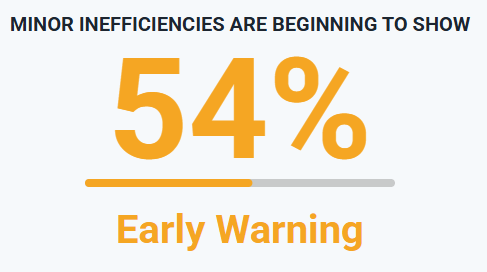
We built a free scorecard that shows how your heat pump, ventilation and solar systems are performing. Results are usually surprising.
No thanksWe built a free scorecard that shows how your heat pump, ventilation and solar systems are performing. Results are usually surprising.
No thanks
If you're looking to get your Daikin heat pump serviced in New Zealand, a quality service should cover both the indoor and outdoor unit: the filters, internal coil, fan, and drainage system on the indoor side, and the external coil on the outdoor side. A performance check after the work should confirm the unit is heating or cooling as expected.
If you have a fault code showing on your unit right now, the right first step is usually a professional service rather than a repair call. Many Daikin fault codes are maintenance-related and clear once the unit has been properly cleaned. If the code is still active when the technician arrives, they can check what it's pointing at and advise on the appropriate next step.
This article covers what a Daikin service typically involves, what to do if your unit is showing a fault code or won't start, what the Daikin warranty says about maintenance, how much a service is likely to cost in New Zealand, and what to look for in a service provider.
A professional service on a wall-mounted Daikin heat pump covers both the indoor and outdoor unit. Here's what that typically involves.
On the indoor side, the front panel comes off and the filters are removed and cleaned. Behind the filters is the evaporator coil, which is the internal heat exchanger that air passes through when the unit is running. If it's carrying dust or contamination, the unit has to work harder to heat or cool the air. The coil is inspected and cleaned as needed. The fan wheel is checked next. That's the cylindrical fan inside the indoor unit that moves air across the coil. It can build up dust and organic growth over time, particularly in damp conditions. The drain tray and drain line are also cleared. If the drain blocks up, water backs up inside the unit and drips out rather than draining away through the wall as it should.
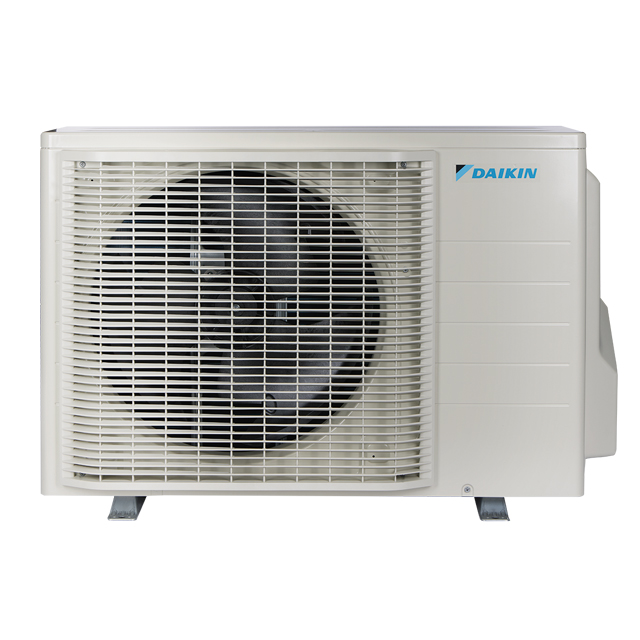
On the outdoor side, the condenser coil is inspected and cleaned. That's the heat exchanger inside the external casing.
Once the service is done, the system should be run with doors and windows closed and temperature readings taken at the air intake and the discharge. That temperature difference is called the delta-T. A well-serviced unit should show a temperature difference of at least 8 to 10 degrees between the return air and the discharge in cooling mode. If the gap is narrow before the service and wider after, that's a measurable sign the service has made a difference. If the delta-T reading comes back below the expected range after the service has been completed, further investigation may be required.
Floor console Daikin units follow the same process, with a slightly different approach to cleaning the evaporator coil due to how the unit is configured.
If you have a ducted Daikin system, servicing involves a different scope of work. The article on why a ducted heat pump needs a different kind of service walks through what that involves. For ducted Daikin servicing in Auckland, see our ducted heat pump service page.
If you've arrived at this article because your heat pump is displaying a fault, read this before you call anyone.
A fault code on a Daikin unit doesn't automatically mean something has broken. Many fault codes that come up on residential units are maintenance-related: restricted airflow from a clogged filter or dirty coil, a blocked drain, or a contaminated outdoor unit. These conditions push the system outside its normal operating range and trigger a fault response. A proper service often clears the code.
If your unit is displaying a fault and hasn't been serviced recently, booking a service is the right starting point. If the code is still active when the technician arrives, they can retrieve it and identify which part of the system it's pointing at. Codes starting with A or C indicate an indoor unit issue. E, F, H, J, L, or P codes indicate an outdoor unit issue. U codes are system-level. That context helps shape what to look for during the service.
If the service resolves the issue, the code should clear and the delta-T check at the end will confirm the unit is performing within the expected range. If the readings still show the unit isn't performing as expected after the service, further investigation is the next step. For most Daikin split and multi-split systems manufactured from 2003 onwards, a diagnostic tool called the D-Checker can connect to the outdoor unit and pull live operating data: temperatures, pressures, compressor behaviour. That level of investigation sits outside the scope of a maintenance service and would be handled as a separate piece of work.
By the way — we built a free scorecard that shows how your heat pump, ventilation and solar are performing. Results are usually surprising.
Most of the hands-on service work follows similar principles across heat pump brands. Where Daikin-specific knowledge counts is in the details.
Understanding Daikin's fault code system means a technician can read what the unit is telling them before the work starts, rather than beginning without that context. Familiarity with how these units behave under different conditions, what normal delta-T readings look like across the Daikin residential range, and how components are accessed on different models all come from regularly working on the brand. That kind of experience isn't something you can shortcut.
The Daikin domestic warranty in New Zealand sets out owner responsibilities clearly. Those responsibilities are: operating and maintaining the unit in accordance with the instructions provided, regularly cleaning air filters and replacing them when necessary, keeping the outdoor unit's air inlet and outlet clear of obstructions, and keeping the condensate drain clean.
The warranty excludes damage caused by negligence and by foreign matter entering the equipment. Dirt and moisture are listed as examples. If contamination builds up inside the unit over time and causes a component to fail, that damage may not be covered.
Filters are excluded from warranty coverage unless they were defective at the time of purchase. Filter maintenance is the owner's responsibility from day one, regardless of how new the unit is.
Under the Consumer Guarantees Act, your rights apply regardless of which qualified technician services your unit, as long as the work is carried out competently. Regular professional servicing aligns with Daikin's own maintenance guidance.
The article on whether servicing a heat pump affects your warranty goes into more detail on how independent servicing and manufacturer warranties interact.
A heat pump that isn't serviced doesn't fail suddenly. The deterioration is gradual and mostly invisible from outside the unit.
Filters load up with dust and restrict airflow. The evaporator coil starts collecting what the filter misses. The fan wheel accumulates dust and organic growth. The drain tray fills with debris and eventually stops clearing properly.
Each of those things makes the unit work harder to move the same volume of air. Power draw increases. An unserviced heat pump can lose 10 to 25 percent of its operating efficiency over time. The unit keeps running, but it's consuming more to deliver less. The gap between what you're spending and what you're getting widens slowly, and it isn't obvious until the power bills start telling you.
The article on what happens inside a heat pump that isn't serviced covers the full sequence in detail.
When choosing a provider, a few direct questions will tell you most of what you need to know. Ask whether their technicians have completed Daikin-specific training through Daikin NZ or an accredited distributor, and how many Daikin units they service each year. Ask what the performance check at the end covers and what temperature differential they expect to see from a well-serviced unit. A provider who works on the brand regularly can answer those questions without hesitation.
In Auckland, providers like MiHT Home Energy Care service Daikin units regularly and can walk you through what the service covers before you book. The article on what a professional heat pump service includes in Auckland gives you a full breakdown of what a thorough service covers, so you have a clear benchmark when comparing quotes.
Cleaning the filters yourself is something you can and should do. Daikin includes it as an owner responsibility in their warranty, and cleaning them every few weeks during periods of regular use is reasonable. But filter cleaning only covers one part of the system. The evaporator coil, fan wheel, drain line, and outdoor unit all accumulate contamination that isn't accessible without removing panels. A professional service covers those components and includes a temperature performance check to confirm the unit is actually heating or cooling as expected. The article on what a professional heat pump service includes in Auckland explains what each step of a service covers.
Daikin recommends annual professional servicing for residential units in regular use, and it's what most experienced technicians advise for a unit running through New Zealand's winters and summers. Leaving it longer gives contamination more time to build inside the coil and fan, and increases the risk of fault codes and reduced performance. If your unit hasn't been serviced in over 12 months, booking one now is a good place to start.
A thorough service covers both the indoor and outdoor unit: filter removal and clean, evaporator coil inspection and clean, fan wheel inspection and clean, drain tray cleared and drain line flushed, outdoor condenser coil inspection and clean, and temperature measurements before and after the service. If a fault code is active when the technician arrives, they'll note it and advise on what it's pointing at. After the service, a well-performing Daikin should show a temperature difference of 8 to 10 degrees between the return air and the discharge in cooling mode. The article on what a professional heat pump service includes in Auckland walks through each step in detail.
The cost of a professional Daikin heat pump service in New Zealand depends on what's included, the type of unit, and the provider. A standard single-unit wall-mounted service and a more thorough first-time deep clean are typically priced differently, as are wall-mounted units versus floor consoles or multi-split systems. Prices also vary between Auckland, Wellington, and other regions. The article on how much does a heat pump service cost in NZ covers what to expect to pay and what to watch for when comparing quotes.
Under the Consumer Guarantees Act, your rights apply regardless of which qualified technician services your unit, as long as the work is carried out competently. The Daikin domestic warranty excludes damage caused by negligence. Having the unit properly maintained is consistent with the owner responsibilities the warranty sets out. The article on whether servicing a heat pump affects your warranty covers how servicing and warranty interact in more detail.
A flashing green light on the indoor unit means an active fault has been logged. To retrieve the code: hold the Cancel button on the remote for about five seconds until "00" appears on the display, then press Cancel repeatedly until you hear a long beep. The code tells you which part of the system the fault is sitting in. A or C codes are indoor unit issues, E, F, H, J, L, or P codes are outdoor unit issues, and U codes are system-level. If the light has stopped flashing and the unit appears to be running normally, the fault may have self-cleared, but the underlying cause may still be there. If the unit hasn't been serviced recently, that's a good place to start before assuming a repair is needed.
Start with a few basic checks before calling anyone. First, check the circuit breaker for the heat pump at your switchboard. Heat pumps can trip their breaker, particularly after a power outage or a power failure at the property. Reset it if it's tripped and try again. Second, check the remote has working batteries and is set to the right mode. If the remote is not responding at all after a battery change, see heat pump remote not working or lost. Third, look at the OPERATION lamp on the indoor unit. If it's blinking rather than fully off, turn the circuit breaker off, wait a moment, then restart the unit with the remote. If it's still blinking after that, hold the Cancel button for about five seconds until "00" appears on the display, then press Cancel repeatedly until you hear a long beep to retrieve the fault code.
If the unit passes those checks but still won't run, and it hasn't been serviced recently, a professional service is a good next step. Many issues that appear to be unit failure are maintenance-related. A service will either resolve the issue or clearly identify that something needs further investigation.
MiHT Home Energy System Care offers a free Home Energy Health Assessment. If you want to know how your heat pump and the rest of your home's energy systems are performing, it takes about three minutes and gives you a clear starting point.
If you're looking to get your Daikin heat pump serviced in New Zealand, a quality service should cover both the indoor and outdoor unit: the filters, internal coil, fan, and drainage system on the indoor side, and the external coil on the outdoor side. A performance check after the work should confirm the unit is heating or cooling as expected.
If you have a fault code showing on your unit right now, the right first step is usually a professional service rather than a repair call. Many Daikin fault codes are maintenance-related and clear once the unit has been properly cleaned. If the code is still active when the technician arrives, they can check what it's pointing at and advise on the appropriate next step.
This article covers what a Daikin service typically involves, what to do if your unit is showing a fault code or won't start, what the Daikin warranty says about maintenance, how much a service is likely to cost in New Zealand, and what to look for in a service provider.
A professional service on a wall-mounted Daikin heat pump covers both the indoor and outdoor unit. Here's what that typically involves.
On the indoor side, the front panel comes off and the filters are removed and cleaned. Behind the filters is the evaporator coil, which is the internal heat exchanger that air passes through when the unit is running. If it's carrying dust or contamination, the unit has to work harder to heat or cool the air. The coil is inspected and cleaned as needed. The fan wheel is checked next. That's the cylindrical fan inside the indoor unit that moves air across the coil. It can build up dust and organic growth over time, particularly in damp conditions. The drain tray and drain line are also cleared. If the drain blocks up, water backs up inside the unit and drips out rather than draining away through the wall as it should.
On the outdoor side, the condenser coil is inspected and cleaned. That's the heat exchanger inside the external casing.
Once the service is done, the system should be run with doors and windows closed and temperature readings taken at the air intake and the discharge. That temperature difference is called the delta-T. A well-serviced unit should show a temperature difference of at least 8 to 10 degrees between the return air and the discharge in cooling mode. If the gap is narrow before the service and wider after, that's a measurable sign the service has made a difference. If the delta-T reading comes back below the expected range after the service has been completed, further investigation may be required.
Floor console Daikin units follow the same process, with a slightly different approach to cleaning the evaporator coil due to how the unit is configured.
If you have a ducted Daikin system, servicing involves a different scope of work. The article on why a ducted heat pump needs a different kind of service walks through what that involves. For ducted Daikin servicing in Auckland, see our ducted heat pump service page.
If you've arrived at this article because your heat pump is displaying a fault, read this before you call anyone.
A fault code on a Daikin unit doesn't automatically mean something has broken. Many fault codes that come up on residential units are maintenance-related: restricted airflow from a clogged filter or dirty coil, a blocked drain, or a contaminated outdoor unit. These conditions push the system outside its normal operating range and trigger a fault response. A proper service often clears the code.
If your unit is displaying a fault and hasn't been serviced recently, booking a service is the right starting point. If the code is still active when the technician arrives, they can retrieve it and identify which part of the system it's pointing at. Codes starting with A or C indicate an indoor unit issue. E, F, H, J, L, or P codes indicate an outdoor unit issue. U codes are system-level. That context helps shape what to look for during the service.
If the service resolves the issue, the code should clear and the delta-T check at the end will confirm the unit is performing within the expected range. If the readings still show the unit isn't performing as expected after the service, further investigation is the next step. For most Daikin split and multi-split systems manufactured from 2003 onwards, a diagnostic tool called the D-Checker can connect to the outdoor unit and pull live operating data: temperatures, pressures, compressor behaviour. That level of investigation sits outside the scope of a maintenance service and would be handled as a separate piece of work.
By the way — we built a free scorecard that shows how your heat pump, ventilation and solar are performing. Results are usually surprising.
Most of the hands-on service work follows similar principles across heat pump brands. Where Daikin-specific knowledge counts is in the details.
Understanding Daikin's fault code system means a technician can read what the unit is telling them before the work starts, rather than beginning without that context. Familiarity with how these units behave under different conditions, what normal delta-T readings look like across the Daikin residential range, and how components are accessed on different models all come from regularly working on the brand. That kind of experience isn't something you can shortcut.
The Daikin domestic warranty in New Zealand sets out owner responsibilities clearly. Those responsibilities are: operating and maintaining the unit in accordance with the instructions provided, regularly cleaning air filters and replacing them when necessary, keeping the outdoor unit's air inlet and outlet clear of obstructions, and keeping the condensate drain clean.
The warranty excludes damage caused by negligence and by foreign matter entering the equipment. Dirt and moisture are listed as examples. If contamination builds up inside the unit over time and causes a component to fail, that damage may not be covered.
Filters are excluded from warranty coverage unless they were defective at the time of purchase. Filter maintenance is the owner's responsibility from day one, regardless of how new the unit is.
Under the Consumer Guarantees Act, your rights apply regardless of which qualified technician services your unit, as long as the work is carried out competently. Regular professional servicing aligns with Daikin's own maintenance guidance.
The article on whether servicing a heat pump affects your warranty goes into more detail on how independent servicing and manufacturer warranties interact.
A heat pump that isn't serviced doesn't fail suddenly. The deterioration is gradual and mostly invisible from outside the unit.
Filters load up with dust and restrict airflow. The evaporator coil starts collecting what the filter misses. The fan wheel accumulates dust and organic growth. The drain tray fills with debris and eventually stops clearing properly.
Each of those things makes the unit work harder to move the same volume of air. Power draw increases. An unserviced heat pump can lose 10 to 25 percent of its operating efficiency over time. The unit keeps running, but it's consuming more to deliver less. The gap between what you're spending and what you're getting widens slowly, and it isn't obvious until the power bills start telling you.
The article on what happens inside a heat pump that isn't serviced covers the full sequence in detail.
When choosing a provider, a few direct questions will tell you most of what you need to know. Ask whether their technicians have completed Daikin-specific training through Daikin NZ or an accredited distributor, and how many Daikin units they service each year. Ask what the performance check at the end covers and what temperature differential they expect to see from a well-serviced unit. A provider who works on the brand regularly can answer those questions without hesitation.
In Auckland, providers like MiHT Home Energy Care service Daikin units regularly and can walk you through what the service covers before you book. The article on what a professional heat pump service includes in Auckland gives you a full breakdown of what a thorough service covers, so you have a clear benchmark when comparing quotes.
Cleaning the filters yourself is something you can and should do. Daikin includes it as an owner responsibility in their warranty, and cleaning them every few weeks during periods of regular use is reasonable. But filter cleaning only covers one part of the system. The evaporator coil, fan wheel, drain line, and outdoor unit all accumulate contamination that isn't accessible without removing panels. A professional service covers those components and includes a temperature performance check to confirm the unit is actually heating or cooling as expected. The article on what a professional heat pump service includes in Auckland explains what each step of a service covers.
Daikin recommends annual professional servicing for residential units in regular use, and it's what most experienced technicians advise for a unit running through New Zealand's winters and summers. Leaving it longer gives contamination more time to build inside the coil and fan, and increases the risk of fault codes and reduced performance. If your unit hasn't been serviced in over 12 months, booking one now is a good place to start.
A thorough service covers both the indoor and outdoor unit: filter removal and clean, evaporator coil inspection and clean, fan wheel inspection and clean, drain tray cleared and drain line flushed, outdoor condenser coil inspection and clean, and temperature measurements before and after the service. If a fault code is active when the technician arrives, they'll note it and advise on what it's pointing at. After the service, a well-performing Daikin should show a temperature difference of 8 to 10 degrees between the return air and the discharge in cooling mode. The article on what a professional heat pump service includes in Auckland walks through each step in detail.
The cost of a professional Daikin heat pump service in New Zealand depends on what's included, the type of unit, and the provider. A standard single-unit wall-mounted service and a more thorough first-time deep clean are typically priced differently, as are wall-mounted units versus floor consoles or multi-split systems. Prices also vary between Auckland, Wellington, and other regions. The article on how much does a heat pump service cost in NZ covers what to expect to pay and what to watch for when comparing quotes.
Under the Consumer Guarantees Act, your rights apply regardless of which qualified technician services your unit, as long as the work is carried out competently. The Daikin domestic warranty excludes damage caused by negligence. Having the unit properly maintained is consistent with the owner responsibilities the warranty sets out. The article on whether servicing a heat pump affects your warranty covers how servicing and warranty interact in more detail.
A flashing green light on the indoor unit means an active fault has been logged. To retrieve the code: hold the Cancel button on the remote for about five seconds until "00" appears on the display, then press Cancel repeatedly until you hear a long beep. The code tells you which part of the system the fault is sitting in. A or C codes are indoor unit issues, E, F, H, J, L, or P codes are outdoor unit issues, and U codes are system-level. If the light has stopped flashing and the unit appears to be running normally, the fault may have self-cleared, but the underlying cause may still be there. If the unit hasn't been serviced recently, that's a good place to start before assuming a repair is needed.
Start with a few basic checks before calling anyone. First, check the circuit breaker for the heat pump at your switchboard. Heat pumps can trip their breaker, particularly after a power outage or a power failure at the property. Reset it if it's tripped and try again. Second, check the remote has working batteries and is set to the right mode. If the remote is not responding at all after a battery change, see heat pump remote not working or lost. Third, look at the OPERATION lamp on the indoor unit. If it's blinking rather than fully off, turn the circuit breaker off, wait a moment, then restart the unit with the remote. If it's still blinking after that, hold the Cancel button for about five seconds until "00" appears on the display, then press Cancel repeatedly until you hear a long beep to retrieve the fault code.
If the unit passes those checks but still won't run, and it hasn't been serviced recently, a professional service is a good next step. Many issues that appear to be unit failure are maintenance-related. A service will either resolve the issue or clearly identify that something needs further investigation.
MiHT Home Energy System Care offers a free Home Energy Health Assessment. If you want to know how your heat pump and the rest of your home's energy systems are performing, it takes about three minutes and gives you a clear starting point.