Before you go...
We built a free scorecard that shows how your heat pump, ventilation and solar systems are performing. Results are usually surprising.
Get my score
No thanks
We built a free scorecard that shows how your heat pump, ventilation and solar systems are performing. Results are usually surprising.
No thanksWe built a free scorecard that shows how your heat pump, ventilation and solar systems are performing. Results are usually surprising.
No thanks
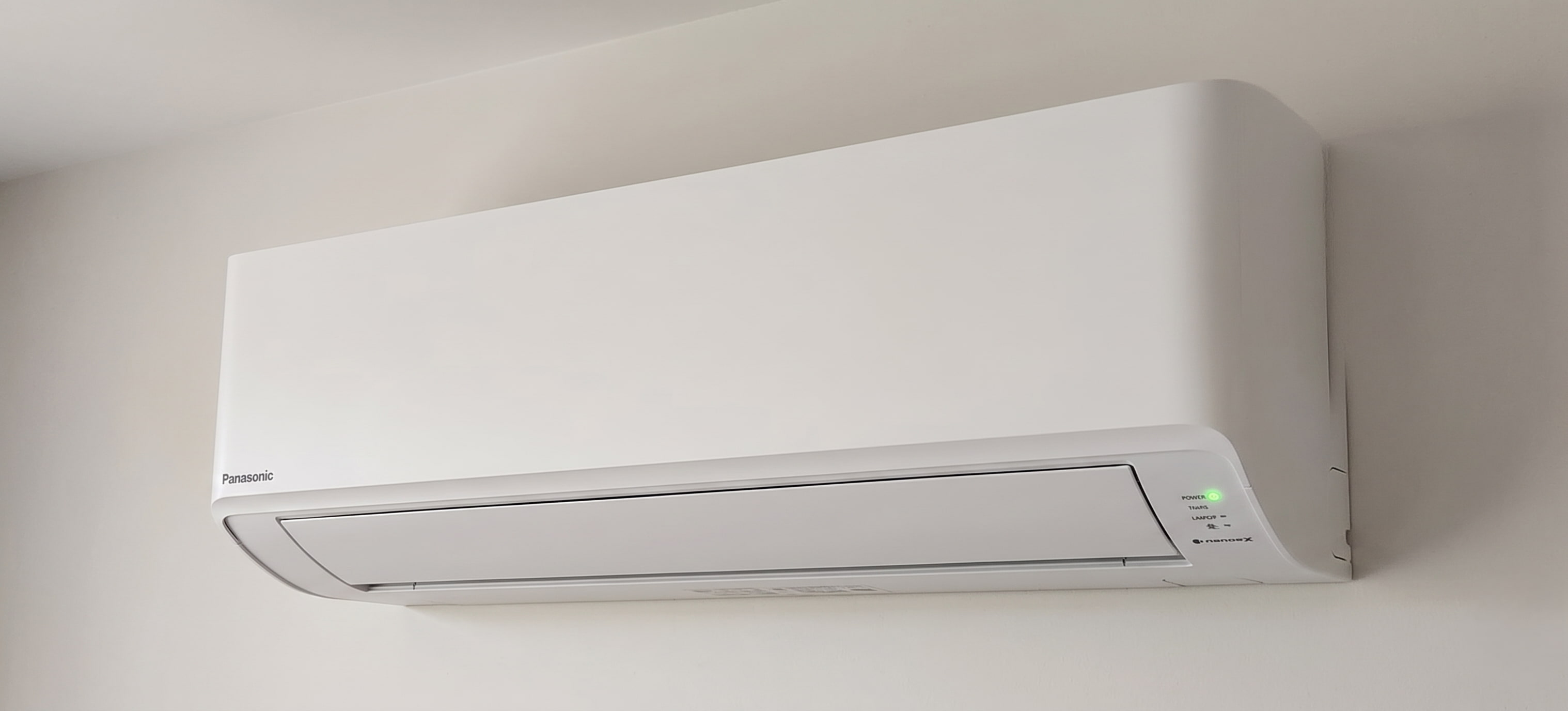
Green light blinking: almost always normal, defrost mode or startup. Amber light blinking: a fault has been detected and logged. Read on to confirm which applies to you.
Your Panasonic heat pump has two indicator lights that can blink, and they mean completely different things. The green power light blinks during normal operation in certain conditions. The amber timer light blinks when the unit has detected a fault, stopped itself, and recorded a fault code in its memory.
Many people searching this question are watching the green power light blink on a cold morning while their unit sits stopped with the louver closed. That is almost always defrost mode, and it is normal. The rest of this article explains both scenarios, what each light is telling you, and where maintenance connects to both.
This applies whether you call your unit a heat pump, a split system or an air conditioner. Panasonic uses all three terms depending on the model and marketing material, but the light behaviour is the same.
Your green power light blinks during defrost mode, and this is the most common reason people search for a flashing Panasonic light.
In heating mode during cold weather, the outdoor coil gradually ices up as moisture in the air freezes on the coil surface. When ice builds up enough to affect performance, the unit enters a defrost cycle automatically. The indoor fan stops. The louver closes. The green power light blinks. From inside the house, it looks like the unit has stopped working. It hasn't. The defrost cycle takes up to 15 minutes. When it finishes, the unit resumes heating without any action from you.
The green power light also blinks during the pre-heating stage when the unit first switches on. This lasts up to three minutes and is normal.
Your unit enters defrost mode more frequently when the indoor coil or outdoor coil is dirty. A dirty indoor coil reduces heat transfer efficiency, which means the system has to work harder to reach its heating target. A dirty outdoor coil reduces the unit's ability to absorb heat from the outside air, which means icing conditions are reached faster and more often.
A unit on a regular service schedule defrosts less often than one that hasn't been maintained. If your Panasonic is entering defrost cycles noticeably more often than it used to, or staying in defrost for longer, that is worth acting on before a fault code appears.
Your amber timer light blinking is the Panasonic fault signal. When the unit detects a problem outside its normal operating parameters, it stops, closes the louver, and the timer light starts blinking. The unit has recorded a fault code in its memory.
This is a different situation from defrost mode. The unit is not going to restart on its own.
Your fault code identifies which part of the system has triggered the shutdown. Here is how to retrieve it:
H00 is the default screen when you first enter diagnostic mode. If scrolling only returns H00, the unit has no stored fault in memory. The fault may have been a transient event, but the underlying cause may still be present if the timer light returns.
Your unit is most likely blinking because of a maintenance issue. Dirty components are the most common triggers on Panasonic units, and the ones most owners overlook, because the unit can appear to resolve after a reset.
Across the units serviced in Auckland, maintenance causes account for the majority of fault light presentations.
Your filter is the first thing to check. H98 (indoor coil overheat in heating mode) and H99 (indoor coil de-ice in cooling mode) are both directly linked to dirty filters and dirty indoor coils in Panasonic's own fault documentation.
This is The Set and Forget Cost in practice. A system fighting through a blocked filter can lose up to 25% of its operating efficiency before it hits the threshold that triggers a fault code. The unit has been working progressively harder as the filter loaded up. The code is the point at which it can no longer compensate.
Your filter sits in the front panel of the indoor unit. Remove the front panel, take it out, rinse under cold water, dry fully, and reinstall. If a dirty filter was the only cause, this may clear the fault after a proper reset.
The indoor coil sits behind the filter. Dust and biological material that bypasses the filter accumulates on the coil fins over time, further restricting airflow and heat transfer. Cleaning the coil requires specialist equipment. A heat pump service addresses this.
One note on H99: low refrigerant charge and low ambient temperature are secondary documented causes. If H99 returns after a service that has confirmed clean filters and a clean coil, refrigerant loss becomes more likely and a technician should assess the unit.
Your outdoor coil is as important to the system as the indoor coil, and just as capable of triggering a fault when neglected. F95 (outdoor coil overheat in cooling mode) lists a dirty condenser coil as its primary documented cause. F96 (IPM or compressor overheating) lists a dirty heat exchanger alongside gas charge issues.
When the outdoor coil fins are clogged with dust, pollen, or organic growth, the unit can't transfer heat effectively through the refrigerant circuit. In cooling mode, heat that should be expelled outside has nowhere to go. Pressure and temperature in the circuit rise until a protection fault triggers.
Your outdoor unit needs clear space to operate correctly. The EECA heat pump installation guide specifies 150mm of clearance at the back of the unit and 500mm at the front where the fan exhausts. Check that fins are not blocked with debris or vegetation. An outdoor coil clean is part of a professional service.
H21 is Panasonic's float switch fault code. Your condensate drain has become blocked, causing water to back up into the drain tray until the float sensor triggers. The unit shuts down to prevent overflow and water damage.
Clearing a blocked condensate drain thoroughly is part of a professional service.
H19 indicates the indoor fan motor has locked. A heavy accumulation of debris on the internal fan can, in some cases, cause enough drag to trigger this code before the motor itself has failed. A professional service that includes fan cleaning is a reasonable first step. If the motor has mechanically failed, a repair technician is required. If the motor has mechanically failed, the unit needs repair rather than a clean. MiHT now carries out heat pump repairs directly, get in touch about professional heat pump repair rather than booking a service.
A service visit will address the maintenance causes above. The causes below require a qualified technician.
H11 means the indoor and outdoor units have lost communication. The cause is faulty wiring, loose connectors, or a PCB issue. A service won't resolve this.
Your clearest indicator of refrigerant loss is output, not the fault code alone. H16 (current transformer problem) is associated with very low refrigerant charge, alongside possible power transistor or outdoor PCB failure. F91 flags a refrigeration cycle problem from low gas or a blockage. F97 signals high compressor discharge temperature from low gas charge or a failing compressor.
If your unit runs but produces no useful heat in heating mode, or no cooling in cooling mode, refrigerant loss is the likely cause. Contact us about heat pump repair rather than booking a service.
Refrigerant leaks are more common in New Zealand than most homeowners realise, partly because some installations don't include proper pressure-testing of the pipework at commissioning. A leak can develop slowly over a year or more before the unit logs a fault.
H14 indicates an indoor air temperature sensor fault. H15 indicates an outdoor compressor temperature sensor fault. Panasonic's documented causes for both include dirty sensor contacts, alongside disconnected or genuinely faulty sensors.
Your first step if these codes appear is a professional service that includes sensor contact inspection and cleaning. Accumulated grime on sensor contacts can produce both codes without the sensor itself having failed. If the code returns after a service, the sensor is likely disconnected or faulty and a technician needs to assess it.
Your reset procedure: turn the isolator switch off at the outdoor unit and wait 5 minutes before turning it back on. The 5-minute wait is important for compressor protection. Alternatively, switch the circuit breaker for the heat pump off at the switchboard for the same period, then restart with the remote.
Your unit will clear the stored fault condition and attempt normal operation. It won't address whatever caused the fault.
If the cause was a dirty filter, a clogged outdoor coil, or a blocked drain, those conditions remain. Your unit will run until the same threshold is reached again, and the timer light will return.
Resetting is symptom suppression, not a fix. If the timer light doesn't return after several weeks of normal use, the fault was likely a transient event rather than an accumulating maintenance cause.
Your Econavi or Nanoe-X Panasonic unit uses the same diagnostic system as the rest of the residential range. The timer light blinks when a fault is logged, and the CHECK button retrieval steps above apply regardless of model.
Your Nanoe-X air purification system operates independently of the heating and cooling components. A fault in the main system will trigger the timer light whether or not Nanoe-X is active at the time.
Nanoe-G is an older air purification technology to Nanoe-X, and the two work differently enough that they're worth telling apart. Nanoe-G is a negative ion generator found on older models, including the CS-E PKR series and CS-Z RKR series. Nanoe-X is the newer system, fitted to current models including the CS-Z UFRAW and CS-Z XKRW series.
If your unit has Nanoe-G, it has a separate blue indicator light on the indoor unit's display panel. This is different from the main TIMER light. When the blue light is solidly lit, the air purification function is running normally, and it can run even when heating or cooling is switched off.
A blinking blue light means the internal generator is dirty or malfunctioning, and Panasonic's own documentation links this directly to fault code H99 appearing at the same time. Cleaning the unit is the manufacturer's stated first response.
It's also normal for the unit to run a drying cycle after cooling or dry mode. The fan runs for 30 minutes with the louver slightly open to clear internal moisture. This is followed by a 2-hour phase with the fan stopped and louver closed while Nanoe-G works on the filter. Neither of these is a fault.
The main system fault code retrieval process, using the CHECK button as described above, works the same on Nanoe-G models as anywhere else in the range.
Your fault code is the clearest guide.
H21, H98, H99, F95, and F96 point to maintenance causes. A professional service is the right first step.
H11, H16, F91, and F97 point toward component or refrigerant issues. This needs a heat pump repair rather than a maintenance visit. H25, H26 and H67 point to a fault in the ion or nanoe generator itself, and also need a repair technician. This is separate from the H99 dirty-generator warning above, which a clean can resolve.
H14 and H15 can go either way. A professional service is a reasonable first step because dirty sensor contacts are a documented cause. If the code returns after a service, a technician needs to assess the sensor.
If you can't retrieve the fault code and the unit is still producing some heat or cooling, a service is the right starting point. If the unit runs but produces no useful output at all, contact a repair technician first.
A Panasonic unit back at full operating condition defrosts less often, runs quieter, draws less power, and stops cycling through protection mode. Your timer light is the early signal. Early signals cost less to act on.
For more on what a Panasonic service should cover and how often Auckland units need attention, see Panasonic heat pump service in Auckland.
Your green power light blinks during two normal operational states: the pre-heating stage when the unit first switches on, and defrost mode during cold weather. Neither indicates a fault. The fault indicator on Panasonic units is the amber timer light. If your unit is entering defrost mode noticeably more often than it used to, a dirty indoor or outdoor coil is likely the reason.
Your amber timer light blinks when the unit has detected a fault and recorded a fault code in its memory. The most common causes are maintenance-related: a blocked filter or dirty indoor coil (H98 or H99), a clogged outdoor condenser coil (F95 or F96), or a blocked condensate drain (H21). Retrieve the fault code using the CHECK button on your remote, following the steps above, to identify which category applies.
Check which light is blinking. If the green power light is blinking in heating mode on a cold day, this is defrost mode and is normal. The unit will resume within 15 minutes without any action needed. If the amber timer light is blinking and the unit stopped suddenly, it has entered protection mode and recorded a fault code. Retrieve the code using the CHECK button procedure above before resetting.
Turn the isolator switch off at the outdoor unit, wait 5 minutes, then turn it back on. Alternatively, switch the circuit breaker for the heat pump off at the switchboard, wait 5 minutes, and restart with the remote. The 5-minute wait protects the compressor. This clears the stored fault condition but does not address whatever caused it. If the timer light returns, the underlying cause is still present.
Your filter is the first thing to check: remove it and see whether it is blocked. Then check the circuit breaker at the switchboard, as heat pumps can trip their breaker after a power disruption. Check the remote has working batteries and is set to the correct mode. If the amber timer light is blinking, follow the CHECK button procedure to retrieve the fault code before resetting. If none of these steps restore normal operation and the unit has not had a professional service recently, book one before assuming a repair is needed.
Check the timer light before anything else. If it's blinking, retrieve the fault code using the CHECK button steps above. H98 specifically indicates an indoor coil overheat in heating mode, almost always caused by a dirty filter or dirty coil restricting airflow. If the timer light isn't blinking and the unit runs but produces no heat at all, that points toward a repair technician rather than a maintenance issue.