Before you go...
We built a free scorecard that shows how your heat pump, ventilation and solar systems are performing. Results are usually surprising.
Get my score
No thanks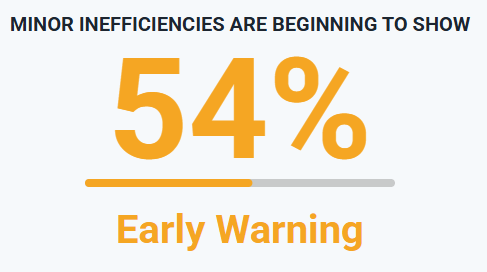
We built a free scorecard that shows how your heat pump, ventilation and solar systems are performing. Results are usually surprising.
No thanksWe built a free scorecard that shows how your heat pump, ventilation and solar systems are performing. Results are usually surprising.
No thanks
.jpg)
If your heat pump isn't heating or cooling the way it used to, or your power bill has climbed without a clear explanation, maintenance is usually where the answer sits.
Heat pumps don't fail suddenly. They degrade over time. Dust and grime build on the internal fan. The condensate drain collects debris. The heat exchange coil loses efficiency. The system keeps running, but not at the same level it once did. This is The Set and Forget Cost in practice: not a breakdown, but a slow loss of performance that builds when a system isn't maintained regularly.
Regular professional maintenance is what prevents that drift.
The commonly cited industry figure is that three-quarters or more of heat pump faults trace back to poor or absent maintenance. The pattern is consistent with what gets observed across Auckland properties.
The smell from the indoor unit. The room that won't reach temperature in winter. The water stain appearing on the wall below the indoor unit. In most cases, these are not failures of the heat pump itself. They are predictable outcomes of a system that has been running without proper care.
Here are the fault types that generate the majority of Auckland call-outs.
Smell from the indoor unit
When dust gets past the filter, it settles on the internal coil and in the condensate drain pan. In Auckland's humid climate, that creates conditions for bacterial and mould growth. The smell described as musty, damp, or like something dead in the wall comes from this internal contamination. It is almost always a maintenance issue, not a mechanical fault. For a full breakdown of what causes heat pump odours and what resolves them, see why your heat pump smells.
Poor heating or cooling performance
When the internal fan and coil accumulates dust and restricts airflow, the system works harder to move less air. Efficiency drops between 10 and 25 percent. The room that won't warm up, or the power bill that has climbed without explanation, typically traces back to this. See how a dirty heat pump affects your power bill for a detailed breakdown.
Water leaking from the indoor unit
The condensate drain removes moisture from the air during cooling mode. When it blocks with algae and debris, the drain pan overflows. That water goes somewhere: usually down the wall, or into the ceiling cavity beneath a ducted unit. This is one of the most avoidable causes of water damage seen in Auckland homes.
Noise from the indoor unit
A fan wheel that has accumulated significant dust can become unbalanced and vibrate against the casing. What sounds like a mechanical fault is often a fan that hasn't been cleaned in years.
For a detailed look at what happens inside a heat pump when it isn't serviced, see what happens inside a heat pump when it isn't serviced.
By the way — we built a free scorecard that shows how your heat pump, ventilation and solar are performing. Results are usually surprising.
The word gets used loosely. A maintenance visit can mean anything from wiping the front casing to a thorough inspection and clean of every accessible internal component. There's no reliable way to tell from the booking confirmation alone.
Properly defined, maintenance means keeping a system operating at its designed performance standard for its age and the conditions it runs in. A heat pump that's run through three Auckland winters in a high-occupancy household is in a different condition than one installed six months ago. Proper maintenance accounts for that.
The components that matter are the filter, condensate drain, internal coil, internal fan, drain pan, outdoor unit, and a full operational test in both modes before the technician leaves. A visit that doesn't cover all of those hasn't maintained the system , it's maintained part of it.
For the full component-by-component breakdown of what each step involves, and how to tell which service tier your heat pump needs, see what a professional heat pump service includes in Auckland.
Time is a useful indicator. A professional maintenance visit takes between one and a half hours. A visit completed in 20 minutes has not covered the full system. The filter may have been cleaned. The coil, drain, fan, and outdoor unit have not.
Documentation is as important as the work itself. A properly completed visit produces before-and-after photos of the key internal components, written notes on what was found, and a clear record of the recommended next service interval.
Without that documentation, there is no way to track the condition of the system over time, and no evidence to support a warranty claim if a fault develops in the months that follow.
This connects directly to warranty coverage. Manufacturers do not automatically decline warranty claims because an annual service was skipped. But when a unit is assessed for a warranty claim, the technician inspects the condition of the filter, the coil, and the drain pan. A unit showing clear signs of neglect has a harder conversation ahead of it. For the full picture on warranties and servicing, see does servicing a heat pump affect your warranty.
Most companies offering heat pump maintenance in Auckland also install. Maintenance is a secondary service to their core business.
That matters for two reasons. A technician whose primary work is installation brings a different level of focus to a maintenance visit. And a business that earns from replacing units has more than one outcome available when a system is underperforming
Performance. Blocked components reduce a system's efficiency by between 10 and 25 percent. After a full service, the unit reaches the set temperature faster and holds it without the extended run times that push up power consumption. In a room that hasn't been warming properly, the difference is noticeable within the first heating cycle.
Running cost. Your heat pump accounts for roughly 30 to 34 percent of household electricity use in winter. A system running at 20 percent below efficiency is adding that loss to every bill. For homes with two or more units running year-round, the combined efficiency loss can reach between $300 and $600 annually. A service typically costs less than that.
Air quality. The fan circulates air across every surface inside the unit on every cycle. In an unmaintained heat pump, those surfaces carry dust and biological growth. A clean system moves clean air. This is what the Healthy Home Blindspot points to: a home that looks clean is not always one where the air is.
There is also a records advantage. A heat pump with a documented service history is in a stronger position at warranty assessment and at the point of property sale. A maintained system with service records is an asset. An unmaintained one is a liability the buyer will price in.
For most Auckland homes, an annual professional service is the right interval. Coastal properties, high-usage households, and homes where occupants have respiratory conditions often benefit from a visit every six months.
Floor console units draw air at floor level. In carpeted rooms, they accumulate carpet fibres, dust, and debris significantly faster than wall-mounted units. These typically need professional attention every six months, regardless of other household factors. For a detailed breakdown of what a floor console service covers and how the process differs from a wall unit, see floor console and floor mounted heat pump service in NZ.
For a full breakdown of service intervals by unit type, household type, and location, see how often should a heat pump be serviced in Auckland.
For a full overview of what professional heat pump maintenance covers, see our heat pump servicing page.
By the way — we built a free scorecard that shows how your heat pump, ventilation and solar are performing. Results are usually surprising.
A professional maintenance visit takes between one hour and one and a half hours. A visit completed in 20 minutes has not covered the full system. The filter may have been cleaned, but the internal coil, condensate drain, fan, drain pan, and outdoor unit require time that a quick visit doesn't allow. Duration is one of the most reliable indicators of whether a proper job has been done.
The terms are used interchangeably, but the scope varies widely between providers. A proper maintenance visit covers the filter, condensate drain, internal coil, indoor fan, drain pan, outdoor unit, and a full operational test in both heating and cooling modes. A filter clean alone is not a maintenance visit. If the technician does not inspect the drain and coil, the system has not been fully maintained.
Most Auckland homes benefit from an annual professional service. Coastal properties, high-usage households, and homes where occupants have respiratory conditions often benefit from a visit every six months. Floor console units in carpeted rooms typically need servicing every six months due to the volume of debris they accumulate at floor level. The cooling cycle is the key variable: units that run in cooling mode accumulate mould on the coil and in the drain system faster than heating-only units.
Manufacturers do not automatically decline warranty claims because an annual service was skipped. However, if a fault is assessed as resulting from neglect, a clogged filter that caused motor failure or a blocked drain that caused water damage; the repair is unlikely to be covered. What the technician documents about the condition of the unit at assessment is what matters. A maintained system with service records is in a stronger position.
No. Routine maintenance, including filter cleaning, coil cleaning, drain flushing, and outdoor unit inspection, can be carried out by any qualified service provider. Brand authorisation is required for warranty repair work only, not for standard maintenance visits.
The internal components of a heat pump accumulate dust, biological material, and debris continuously during normal operation. When this is not cleared regularly, it restricts airflow, creates conditions for mould growth, blocks drainage, and forces components to work harder than designed. The faults that follow including smells, poor performance, water leaks, and noise; are the predictable result of a system operating in a degraded state.
If your heat pump isn't heating or cooling the way it used to, or your power bill has climbed without a clear explanation, maintenance is usually where the answer sits.
Heat pumps don't fail suddenly. They degrade over time. Dust and grime build on the internal fan. The condensate drain collects debris. The heat exchange coil loses efficiency. The system keeps running, but not at the same level it once did. This is The Set and Forget Cost in practice: not a breakdown, but a slow loss of performance that builds when a system isn't maintained regularly.
Regular professional maintenance is what prevents that drift.
The commonly cited industry figure is that three-quarters or more of heat pump faults trace back to poor or absent maintenance. The pattern is consistent with what gets observed across Auckland properties.
The smell from the indoor unit. The room that won't reach temperature in winter. The water stain appearing on the wall below the indoor unit. In most cases, these are not failures of the heat pump itself. They are predictable outcomes of a system that has been running without proper care.
Here are the fault types that generate the majority of Auckland call-outs.
Smell from the indoor unit
When dust gets past the filter, it settles on the internal coil and in the condensate drain pan. In Auckland's humid climate, that creates conditions for bacterial and mould growth. The smell described as musty, damp, or like something dead in the wall comes from this internal contamination. It is almost always a maintenance issue, not a mechanical fault. For a full breakdown of what causes heat pump odours and what resolves them, see why your heat pump smells.
Poor heating or cooling performance
When the internal fan and coil accumulates dust and restricts airflow, the system works harder to move less air. Efficiency drops between 10 and 25 percent. The room that won't warm up, or the power bill that has climbed without explanation, typically traces back to this. See how a dirty heat pump affects your power bill for a detailed breakdown.
Water leaking from the indoor unit
The condensate drain removes moisture from the air during cooling mode. When it blocks with algae and debris, the drain pan overflows. That water goes somewhere: usually down the wall, or into the ceiling cavity beneath a ducted unit. This is one of the most avoidable causes of water damage seen in Auckland homes.
Noise from the indoor unit
A fan wheel that has accumulated significant dust can become unbalanced and vibrate against the casing. What sounds like a mechanical fault is often a fan that hasn't been cleaned in years.
For a detailed look at what happens inside a heat pump when it isn't serviced, see what happens inside a heat pump when it isn't serviced.
By the way — we built a free scorecard that shows how your heat pump, ventilation and solar are performing. Results are usually surprising.
The word gets used loosely. A maintenance visit can mean anything from wiping the front casing to a thorough inspection and clean of every accessible internal component. There's no reliable way to tell from the booking confirmation alone.
Properly defined, maintenance means keeping a system operating at its designed performance standard for its age and the conditions it runs in. A heat pump that's run through three Auckland winters in a high-occupancy household is in a different condition than one installed six months ago. Proper maintenance accounts for that.
The components that matter are the filter, condensate drain, internal coil, internal fan, drain pan, outdoor unit, and a full operational test in both modes before the technician leaves. A visit that doesn't cover all of those hasn't maintained the system , it's maintained part of it.
For the full component-by-component breakdown of what each step involves, and how to tell which service tier your heat pump needs, see what a professional heat pump service includes in Auckland.
Time is a useful indicator. A professional maintenance visit takes between one and a half hours. A visit completed in 20 minutes has not covered the full system. The filter may have been cleaned. The coil, drain, fan, and outdoor unit have not.
Documentation is as important as the work itself. A properly completed visit produces before-and-after photos of the key internal components, written notes on what was found, and a clear record of the recommended next service interval.
Without that documentation, there is no way to track the condition of the system over time, and no evidence to support a warranty claim if a fault develops in the months that follow.
This connects directly to warranty coverage. Manufacturers do not automatically decline warranty claims because an annual service was skipped. But when a unit is assessed for a warranty claim, the technician inspects the condition of the filter, the coil, and the drain pan. A unit showing clear signs of neglect has a harder conversation ahead of it. For the full picture on warranties and servicing, see does servicing a heat pump affect your warranty.
Most companies offering heat pump maintenance in Auckland also install. Maintenance is a secondary service to their core business.
That matters for two reasons. A technician whose primary work is installation brings a different level of focus to a maintenance visit. And a business that earns from replacing units has more than one outcome available when a system is underperforming
Performance. Blocked components reduce a system's efficiency by between 10 and 25 percent. After a full service, the unit reaches the set temperature faster and holds it without the extended run times that push up power consumption. In a room that hasn't been warming properly, the difference is noticeable within the first heating cycle.
Running cost. Your heat pump accounts for roughly 30 to 34 percent of household electricity use in winter. A system running at 20 percent below efficiency is adding that loss to every bill. For homes with two or more units running year-round, the combined efficiency loss can reach between $300 and $600 annually. A service typically costs less than that.
Air quality. The fan circulates air across every surface inside the unit on every cycle. In an unmaintained heat pump, those surfaces carry dust and biological growth. A clean system moves clean air. This is what the Healthy Home Blindspot points to: a home that looks clean is not always one where the air is.
There is also a records advantage. A heat pump with a documented service history is in a stronger position at warranty assessment and at the point of property sale. A maintained system with service records is an asset. An unmaintained one is a liability the buyer will price in.
For most Auckland homes, an annual professional service is the right interval. Coastal properties, high-usage households, and homes where occupants have respiratory conditions often benefit from a visit every six months.
Floor console units draw air at floor level. In carpeted rooms, they accumulate carpet fibres, dust, and debris significantly faster than wall-mounted units. These typically need professional attention every six months, regardless of other household factors. For a detailed breakdown of what a floor console service covers and how the process differs from a wall unit, see floor console and floor mounted heat pump service in NZ.
For a full breakdown of service intervals by unit type, household type, and location, see how often should a heat pump be serviced in Auckland.
For a full overview of what professional heat pump maintenance covers, see our heat pump servicing page.
By the way — we built a free scorecard that shows how your heat pump, ventilation and solar are performing. Results are usually surprising.
A professional maintenance visit takes between one hour and one and a half hours. A visit completed in 20 minutes has not covered the full system. The filter may have been cleaned, but the internal coil, condensate drain, fan, drain pan, and outdoor unit require time that a quick visit doesn't allow. Duration is one of the most reliable indicators of whether a proper job has been done.
The terms are used interchangeably, but the scope varies widely between providers. A proper maintenance visit covers the filter, condensate drain, internal coil, indoor fan, drain pan, outdoor unit, and a full operational test in both heating and cooling modes. A filter clean alone is not a maintenance visit. If the technician does not inspect the drain and coil, the system has not been fully maintained.
Most Auckland homes benefit from an annual professional service. Coastal properties, high-usage households, and homes where occupants have respiratory conditions often benefit from a visit every six months. Floor console units in carpeted rooms typically need servicing every six months due to the volume of debris they accumulate at floor level. The cooling cycle is the key variable: units that run in cooling mode accumulate mould on the coil and in the drain system faster than heating-only units.
Manufacturers do not automatically decline warranty claims because an annual service was skipped. However, if a fault is assessed as resulting from neglect, a clogged filter that caused motor failure or a blocked drain that caused water damage; the repair is unlikely to be covered. What the technician documents about the condition of the unit at assessment is what matters. A maintained system with service records is in a stronger position.
No. Routine maintenance, including filter cleaning, coil cleaning, drain flushing, and outdoor unit inspection, can be carried out by any qualified service provider. Brand authorisation is required for warranty repair work only, not for standard maintenance visits.
The internal components of a heat pump accumulate dust, biological material, and debris continuously during normal operation. When this is not cleared regularly, it restricts airflow, creates conditions for mould growth, blocks drainage, and forces components to work harder than designed. The faults that follow including smells, poor performance, water leaks, and noise; are the predictable result of a system operating in a degraded state.