Before you go...
We built a free scorecard that shows how your heat pump, ventilation and solar systems are performing. Results are usually surprising.
Get my score
No thanks
We built a free scorecard that shows how your heat pump, ventilation and solar systems are performing. Results are usually surprising.
No thanksWe built a free scorecard that shows how your heat pump, ventilation and solar systems are performing. Results are usually surprising.
No thanks
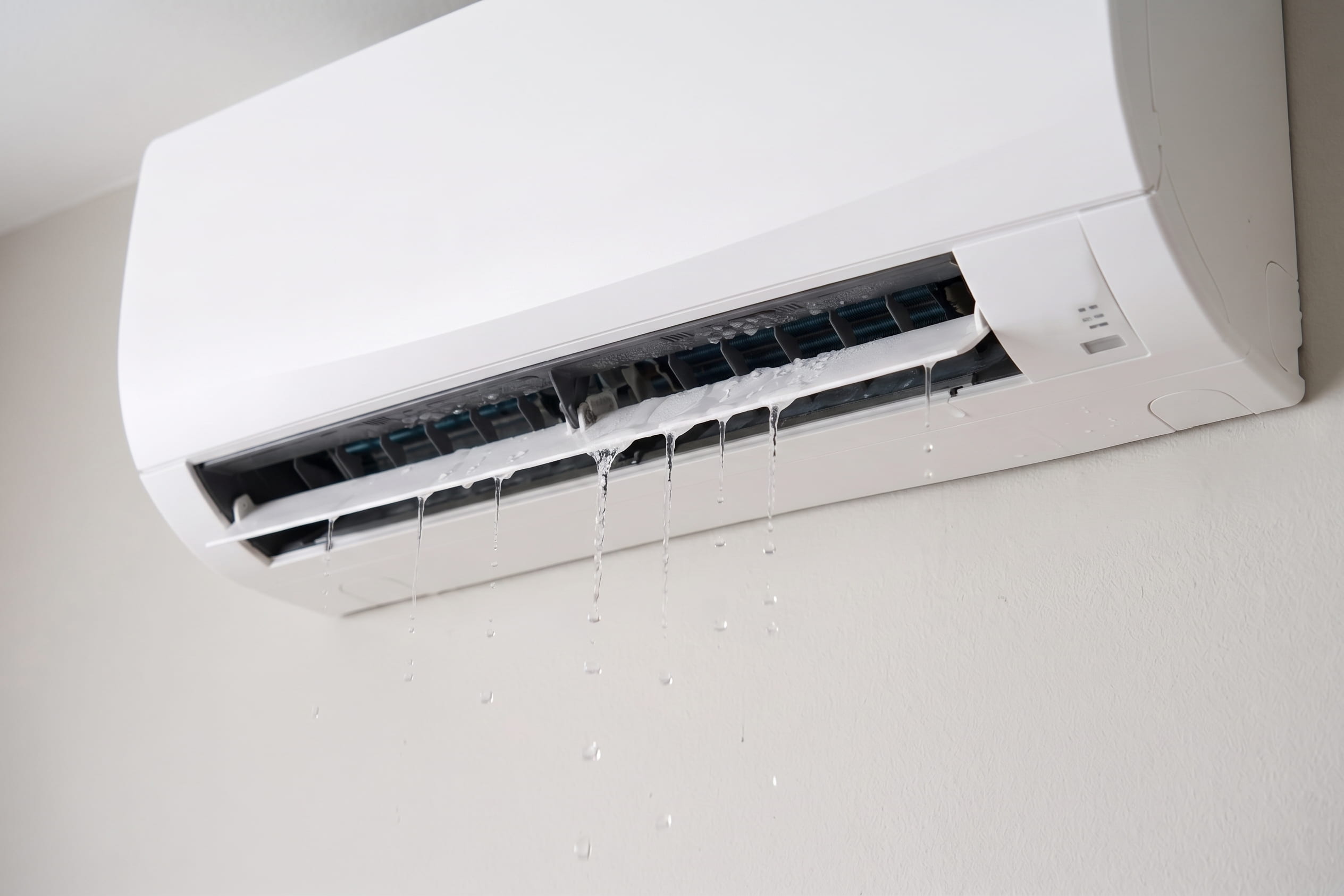
A heat pump dripping water from the indoor unit is one of the more common calls we get across Auckland properties. Maybe there's a stain on the wall below it, or a small puddle forming underneath.
The first instinct is that something has broken. In most cases, that's not what's happening.
Water from the indoor unit almost always comes from the condensate system: the part of the heat pump designed to carry moisture away during cooling. The same applies whether you call your system a heat pump, air conditioner, or aircon; the condensate system works the same way across all of them. When it works correctly, moisture drains away quietly and you never see it. When it doesn't, water backs up and comes out somewhere it shouldn't.
This article explains the two causes, what to check, and why a professional service is the right fix for most people.
During cooling and dehumidification, warm room air passes over a cold internal coil. Moisture in that air condenses on the coil surface and drips into a drain pan beneath it. From there it flows through a drain line out of the unit and away from the house.
In Auckland's climate, a heat pump running in cooling mode produces a significant volume of moisture. The system handles this without any visible sign, as long as the drain stays clear.
The drain line and drain pan collect more than just water. Dust and organic material fall from the internal coil into the drain pan over time, carried down by the moisture dripping off the coil surface. In warm, humid conditions, that material accumulates into sludge.
Through summer, that sludge builds up gradually. When the unit switches to heating mode over winter, the drain stops carrying water and the sludge dries out. Over months without moisture flowing through, it hardens. Come the following summer, when the unit switches back into cooling mode, the drain is partially or fully blocked before the season even starts.
This is why a drain that seemed fine last summer may cause problems this year. The blockage developed while the unit wasn't in cooling mode, and there was no visible sign it was forming.
When a blocked drain is found on a service visit, the drain pan typically contains a thick layer of sludge covering the base of the pan. The drain outlet at the lowest point of the pan is packed with the same material.
The moisture that would normally flow out has nowhere to go. The pan fills. Then it overflows, and water runs down the back of the indoor unit and down the wall behind it.
By the way — we built a free scorecard that shows how your heat pump, ventilation and solar are performing. Results are usually surprising.
Most wall-mounted heat pumps drain by gravity. The drain line runs from the indoor unit to an external wall, sloping downward so moisture flows out naturally.
Some installations don't allow for a gravity drain. If the indoor unit is positioned below the level of the nearest external wall, a condensate pump is fitted instead. This is a small electric pump, usually mounted near the indoor unit, that actively pumps moisture out when the drain pan fills past a set level.
Condensate pumps are prone to the same problem as gravity drain lines. Algae, mould, and a layer of organic slime build up inside the pump reservoir and inside the discharge tubing. If that buildup isn't cleared, it blocks the pump or the line, and water overflows exactly as it would with a blocked gravity drain.
Inside the pump there is a float switch that rises with the water level to trigger the pump. If slime holds the float stuck in the up position, the pump runs dry and burns out. If it holds the float in the down position, the pump won't trigger and the pan overflows. Keeping the float switch clean and free-moving is the key maintenance task on any condensate pump.
The discharge tubing that carries water from the pump out of the building is also prone to organic growth. A blocked tube stops the pump from emptying the pan even when the pump motor itself is working correctly.
Check the area near the indoor unit for a small rectangular box, typically white or grey, with a tube running into it from the unit. If the indoor unit is installed in a room without a direct external wall, or in a position where a sloped drain line to the outside wasn't possible, a condensate pump was almost certainly fitted during installation.
Clearing a hardened drain or servicing a condensate pump requires direct access to the drain system, equipment to flush or vacuum the line, and the ability to read the condition of the drain pan and float switch. A professional heat pump clean covers all of this as a standard step.
On a service visit, the drain pan is cleared of sludge, the drain line is flushed, and a slow-release treatment tablet is placed in the pan to slow regrowth before the next service. If a condensate pump is fitted, the reservoir is cleaned, the float switch is checked for free movement, and the discharge tubing is cleared.
If you're comfortable working around the unit with the power fully off, some of this work is manageable without a professional. If you're not certain about any step, book a service instead.
For a gravity drain line, pour a small amount of warm water into the drain pan with the unit off and watch whether it exits at the external drain point (the point outside the house). If it flows freely, the line is clear. If it backs up, the blockage is further along the line. A warm water flush will sometimes shift a soft blockage. Hardened sludge won't respond to this and needs physical clearing by a professional.
For a condensate pump, the process is more involved. Turn the unit off at the isolator switch outside by the outdoor unit before touching anything. Remove the lower reservoir section of the pump, empty it, and scrub the inside to remove slime, algae, and deposits. Check that the float switch moves freely up and down. Disconnect the discharge tubing and flush it with warm water and white vinegar, or use a wet/dry vacuum on the outside end to draw out the blockage. Once everything is reassembled and power restored, pour water slowly into the reservoir and confirm the float triggers the pump and water exits the discharge line.
A condensate tablet placed in the pump reservoir or drain pan after cleaning slows regrowth between professional services.
Forcing a hardened blockage risks damaging the drain fitting. Working on a condensate pump with power connected is a risk that isn't worth taking.
In heating mode, the drain system isn't active. The internal coil runs warm and moisture doesn't condense on it. If the unit is leaking in cooling or dehumidification mode but running normally in heating, you can continue using it for warmth while you arrange a service.
Don't use it in cooling or dehumidification mode until the drain is cleared. Each cooling cycle produces moisture that will overflow if the drain is blocked.
The sludge that blocks the drain originates from the internal coil. A coil that isn't serviced regularly develops a layer of organic growth that sheds material into the drain pan season after season. The two problems share the same root cause.
By the time visible water damage appears on a wall, the repair cost has already exceeded what annual servicing would have cost. The stain on the wall is the visible end of a process that started inside the unit, often a year or more earlier.
Addressing the coil as part of an annual service reduces the rate at which the drain blocks.
By the way — we built a free scorecard that shows how your heat pump, ventilation and solar are performing. Results are usually surprising.
Yes. During cooling and dehumidification, moisture condenses on the internal coil and drips into the drain pan. A working drain system removes that moisture without any visible sign. If you can see water coming from the unit, the drain system isn't working correctly. The cause is a blocked drain line, a blocked condensate pump, or a float switch that's stuck.
The condensate system only carries moisture during cooling and dehumidification. In heating mode, the internal coil runs warm and moisture doesn't form on it. A blockage that developed over winter won't be obvious until the unit runs in cooling mode the following summer, which is why a leak can appear without warning after a unit worked fine the previous season.
In heating mode, yes. The drain isn't active during heating, so running the unit for warmth while you arrange a service doesn't make the situation worse. Don't use it in cooling or dehumidification mode until the drain is cleared. Each cooling cycle produces moisture that will overflow if the drain is blocked.
A blocked drain means moisture from the cooling cycle has nowhere to go. The drain pan fills and overflows, sending water down the back of the indoor unit and down the wall behind it. Left uncleared, a blocked drain causes water damage to walls, ceiling linings, and flooring that is significantly more expensive to fix than the service that would have prevented it. If you can see water coming from the indoor unit during cooling, a blocked drain is the most likely cause. Switch the unit off in cooling mode and arrange a service.
Check the area near the indoor unit for a small rectangular box, typically white or grey, with a tube running into it from the unit. If the indoor unit is installed in a room without a direct external wall, or in a position where a sloped drain line to the outside wasn't possible, a condensate pump was almost certainly fitted during installation.
An annual professional service clears the drain and condensate pump as a standard step. For units running in cooling mode through Auckland summers, that annual interval prevents sludge from hardening between seasons. In high-humidity homes or with heavy year-round use, checking the drain system twice a year is reasonable. A condensate tablet placed in the drain pan or pump reservoir slows regrowth between services.
The cause is the same whether you call it a heat pump, air conditioner, or aircon. During cooling, moisture condenses on the internal coil and collects in a drain pan. That water exits through a drain line. When the drain line or drain pan blocks, water backs up and comes out of the indoor unit. A blocked condensate drain is the most common cause of an air conditioner or aircon leaking water inside the house. The fix is a professional drain clear and service of the internal components.