Heat pump servicing, maintenance & cleaning, Auckland-wide.
Breathe cleaner air, cut your heating costs, and get more life from your system.
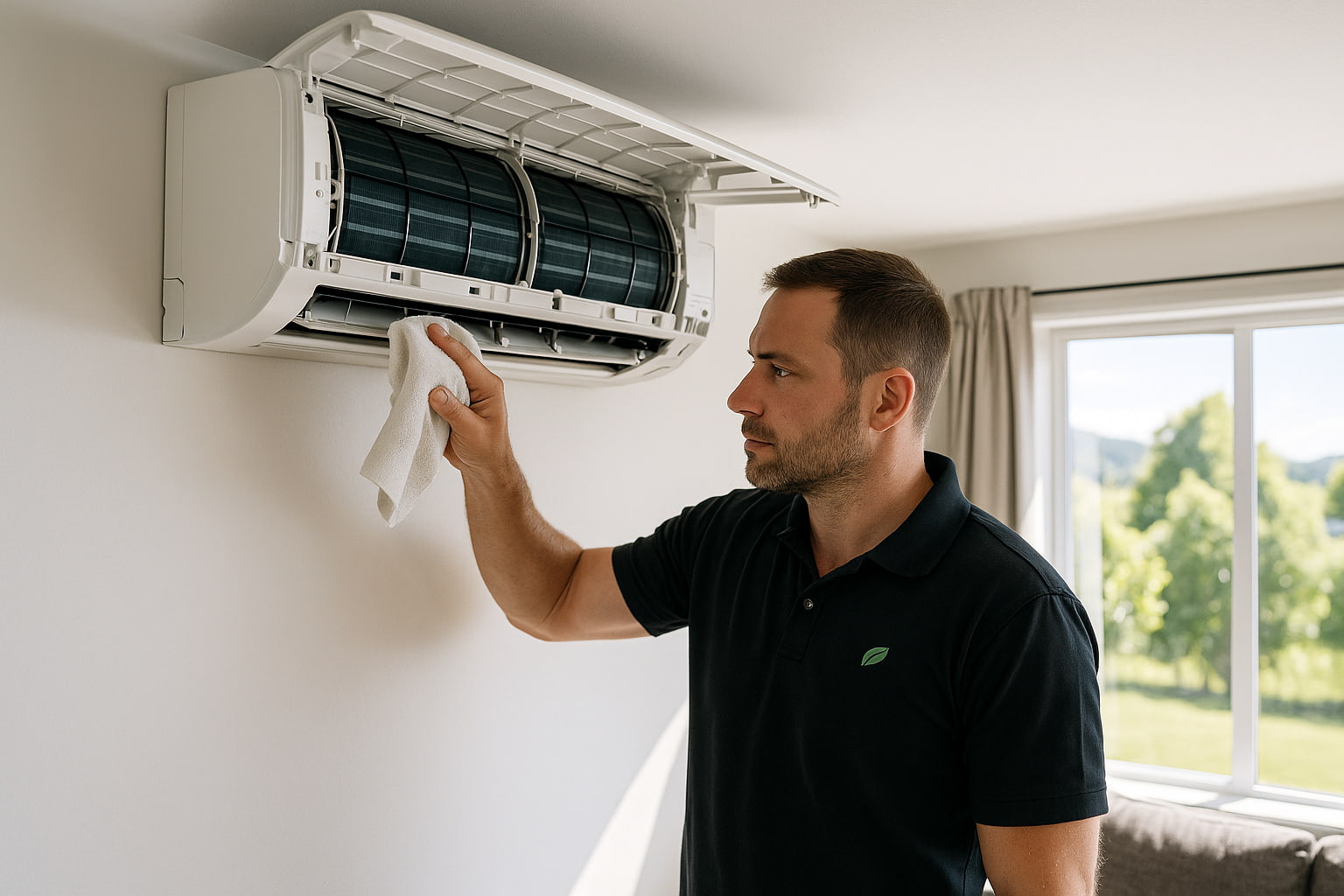
Heat pump servicing in Auckland reaches the mould and dust a filter rinse never touches. If your heat pump has never been professionally serviced, or it has been years since it was, the MiHT Home Energy System Care Protocol removes that buildup, restores the performance you paid for, and keeps it there with a service plan built to suit you.
Your heat pump systems get a professional service from a company that doesn't sell or install new units.
MiHT is right for you if...
Heat pump servicing for wall, multi-split, and ducted systems
Wall & Floor Heat Pump Service and Cleaning Auckland
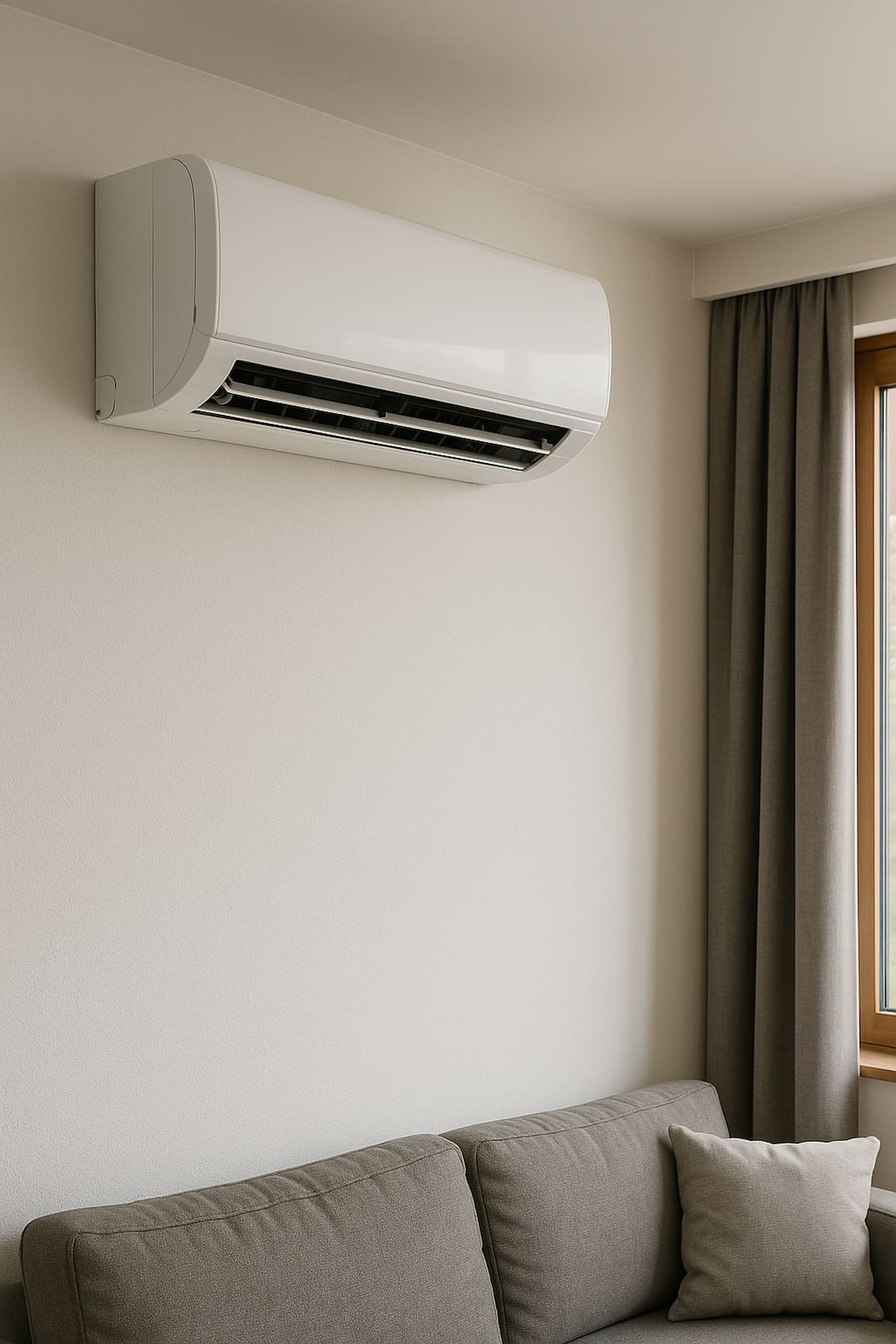
The most common system in Auckland homes. Your unit gets cleaned deep inside, reaching the components behind the filter where mould and dust accumulate and a filter rinse never reaches.
Wall & Floor Heat Pump Service and Cleaning Auckland
Multiple indoor units running from a single outdoor unit. Each unit requires individual attention to ensure the whole system runs efficiently without placing unnecessary load on the outdoor unit.
Ducted Heat Pump Service and Cleaning Auckland
Quiet and powerful, but easy to overlook. Your return grilles, central unit, and duct network all get serviced.
Heat pump cleaning and servicing across greater Auckland
Your heat pump cleaning or service booking runs the same MiHT Care Protocol no matter which part of Auckland you are in.
Standard coverage includes Auckland City, South Auckland, West Auckland, the North Shore and East Auckland. Check availability for your suburb at the time of booking, whether you are after a one-off heat pump cleaning service or an ongoing care plan.
The Two Things Quietly Working Against Your Heat Pump
The first is financial. Dust, moisture, and in coastal Auckland, salt spray, accumulate on the internal components over time. The unit works harder to produce the same output. That extra effort does not appear as a fault or a warning. It shows up quietly on the power bill and accelerates wear on the hardware. This is the Set and Forget Cost.
The second is physical. Deep inside the unit, in the spaces behind and beyond the filter, mould and bacteria accumulate on the fan that moves air through the system. Every time the system runs, air passes through what has built up there before it reaches your home. The filter is clean. The air is not. This is the Healthy Home Blindspot.
A professional MiHT service addresses both. Your system's internal components are accessed, the buildup removed, and the system restored to designed operating condition.
The MiHT Care Protocol.
Every MiHT visit follows the same five-stage process. It was built around a gap we kept seeing in the industry: homeowners paying for a service with no way to know what they actually got, or whether their systems were any better for it.
PLAN
Tell us which units you want serviced and how many. Your price is calculated instantly.
You see exactly what is included and what it costs before you confirm anything.
Pick a time that suits you and book it yourself. Any time of the day or night.
UNCOVER
Before any work starts, every unit is photographed and its condition recorded. Your system's current heating and cooling efficiency is measured before any work starts. That starting point is what allows us to show you, at the end of the visit, exactly what the service achieved and what, if anything, still needs attention.
RESTORE
Your service follows a documented checklist built on industry best practice. Every booked unit has its key operating components cleaned thoroughly, focusing on what drives heating and cooling efficiency, air quality, and system longevity. The objective is straightforward: clear the contaminants that have built up since install or the last clean, so your system runs the way it was designed to.
REVIEW
Once the work is done, you receive a written condition report with before and after photos of every unit we serviced. The photos focus on the areas that needed the most attention, and the report shows your system’s pre and post service efficiency so the full improvement is documented. Any issues that need attention are noted clearly, whether that is a repair your system needs or something to keep an eye on at the next service. It is a complete record of your system’s condition, yours to keep.
PROTECT
Once your service is complete, we take care of what comes next. Annual Care Plan customers have their next service automatically scheduled. We manage the timing, send the reminders, and book the visit. For one-off customers, we send a reminder when your system is next due so you never have to remember when you last had it serviced. Either way, your system does not get forgotten.
What's included in a heat pump service
Your heat pump service covers the key components for your system type, whether that is a wall or floor unit, a multi-split system, or ducted. Every visit follows the same five-stage MiHT Care Protocol, so your service is documented from start to finish regardless of which system you have.
Your service is different from a filter clean. It reaches the components behind and beyond the filter that a filter clean cannot reach. You also receive a written before and after record, so you know exactly what was done to your system.
MiHT services every major heat pump brand in Auckland, including Fujitsu, Daikin, Mitsubishi, Hitachi, Rinnai and Toshiba systems. Each visit follows the same five-stage MiHT Care Protocol, with attention to the coil design, filter type and fault codes specific to your brand.
MiHT Care™ — Proactive Service, Simplified.
The MiHT Care Plan takes the servicing of your home energy systems off your list. Automatic bookings, a written condition report after every visit, and a technician who knows your system's history. Choose annual or biennial care and select only the systems you want us to look after.
Automatic scheduling & service reminders
Tailored care for your home’s exact systems
Includes photo reports + system performance check
Better airflow, lower energy bills, and fewer breakdowns

Common questions about air conditioning servicing in Auckland
How much does a heat pump service cost in Auckland?
A wall or floor mounted heat pump service (what we call a Restore) starts from $249 inc GST. A ducted system Restore starts from $375 inc GST. A multi-split Restore starts from $374 inc GST for two indoor units. Pricing is confirmed at booking. There are no callout fees and no hidden charges.
Do you repair heat pumps?
Not as a standalone service — this page covers scheduled servicing and maintenance, not fault diagnosis. If your system already has a specific problem, like not heating, tripping, making noise, or showing an error code, book our dedicated Repair Diagnosis instead. It gets you an on-site inspection and a clear, honest answer on what's actually wrong before any work goes ahead.
How do I know what type of system I have?
If you have one indoor unit on a wall or floor connected to one outdoor unit, that is a wall or floor mounted system. If you have two or more indoor units connected to a single outdoor unit, that is a multi-split system. If your heating and cooling comes through vents in your ceiling or floor from a unit hidden in the ceiling or under the house, that is a ducted system. If you are not sure, note what you can see when you book and we will confirm before the visit.
What is the difference between cleaning the filter myself and booking a professional service?
Cleaning the filter removes surface dust from the part of the unit you can access. A professional Restore covers the parts behind and beneath the filter where mould and dust accumulate over time. Here is a full breakdown of what a professional heat pump service includes.. These are the components that affect your air quality and your power bill. A Restore also includes a written condition report with before and after photographs. Here is a detailed comparison of a filter clean versus a professional service.
How often should my heat pump be serviced?
For most systems in year-round use, annual professional servicing is the standard.. Systems in homes with pets, high dust levels, or occupants with respiratory sensitivities benefit from more frequent care. Between professional visits, cleaning the visible filter every four to six weeks is recommended. Not sure where your system stands? The Home Energy Health Assessment takes about three minutes and gives you a personalised result.
What does a heat pump service include?
A heat pump service covers the key components for your system type and follows the five-stage MiHT Care Protocol on every visit. It goes beyond what a filter clean reaches, and you receive a written before and after record so you can see exactly what was done.
What happens if you find something wrong during the visit?
Every finding from the visit appears in your condition report with a clear action against it. Some things are taken care of on the day as part of the standard service. Some need a return visit to address properly — we will offer to book that before we leave. Some are outside our scope entirely — we document those with photographs so you have everything you need for a qualified specialist. Some are worth watching but not urgent — we note those and recheck them at your next visit.
How long does a service take?
A wall or floor mounted heat pump Restore takes approximately one and a half hours. A multi-split Restore takes two to three hours depending on the number of indoor units. A ducted system Restore takes two to four hours depending on system size and ceiling cavity access. Time estimates are confirmed at booking.
Book your service online, 24 hours a day. Select your system type, choose a time that suits you, and receive instant confirmation. On the day of your service you will receive live GPS tracking of your technician so you know exactly when to expect them.
Can I cancel or reschedule?
Yes. You can cancel or reschedule through the link in your booking confirmation. We ask for 24 hours notice for any changes.
Are your technicians insured?
Yes. MiHT carries $2 million public liability insurance and $1 million statutory liability insurance. All technicians are background checked before working in customer homes.
What if I am not happy with the result?
We stand behind our work. If you are not satisfied with the service, contact us and we will make it right.
Turn a system that has been running unserviced into one that is documented, maintained, and performing the way it should.