Before you go...
We built a free scorecard that shows how your heat pump, ventilation and solar systems are performing. Results are usually surprising.
Get my score
No thanks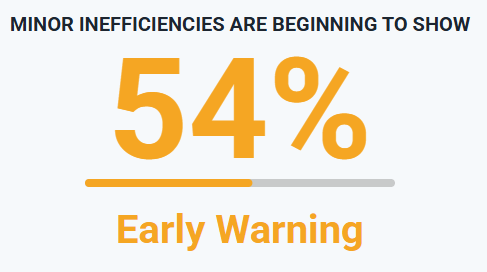
We built a free scorecard that shows how your heat pump, ventilation and solar systems are performing. Results are usually surprising.
No thanksWe built a free scorecard that shows how your heat pump, ventilation and solar systems are performing. Results are usually surprising.
No thanks
.jpeg)
Your heat pump is running. Your ventilation system is on. Your solar panels are generating. Nothing has broken. And yet the power bill is higher than it should be.
The answer is usually not the price of electricity. It is what is happening inside the systems you already own.
A heat pump in good condition produces three to five units of heat for every unit of electricity it consumes. That efficiency ratio is why heat pumps are worth installing. It is also what degrades first when a system is not maintained.
Dust accumulates on the internal coil, the component air passes across to transfer heat. The layer restricts how efficiently heat moves from the coil into the air. The compressor runs longer to close the gap. The motor works at higher load. The room eventually reaches the temperature you set, but the system consumed more electricity to get there than it should have.
Research from the US Department of Energy puts the energy consumption difference between a maintained and a neglected heat pump at 10 to 25 percent. On a household running a heat pump through an Auckland winter, that gap translates to real money across the billing period. Not visible on any single bill. Real across a year.
This is The Set and Forget Cost. The system appears to be working. The efficiency loss is invisible. The power bill carries it without explanation.
For a detailed breakdown of what builds up inside an unserviced heat pump and what it costs in power consumption, see how a dirty heat pump affects your power bill.
Your positive pressure ventilation system, DVS, SmartVent, HRV, or similar, runs continuously. Its job is to push filtered air from the roof cavity into your living areas, which controls moisture and reduces condensation.
The filter sits in the roof cavity. As it loads up with dust and insulation fibres, airflow through the system drops. The fan works harder against greater resistance. A clogged filter does not just reduce the system's effectiveness. It increases the electricity the fan motor draws to maintain the same output.
Most homeowners have never seen the filter in their roof cavity. Many have never had it replaced. A filter that has been running for two or three years without replacement is restricting airflow and increasing running costs. The system is still on. It is just working harder than it needs to.
Your solar system is generating power. Your monitoring app confirms it. What it does not show is how much it should be generating given the conditions that day.
Contamination on the glass reduces how much light reaches the cells. Lichen, bird droppings, and a film of airborne grime all reduce output. The shortfall goes to the grid rather than powering your home. You buy more electricity than you should need to.
The loss builds over months. Output at year five on an unserviced system is measurably lower than at year one. The difference does not appear as a failure. It appears as a power bill that is slightly higher than it should be, for reasons that are not obvious from the monitoring data.
This is Untapped Power. The generation capacity is there. The contamination is absorbing it before it reaches the inverter.
For more on how output loss accumulates and what it looks like on an Auckland rooftop, see how dirty solar panels affect your output.
A household with a heat pump running at 15 percent below efficiency, a ventilation system with a loaded filter, and solar panels generating 10 percent below potential is paying for all three shortfalls on every bill. None of them show up as a fault. None of them trigger a warning. They compound quietly in the background while the bill reflects each one.
The systems were installed to reduce running costs. Unmaintained, they work against that outcome.
A professional heat pump service cleans the internal coil, the internal fan, the drain system, and the outdoor unit. Airflow is restored. Heat transfer efficiency returns to near-original levels. The compressor reaches the set temperature faster and rests more often.
A ventilation service replaces the filter, cleans the fan housing, and checks the ducting. The system delivers the airflow it was designed to at the load it was designed to run at.
A solar maintenance visit cleans the glass, inspects the mounting hardware and cabling, and takes inverter readings before and after. Output recovery is documented rather than estimated.
None of these are large jobs. All of them address the specific causes of the efficiency losses described above.
For a full breakdown of what each service covers, see what a professional heat pump service includes in Auckland, what a professional solar panel service covers, and ventilation maintenance for NZ rental properties.
A heat pump can lose 10 to 25 percent of its operating efficiency through normal use without producing any visible symptoms. Dust on the internal coil restricts heat transfer. The compressor runs longer to compensate. The system heats the room, but uses more electricity to do it. The efficiency loss shows on the power bill before it shows anywhere else.
Yes. A clogged filter restricts the airflow the heat pump draws through the system. The motor works harder against greater resistance. Running costs rise in proportion to how restricted the airflow has become. Filter cleaning every four to six weeks during regular use keeps this from accumulating. It does not address the internal coil or fan, which require a professional service.
Yes. Contamination on the glass reduces how much light reaches the solar cells. Output drops. The shortfall comes from the grid rather than from your panels. The gap between what your system produces and what it should produce is real, but it is not visible in the monitoring data without comparing current output against historical performance.
The reduction depends on how degraded the system was before the service and how long it has been since the last one. A heat pump running at 20 percent below efficiency restored to full performance will draw proportionally less power for the same heating output. The US Department of Energy research puts the efficiency difference between a maintained and a neglected heat pump at 10 to 25 percent. The actual reduction for any specific household depends on usage patterns and the condition of the system before the service.
The Home Energy Health Assessment takes less than three minutes and gives you a clear picture of where your heat pump, ventilation, and solar systems stand. It is free and covers all three system types in a single assessment.
Start the Home Energy Health Assessment at assessment.miht.co.nz