A DIY filter clean addresses the filters. A professional service addresses everything behind them: the internal heat exchanger, the internal fan, the drain, and the outdoor unit. Most heat pump owners do one and assume they are covered. They are not.
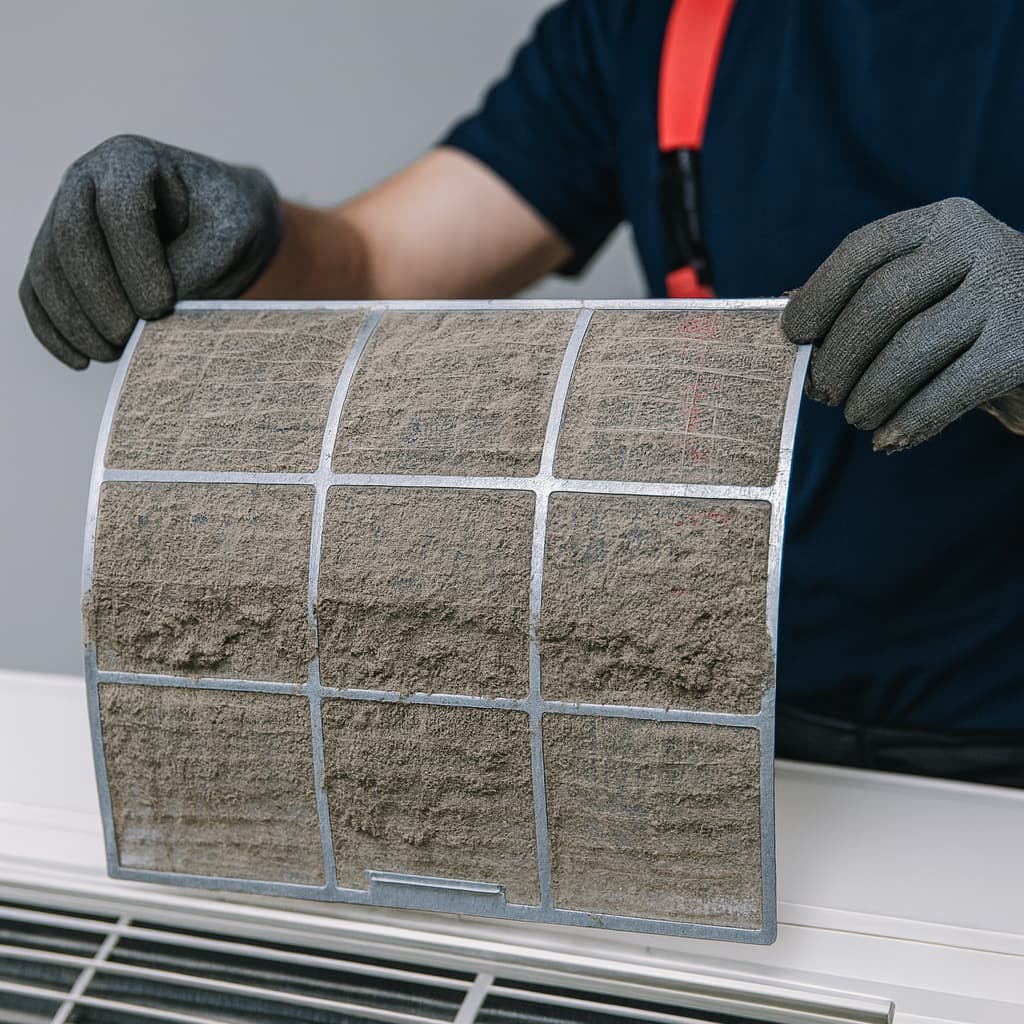
The filters in your heat pump are the first line of defence against dust and airborne particles. Cleaning them regularly matters. The standard process is straightforward: remove the filters, vacuum off the dust, wash them with water, let them dry, and refit them. For a full step-by-step guide to doing this correctly, see how to clean a heat pump filter.
Done properly, filters should be cleaned every four to six weeks during regular use. The casing around the filter housing is worth wiping down at the same time, and the filters need to be seated correctly when refitted. A loose filter allows unfiltered air to bypass it entirely.
Most homeowners do this less often than they should. Some clean filters every few months. Some not at all. But even homeowners who clean their filters consistently are only addressing one part of the system.
Filters are not a perfect barrier. Fine particles, organic growth, and moisture pass through them over time and accumulate on the components behind them. Regular filter cleaning slows this process. It does not stop it.
The internal heat exchanger sits directly behind the filters. It is the component that heats or cools the air circulated into your room. Even in a well-maintained heat pump, grime, dust, and a layer of organic growth collect on it over time. The internal fan, which draws air across the heat exchanger and pushes it into the room, collects the same material. The drain tray, which carries moisture out of the unit, builds up organic matter regardless of how often the filters are cleaned.
None of these components are accessible through a standard filter clean.
This is where the Set and Forget Cost begins. The buildup you cannot see forces the unit to work harder with every cycle. Energy use climbs gradually. The system wears faster than it should. None of it shows up until it shows up on your power bill or in a fault.
A professional heat pump service goes further than filter maintenance. At MiHT Home Energy System Care, a wall-mounted heat pump restore covers the following.
The indoor unit is protected first. A waterproof wash bag fits around the unit and drop sheets protect the floor and furniture. Filters are removed, vacuumed, washed with an specialist cleaning solution, and dried before refit.
The internal heat exchanger is treated with a specialist cleaning solution, then flushed with a low-pressure water wash. This removes built-up grime and contamination that has accumulated inside the unit. The internal fan is pressure washed to clear mould buildup and restore the airflow the unit was designed to deliver.
The drain line is flushed to clear any blockage, and a slow-release tablet is inserted to prevent future clogging. The casing, louvres, and remote control are hand-cleaned and sanitised.
The outdoor unit receives attention too. Organic debris is cleared, and the outdoor heat exchanger and fan blades are soft-washed so the unit can release heat the way it is designed to.
Finally, airflow and outlet temperature are measured before and after the service. This gives a direct, measurable indication of whether the service has restored performance.
When we flush a heat pump that has had regular filter cleans but no professional service, the water collected in the bucket at the end of the job is black. Not slightly discoloured. Black. That is the material sitting inside the unit, being drawn across the heat exchanger, and circulated into the room with every cycle.
Filter cleaning is a regular maintenance task. Every four to six weeks during active use is the right frequency. It keeps the first layer of the system functioning and slows the rate of internal buildup.
Professional servicing operates on a different cycle. For a heat pump in regular use, particularly one used for both heating and cooling, an annual professional service is appropriate. If the unit sees only light use and is not used for cooling, every two years may be sufficient.
Environment matters too. Homes with pets, older construction with more dust, or higher occupancy benefit from annual servicing regardless of usage level. In heavy use situations, twice a year is not unreasonable, though that is the exception.
The two are not interchangeable. Filter cleaning maintains what is accessible. Professional servicing addresses what is not.
No. Filters slow the accumulation of grime on internal components. They do not prevent it. The internal heat exchanger, fan, and drain tray require professional access and equipment to clean properly. If your heat pump has not been professionally serviced in the past two years and is in regular use, a restore is due. What does a professional heat pump service include in Auckland
Reduced airflow, longer heating or cooling times, unusual smells, or visible discolouration around the louvres are common signs. If it has not been professionally serviced in the past two years and is in regular use, it is due regardless of visible signs.
A dirty internal heat exchanger and clogged fan force the unit to work harder to achieve the same output. Restoring the unit to clean operating condition reduces the energy required to heat or cool your space. The degree of improvement depends on how degraded the unit was before the service. Not sure where your system currently stands? the Home Energy Health Assessment gives you a clear picture in about three minutes
A wall-mounted heat pump restore with MiHT Home Energy System Care typically takes 45 to 60 minutes on site.
A DIY filter clean costs you time and addresses one layer of the system. A professional service addresses the components that cause performance degradation, higher energy use, and reduced lifespan, none of which a filter clean reaches.
Not sure where your home energy systems stand? The Home Energy Health Assessment takes about three minutes and tells you what to focus on. Start the assessment