Before you go...
We built a free scorecard that shows how your heat pump, ventilation and solar systems are performing. Results are usually surprising.
Get my score
No thanks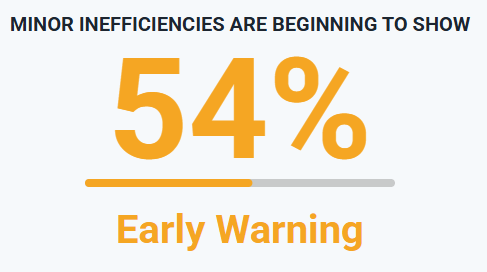
We built a free scorecard that shows how your heat pump, ventilation and solar systems are performing. Results are usually surprising.
No thanksWe built a free scorecard that shows how your heat pump, ventilation and solar systems are performing. Results are usually surprising.
No thanks
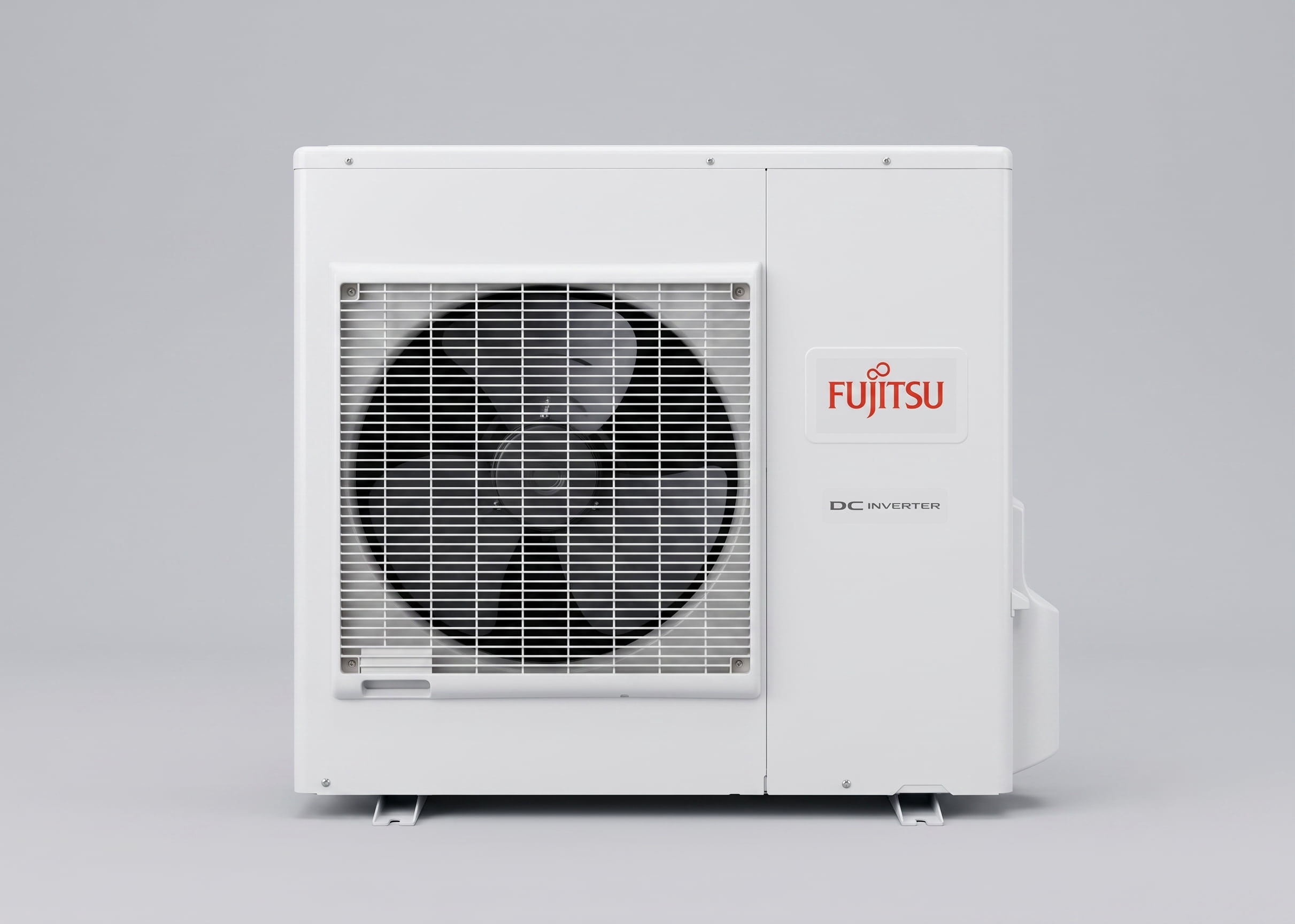
A smell coming from your indoor unit. A room that used to heat in twenty minutes now taking twice that. A power bill that's higher than it should be given how the unit is performing.
Those are worth acting on. Reduced airflow, mould on the internal fan, and drain system build-up are routine findings on Fujitsu units that have been running more than twelve months without a professional service. They produce exactly those symptoms.
Fujitsu General New Zealand changed its trading name to GENERAL in 2026. The product range is now marketed as Airstage. If you've been searching for Fujitsu service information and landing on GENERAL pages, that's why. For this article, Fujitsu and GENERAL refer to the same company.
A thorough service covers both the indoor and outdoor unit. If a provider is only cleaning the filters and calling it done, that's not a full service.
On the indoor side, the front panel comes off and the filters are removed and cleaned. Behind the filters is the internal coil, which is the heat exchanger that air passes through every time the unit runs. If it's carrying dust or contamination, the unit has to work harder to heat or cool the air. The internal fan sits behind the coil. It's a cylindrical component that moves air across the coil, and it can accumulate dust and mould over time, particularly in damp conditions. The drain tray and drain line are cleared. If the drain blocks up, water backs up inside the unit instead of clearing through the wall as it should.
On the outdoor side, the external coil is inspected and cleaned.
After the work is done, the system should be run with doors and windows closed and temperature readings taken at the air intake and discharge. That temperature difference is the delta-T. A well-serviced Fujitsu unit should show a gap of at least 8 to 10 degrees in cooling mode. If that gap was narrow before the service and wider after, that's a measurable result. If the reading still falls below the expected range after a thorough service, further investigation is the next step.
An unserviced Fujitsu heat pump can lose 10 to 25 percent of its operating efficiency over time. That's what we call The Set and Forget Cost: the gap between what your system costs to run when it's maintained and what it costs when it isn't. It doesn't show up on any single bill. It adds up across a year.
For ducted Fujitsu systems, the scope of work is different. The article on why a ducted heat pump needs a different kind of service explains what that involves.
By the way — we built a free scorecard that shows how your heat pump, ventilation and solar are performing. Results are usually surprising.
GENERAL offers a six-year parts and labour warranty when the unit was installed by a General Airstage Accredited Installer. A non-accredited installation carries a five-year warranty. If you've bought a property with a Fujitsu heat pump already in it, the installer type determines which warranty applies.
What the warranty card says about exclusions is worth understanding directly.
There is no residential maintenance schedule requirement in the warranty. No clause voids coverage because you missed an annual service. The maintenance clause (Item 4) applies to commercial installations only.
The relevant exclusion for residential owners is Item 8. It excludes defects or failure caused by blockage from foreign material, such as dust or debris. In plain terms: if a technician opens your Fujitsu unit and finds the internal components clogged with build-up, and traces a component failure back to that condition, the repair falls outside the warranty. Fujitsu's warranty covers manufacturing defects. It doesn't cover damage caused by a unit that's been left to run in a degraded state.
Regular servicing removes that build-up before it causes a failure. It's protection against the specific condition that voids coverage.
For a full breakdown of how servicing interacts with warranty conditions, see the article on whether servicing a heat pump affects your warranty.
GENERAL recommends professional servicing every twelve months. Their documentation also calls out ducted systems specifically, recommending an annual professional inspection to identify potential issues before they develop.
For homeowner-level maintenance, Fujitsu's operating manual states that standard mesh filters should be cleaned every two weeks during normal use. On models fitted with specialised air cleaning filters, those require flushing every six months and full replacement every three years.
Filter cleaning is a homeowner task. It addresses one part of the system. The internal coil, internal fan, and drain system aren't accessible without removing panels, and they accumulate build-up regardless of how consistently the filters are cleaned.
For year-round use in Auckland, twelve months is the right service interval. The interval can extend to two years for units used for heating only in winter, provided filters are being cleaned consistently through that period. The cooling cycle is what drives the shorter schedule. Running the unit in cooling mode generates condensation inside the indoor unit, which creates the conditions for mould growth on the internal fan and in the drain system. A heating-only unit doesn't accumulate that build-up at the same rate.
For a full guide to service intervals by usage type, see how often should a heat pump be serviced in Auckland.
Fujitsu wall-mounted units have three indicator lights on the indoor unit: Operation (green), Timer (orange), and Economy (green). During normal use, one or more of these stays illuminated. If all three begin blinking in a pattern, the unit has logged a fault.
The first step is a power reset. Find the isolation switch. It's a small box fixed to the wall near your outdoor unit, with a large plastic switch or lever on the front. Switch it off. Leave it off for five minutes, then switch it back on and restart the unit with your remote. This clears minor internal errors and temporary faults caused by power fluctuations. For what every symbol on your Fujitsu remote means and how each mode operates, see the Fujitsu heat pump remote guide.
If the lights continue to flash after the reset, the unit needs a professional. Many fault conditions on residential Fujitsu units are maintenance-related. Restricted airflow from a dirty coil, a blocked drain, or a contaminated outdoor unit can all push the system outside its normal operating range and trigger a fault. A thorough service frequently clears the code.
If the fault persists after a service, a technician can connect to the unit's diagnostic system and read what it's pointing at. That level of investigation sits outside the scope of a maintenance service and would be handled separately.
If your unit is under warranty and the fault persists after a reset, contact General Assist through the GENERAL NZ website.
Pricing varies by unit type, service level, and how long since the last service. The article on how much does a heat pump service cost in NZ covers current Auckland pricing and what to watch for when comparing quotes.
MiHT Home Energy Care services Fujitsu and GENERAL units across Auckland. If you want to understand what a full service should cover before you book, the article on what a professional heat pump service includes in Auckland gives you a complete picture. To see the full range of heat pump brands and system types we cover, visit our Auckland heat pump maintenance page.
Yes. Fujitsu General New Zealand changed its trading name to GENERAL in 2026. The product brand is now Airstage. The business, the support team, and the warranty terms are unchanged. If you're finding GENERAL or Airstage branding where you expected Fujitsu, your unit and your warranty are still fully supported.
GENERAL recommends a professional service every twelve months. For year-round use in Auckland, that's the appropriate interval. If your unit only runs for heating in winter and you're cleaning the filters regularly, a two-year interval is reasonable. The cooling cycle is the key variable: units that run in cooling mode accumulate mould on the internal fan and in the drain system faster than heating-only units.
GENERAL's residential warranty doesn't include a schedule-based void clause. The relevant exclusion is Item 8 of the warranty card: defects caused by blockage from dust or debris. In plain terms, if a technician traces a component failure back to internal build-up, that repair falls outside the warranty. Regular servicing removes that build-up before it reaches the point where it causes a failure.
A thorough service covers both the indoor and outdoor unit: filters removed and cleaned, internal coil inspected and cleaned, internal fan checked and cleaned, drain tray and drain line cleared, and the outdoor unit external coil inspected and cleaned. After the service, temperature readings confirm performance. A well-serviced Fujitsu unit should show a gap of at least 8 to 10 degrees between return air and discharge in cooling mode.
Fujitsu wall-mounted units have three indicator lights: Operation (green), Timer (orange), and Economy (green). If all three start blinking, the unit has logged a fault. Find the isolation switch. It's a small box on the wall near the outdoor unit with a large plastic switch on the front. Switch it off, leave it off for five minutes, then switch it back on. This clears minor errors. If the lights are still flashing after the reset, the unit needs a professional inspection. Many fault conditions on residential Fujitsu units are maintenance-related and a thorough service frequently resolves the code.
Pricing depends on unit type, condition, and scope. A wall-mounted unit and a ducted system are priced differently, and a unit that hasn't been serviced for several years typically takes longer than one on a regular schedule. The article on [how much does a heat pump service cost in NZ] covers what to expect across Auckland.
The Home Energy Health Assessment is free and takes less than three minutes. It will help you measure and improve the indoor air quality, energy efficiencyand lifespan of your home energy systems
A smell coming from your indoor unit. A room that used to heat in twenty minutes now taking twice that. A power bill that's higher than it should be given how the unit is performing.
Those are worth acting on. Reduced airflow, mould on the internal fan, and drain system build-up are routine findings on Fujitsu units that have been running more than twelve months without a professional service. They produce exactly those symptoms.
Fujitsu General New Zealand changed its trading name to GENERAL in 2026. The product range is now marketed as Airstage. If you've been searching for Fujitsu service information and landing on GENERAL pages, that's why. For this article, Fujitsu and GENERAL refer to the same company.
A thorough service covers both the indoor and outdoor unit. If a provider is only cleaning the filters and calling it done, that's not a full service.
On the indoor side, the front panel comes off and the filters are removed and cleaned. Behind the filters is the internal coil, which is the heat exchanger that air passes through every time the unit runs. If it's carrying dust or contamination, the unit has to work harder to heat or cool the air. The internal fan sits behind the coil. It's a cylindrical component that moves air across the coil, and it can accumulate dust and mould over time, particularly in damp conditions. The drain tray and drain line are cleared. If the drain blocks up, water backs up inside the unit instead of clearing through the wall as it should.
On the outdoor side, the external coil is inspected and cleaned.
After the work is done, the system should be run with doors and windows closed and temperature readings taken at the air intake and discharge. That temperature difference is the delta-T. A well-serviced Fujitsu unit should show a gap of at least 8 to 10 degrees in cooling mode. If that gap was narrow before the service and wider after, that's a measurable result. If the reading still falls below the expected range after a thorough service, further investigation is the next step.
An unserviced Fujitsu heat pump can lose 10 to 25 percent of its operating efficiency over time. That's what we call The Set and Forget Cost: the gap between what your system costs to run when it's maintained and what it costs when it isn't. It doesn't show up on any single bill. It adds up across a year.
For ducted Fujitsu systems, the scope of work is different. The article on why a ducted heat pump needs a different kind of service explains what that involves.
By the way — we built a free scorecard that shows how your heat pump, ventilation and solar are performing. Results are usually surprising.
GENERAL offers a six-year parts and labour warranty when the unit was installed by a General Airstage Accredited Installer. A non-accredited installation carries a five-year warranty. If you've bought a property with a Fujitsu heat pump already in it, the installer type determines which warranty applies.
What the warranty card says about exclusions is worth understanding directly.
There is no residential maintenance schedule requirement in the warranty. No clause voids coverage because you missed an annual service. The maintenance clause (Item 4) applies to commercial installations only.
The relevant exclusion for residential owners is Item 8. It excludes defects or failure caused by blockage from foreign material, such as dust or debris. In plain terms: if a technician opens your Fujitsu unit and finds the internal components clogged with build-up, and traces a component failure back to that condition, the repair falls outside the warranty. Fujitsu's warranty covers manufacturing defects. It doesn't cover damage caused by a unit that's been left to run in a degraded state.
Regular servicing removes that build-up before it causes a failure. It's protection against the specific condition that voids coverage.
For a full breakdown of how servicing interacts with warranty conditions, see the article on whether servicing a heat pump affects your warranty.
GENERAL recommends professional servicing every twelve months. Their documentation also calls out ducted systems specifically, recommending an annual professional inspection to identify potential issues before they develop.
For homeowner-level maintenance, Fujitsu's operating manual states that standard mesh filters should be cleaned every two weeks during normal use. On models fitted with specialised air cleaning filters, those require flushing every six months and full replacement every three years.
Filter cleaning is a homeowner task. It addresses one part of the system. The internal coil, internal fan, and drain system aren't accessible without removing panels, and they accumulate build-up regardless of how consistently the filters are cleaned.
For year-round use in Auckland, twelve months is the right service interval. The interval can extend to two years for units used for heating only in winter, provided filters are being cleaned consistently through that period. The cooling cycle is what drives the shorter schedule. Running the unit in cooling mode generates condensation inside the indoor unit, which creates the conditions for mould growth on the internal fan and in the drain system. A heating-only unit doesn't accumulate that build-up at the same rate.
For a full guide to service intervals by usage type, see how often should a heat pump be serviced in Auckland.
Fujitsu wall-mounted units have three indicator lights on the indoor unit: Operation (green), Timer (orange), and Economy (green). During normal use, one or more of these stays illuminated. If all three begin blinking in a pattern, the unit has logged a fault.
The first step is a power reset. Find the isolation switch. It's a small box fixed to the wall near your outdoor unit, with a large plastic switch or lever on the front. Switch it off. Leave it off for five minutes, then switch it back on and restart the unit with your remote. This clears minor internal errors and temporary faults caused by power fluctuations. For what every symbol on your Fujitsu remote means and how each mode operates, see the Fujitsu heat pump remote guide.
If the lights continue to flash after the reset, the unit needs a professional. Many fault conditions on residential Fujitsu units are maintenance-related. Restricted airflow from a dirty coil, a blocked drain, or a contaminated outdoor unit can all push the system outside its normal operating range and trigger a fault. A thorough service frequently clears the code.
If the fault persists after a service, a technician can connect to the unit's diagnostic system and read what it's pointing at. That level of investigation sits outside the scope of a maintenance service and would be handled separately.
If your unit is under warranty and the fault persists after a reset, contact General Assist through the GENERAL NZ website.
Pricing varies by unit type, service level, and how long since the last service. The article on how much does a heat pump service cost in NZ covers current Auckland pricing and what to watch for when comparing quotes.
MiHT Home Energy Care services Fujitsu and GENERAL units across Auckland. If you want to understand what a full service should cover before you book, the article on what a professional heat pump service includes in Auckland gives you a complete picture. To see the full range of heat pump brands and system types we cover, visit our Auckland heat pump maintenance page.
Yes. Fujitsu General New Zealand changed its trading name to GENERAL in 2026. The product brand is now Airstage. The business, the support team, and the warranty terms are unchanged. If you're finding GENERAL or Airstage branding where you expected Fujitsu, your unit and your warranty are still fully supported.
GENERAL recommends a professional service every twelve months. For year-round use in Auckland, that's the appropriate interval. If your unit only runs for heating in winter and you're cleaning the filters regularly, a two-year interval is reasonable. The cooling cycle is the key variable: units that run in cooling mode accumulate mould on the internal fan and in the drain system faster than heating-only units.
GENERAL's residential warranty doesn't include a schedule-based void clause. The relevant exclusion is Item 8 of the warranty card: defects caused by blockage from dust or debris. In plain terms, if a technician traces a component failure back to internal build-up, that repair falls outside the warranty. Regular servicing removes that build-up before it reaches the point where it causes a failure.
A thorough service covers both the indoor and outdoor unit: filters removed and cleaned, internal coil inspected and cleaned, internal fan checked and cleaned, drain tray and drain line cleared, and the outdoor unit external coil inspected and cleaned. After the service, temperature readings confirm performance. A well-serviced Fujitsu unit should show a gap of at least 8 to 10 degrees between return air and discharge in cooling mode.
Fujitsu wall-mounted units have three indicator lights: Operation (green), Timer (orange), and Economy (green). If all three start blinking, the unit has logged a fault. Find the isolation switch. It's a small box on the wall near the outdoor unit with a large plastic switch on the front. Switch it off, leave it off for five minutes, then switch it back on. This clears minor errors. If the lights are still flashing after the reset, the unit needs a professional inspection. Many fault conditions on residential Fujitsu units are maintenance-related and a thorough service frequently resolves the code.
Pricing depends on unit type, condition, and scope. A wall-mounted unit and a ducted system are priced differently, and a unit that hasn't been serviced for several years typically takes longer than one on a regular schedule. The article on [how much does a heat pump service cost in NZ] covers what to expect across Auckland.
The Home Energy Health Assessment is free and takes less than three minutes. It will help you measure and improve the indoor air quality, energy efficiencyand lifespan of your home energy systems