Before you go...
We built a free scorecard that shows how your heat pump, ventilation and solar systems are performing. Results are usually surprising.
Get my score
No thanks
We built a free scorecard that shows how your heat pump, ventilation and solar systems are performing. Results are usually surprising.
No thanksWe built a free scorecard that shows how your heat pump, ventilation and solar systems are performing. Results are usually surprising.
No thanks
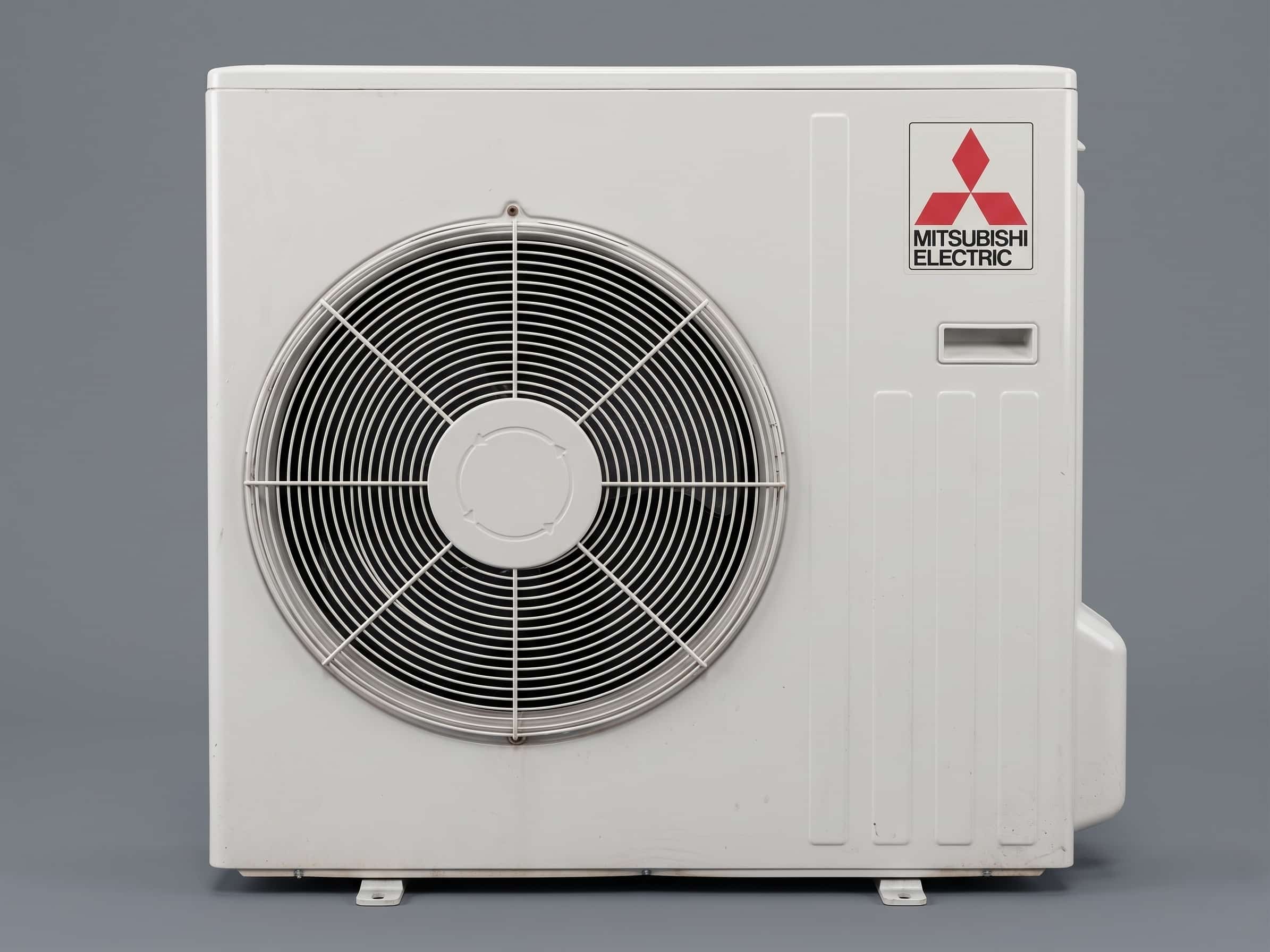
In New Zealand, two separate companies sell heat pumps under the Mitsubishi name. They're completely independent businesses. Both offer residential heat pumps. They share the same three-diamond logo but have entirely different warranty documentation, user manuals, and service recommendations. Which one you have affects what your warranty actually covers and what maintenance is required to protect it.
Checking your label takes ten seconds. The indoor unit casing has a label that reads either "Mitsubishi Electric" or "Mitsubishi Heavy Industries." If you can't find it on the unit, your installer paperwork or warranty registration card will confirm the brand.
A smell that started coming from the indoor unit. A room that takes noticeably longer to reach temperature. A power bill that's climbed without any obvious cause.
Those are worth acting on. Reduced airflow, organic growth on the fan blades, and drain system build-up are all common findings on units that have been running for more than 12 months without a professional service. They produce exactly those symptoms. None of them are visible from the outside, and none of them are resolved by running the self-clean mode.
Waiting until a fault becomes obvious tends to mean the problem is bigger than it needed to be.
Mitsubishi Electric and Mitsubishi Heavy Industries both trace their roots to the same pre-war Japanese industrial group. In 1921, the electrical manufacturing division was split off from what would later become Mitsubishi Heavy Industries. The two companies have operated as separate, competing businesses ever since. Today they go head to head in the residential heat pump market across New Zealand.
Mitsubishi Electric is one of the most widely installed heat pump brands in NZ and operates through a local subsidiary. Mitsubishi Heavy Industries distributes its residential units through third-party suppliers under the MHI brand, including models in the Avanti and Bronte ranges. Both brands use the three-diamond logo, which is the source of most of the confusion.
A qualified technician services a Mitsubishi Electric unit and a Mitsubishi Heavy Industries unit the same way: same steps, same cleaning products, same components. Indoor filters, indoor coil, fan blades, drain pan, drain line, outdoor unit.
Some models are more straightforward to access due to how they're constructed. That affects how long a service takes. It doesn't change what gets covered.
The cost of a professional service varies depending on unit type, how long it has been since the last service, and access. For a full breakdown of current pricing in Auckland, see our guide to how much does a heat pump service cost in NZ.
A wall-mounted unit takes between one hour and one and a half hours on site, depending on condition and access. Ducted systems take longer because of the additional components involved.
You need to be present. A technician requires access to both the indoor unit and the outdoor unit, and will need a clear path to work in front of the indoor unit while the covers are removed.
By the way — we built a free scorecard that shows how your heat pump, ventilation and solar are performing. Results are usually surprising.
Mitsubishi Electric NZ's guidance covers two owner-level tasks: cleaning the indoor filters at every seasonal change, and clearing debris from the outdoor unit every six months. Their documentation points to a professional service for anything deeper, specifically the indoor coil.
Mitsubishi Heavy Industries takes the same position. Owner-level maintenance covers filters and basic external cleaning. The internal components that determine how efficiently your unit runs, including the coil and the drain system, require a qualified technician with the right equipment.
Warranty terms vary by model and purchase date, so check your own documentation for the specifics. Both brands include regular professional maintenance in their owner responsibility sections. Keep a record of every service. That's the clearest protection you have if a claim is ever disputed.
For a full breakdown of how servicing interacts with warranty conditions, see our article on whether servicing a heat pump affects your warranty.
Many Mitsubishi Heavy Industries units include a Self Clean mode on the remote control. Owners with this feature sometimes assume their unit is managing its own upkeep. The function is narrower than that.
The Self Clean mode runs the indoor fan at low speed after a cooling or drying cycle, with the compressor and outdoor unit completely off. The cycle typically runs for 15 to 30 minutes, and you'll hear the fan operating quietly after the unit would normally shut down. Its purpose is to dry residual moisture from the fan blades and internal surfaces. A drying cycle reduces the conditions where mould can form on the fan. That's a useful function, and worth using regularly.
The outdoor unit, the indoor coil, the drain pan, and the drain line are all outside the scope of what that fan cycle touches. Those components accumulate build-up regardless of whether the self-clean mode is used. They require physical access by a technician.
Some Mitsubishi Electric models address coil contamination differently. The Dual Barrier Coating is designed to slow dust accumulation on the indoor coil surface. It works, to a degree, but it doesn't stop accumulation entirely, and it doesn't address the drain system or the outdoor unit.
Neither feature is a substitute for a full professional service. Neither brand claims otherwise in its documentation.
An unserviced heat pump tends to keep running until it doesn't. The more common outcome before failure is a gradual rise in running costs, invisible across any single bill but real across a year.
This is what we call The Set and Forget Cost: the gap between what a well-maintained unit costs to run and what a neglected one does. Research from the US Department of Energy puts the energy consumption difference between a maintained and a neglected heat pump at 10 to 25 percent. That gap doesn't show up clearly on any single power bill. It accumulates quietly.
The self-clean mode doesn't close that gap. Neither does a dust-resistant coating. Both features address surface conditions on one part of the indoor unit. The coil, drain pan, and outdoor unit degrade on their own timeline, regardless of what the remote control can do.
For a full breakdown of what deferred maintenance costs on your power bill, see how a dirty heat pump affects your power bill.
For most Auckland homes, an annual professional service is the appropriate minimum. Units near active kitchens, homes with pets, or high-use households benefit from a service every six to eight months. Coastal properties face additional salt-spray exposure on the outdoor unit. That tends to bring the service schedule forward.
For a full guide to service frequency by household type and usage pattern, see how often should a heat pump be serviced in Auckland.
For landlords and property managers, the Healthy Homes Standards require that heating systems are in working order and capable of heating the main living room to 18 degrees. A documented service record is the clearest evidence you've met that obligation.
By the way — we built a free scorecard that shows how your heat pump, ventilation and solar are performing. Results are usually surprising.
No. Both companies trace their origins to the same pre-war Mitsubishi industrial group in Japan, but they separated in 1921 and have operated as independent businesses ever since. They're direct competitors in the residential heat pump market in New Zealand. Your indoor unit label will show one name or the other. For Mitsubishi Electric-specific manufacturer recommendations on service frequency, see how often should a heat pump be serviced in Auckland.
No. The self-clean mode runs the indoor fan at low speed for 15 to 30 minutes after a cooling or drying cycle. Its purpose is to dry residual moisture from internal surfaces and reduce the conditions where mould can form on the fan blades. The coil, drain pan, drain line, and outdoor unit are outside the scope of what it does. A professional service covers all of those components. For what that service includes, see what a professional heat pump service includes in Auckland.
Check the label on the side or back of your indoor unit. It will show either "Mitsubishi Electric" or "Mitsubishi Heavy Industries," sometimes abbreviated to MHI. Your installer paperwork or warranty registration will also confirm the brand. If you're booking a service and you're unsure, your technician can confirm it on arrival.
Yes, it can. Both Mitsubishi Electric and Mitsubishi Heavy Industries include an owner responsibility section in their warranty terms, and both reference regular professional maintenance as part of that obligation. When a warranty claim is assessed, the authorised repair agent looks at the condition of the unit, including the filters, the internal coil, and the drain pan. A unit that hasn't been professionally maintained tells a clear story.
In Auckland, a professional heat pump service typically costs between $100 and $300 depending on the service scope and the condition of the unit. A basic service covering filters and coil cleaning sits toward the lower end. A more thorough service that includes the drain pan, drain line, internal fan and outdoor unit sits toward the upper end. Units that have not been serviced for two or more years often require the deeper scope, which affects the price. For a full breakdown of what different service tiers include and what drives the price variation, see our guide to heat pump service costs in NZ.
In New Zealand, two separate companies sell heat pumps under the Mitsubishi name. They're completely independent businesses. Both offer residential heat pumps. They share the same three-diamond logo but have entirely different warranty documentation, user manuals, and service recommendations. Which one you have affects what your warranty actually covers and what maintenance is required to protect it.
Checking your label takes ten seconds. The indoor unit casing has a label that reads either "Mitsubishi Electric" or "Mitsubishi Heavy Industries." If you can't find it on the unit, your installer paperwork or warranty registration card will confirm the brand.
A smell that started coming from the indoor unit. A room that takes noticeably longer to reach temperature. A power bill that's climbed without any obvious cause.
Those are worth acting on. Reduced airflow, organic growth on the fan blades, and drain system build-up are all common findings on units that have been running for more than 12 months without a professional service. They produce exactly those symptoms. None of them are visible from the outside, and none of them are resolved by running the self-clean mode.
Waiting until a fault becomes obvious tends to mean the problem is bigger than it needed to be.
Mitsubishi Electric and Mitsubishi Heavy Industries both trace their roots to the same pre-war Japanese industrial group. In 1921, the electrical manufacturing division was split off from what would later become Mitsubishi Heavy Industries. The two companies have operated as separate, competing businesses ever since. Today they go head to head in the residential heat pump market across New Zealand.
Mitsubishi Electric is one of the most widely installed heat pump brands in NZ and operates through a local subsidiary. Mitsubishi Heavy Industries distributes its residential units through third-party suppliers under the MHI brand, including models in the Avanti and Bronte ranges. Both brands use the three-diamond logo, which is the source of most of the confusion.
A qualified technician services a Mitsubishi Electric unit and a Mitsubishi Heavy Industries unit the same way: same steps, same cleaning products, same components. Indoor filters, indoor coil, fan blades, drain pan, drain line, outdoor unit.
Some models are more straightforward to access due to how they're constructed. That affects how long a service takes. It doesn't change what gets covered.
The cost of a professional service varies depending on unit type, how long it has been since the last service, and access. For a full breakdown of current pricing in Auckland, see our guide to how much does a heat pump service cost in NZ.
A wall-mounted unit takes between one hour and one and a half hours on site, depending on condition and access. Ducted systems take longer because of the additional components involved.
You need to be present. A technician requires access to both the indoor unit and the outdoor unit, and will need a clear path to work in front of the indoor unit while the covers are removed.
By the way — we built a free scorecard that shows how your heat pump, ventilation and solar are performing. Results are usually surprising.
Mitsubishi Electric NZ's guidance covers two owner-level tasks: cleaning the indoor filters at every seasonal change, and clearing debris from the outdoor unit every six months. Their documentation points to a professional service for anything deeper, specifically the indoor coil.
Mitsubishi Heavy Industries takes the same position. Owner-level maintenance covers filters and basic external cleaning. The internal components that determine how efficiently your unit runs, including the coil and the drain system, require a qualified technician with the right equipment.
Warranty terms vary by model and purchase date, so check your own documentation for the specifics. Both brands include regular professional maintenance in their owner responsibility sections. Keep a record of every service. That's the clearest protection you have if a claim is ever disputed.
For a full breakdown of how servicing interacts with warranty conditions, see our article on whether servicing a heat pump affects your warranty.
Many Mitsubishi Heavy Industries units include a Self Clean mode on the remote control. Owners with this feature sometimes assume their unit is managing its own upkeep. The function is narrower than that.
The Self Clean mode runs the indoor fan at low speed after a cooling or drying cycle, with the compressor and outdoor unit completely off. The cycle typically runs for 15 to 30 minutes, and you'll hear the fan operating quietly after the unit would normally shut down. Its purpose is to dry residual moisture from the fan blades and internal surfaces. A drying cycle reduces the conditions where mould can form on the fan. That's a useful function, and worth using regularly.
The outdoor unit, the indoor coil, the drain pan, and the drain line are all outside the scope of what that fan cycle touches. Those components accumulate build-up regardless of whether the self-clean mode is used. They require physical access by a technician.
Some Mitsubishi Electric models address coil contamination differently. The Dual Barrier Coating is designed to slow dust accumulation on the indoor coil surface. It works, to a degree, but it doesn't stop accumulation entirely, and it doesn't address the drain system or the outdoor unit.
Neither feature is a substitute for a full professional service. Neither brand claims otherwise in its documentation.
An unserviced heat pump tends to keep running until it doesn't. The more common outcome before failure is a gradual rise in running costs, invisible across any single bill but real across a year.
This is what we call The Set and Forget Cost: the gap between what a well-maintained unit costs to run and what a neglected one does. Research from the US Department of Energy puts the energy consumption difference between a maintained and a neglected heat pump at 10 to 25 percent. That gap doesn't show up clearly on any single power bill. It accumulates quietly.
The self-clean mode doesn't close that gap. Neither does a dust-resistant coating. Both features address surface conditions on one part of the indoor unit. The coil, drain pan, and outdoor unit degrade on their own timeline, regardless of what the remote control can do.
For a full breakdown of what deferred maintenance costs on your power bill, see how a dirty heat pump affects your power bill.
For most Auckland homes, an annual professional service is the appropriate minimum. Units near active kitchens, homes with pets, or high-use households benefit from a service every six to eight months. Coastal properties face additional salt-spray exposure on the outdoor unit. That tends to bring the service schedule forward.
For a full guide to service frequency by household type and usage pattern, see how often should a heat pump be serviced in Auckland.
For landlords and property managers, the Healthy Homes Standards require that heating systems are in working order and capable of heating the main living room to 18 degrees. A documented service record is the clearest evidence you've met that obligation.
By the way — we built a free scorecard that shows how your heat pump, ventilation and solar are performing. Results are usually surprising.
No. Both companies trace their origins to the same pre-war Mitsubishi industrial group in Japan, but they separated in 1921 and have operated as independent businesses ever since. They're direct competitors in the residential heat pump market in New Zealand. Your indoor unit label will show one name or the other. For Mitsubishi Electric-specific manufacturer recommendations on service frequency, see how often should a heat pump be serviced in Auckland.
No. The self-clean mode runs the indoor fan at low speed for 15 to 30 minutes after a cooling or drying cycle. Its purpose is to dry residual moisture from internal surfaces and reduce the conditions where mould can form on the fan blades. The coil, drain pan, drain line, and outdoor unit are outside the scope of what it does. A professional service covers all of those components. For what that service includes, see what a professional heat pump service includes in Auckland.
Check the label on the side or back of your indoor unit. It will show either "Mitsubishi Electric" or "Mitsubishi Heavy Industries," sometimes abbreviated to MHI. Your installer paperwork or warranty registration will also confirm the brand. If you're booking a service and you're unsure, your technician can confirm it on arrival.
Yes, it can. Both Mitsubishi Electric and Mitsubishi Heavy Industries include an owner responsibility section in their warranty terms, and both reference regular professional maintenance as part of that obligation. When a warranty claim is assessed, the authorised repair agent looks at the condition of the unit, including the filters, the internal coil, and the drain pan. A unit that hasn't been professionally maintained tells a clear story.
In Auckland, a professional heat pump service typically costs between $100 and $300 depending on the service scope and the condition of the unit. A basic service covering filters and coil cleaning sits toward the lower end. A more thorough service that includes the drain pan, drain line, internal fan and outdoor unit sits toward the upper end. Units that have not been serviced for two or more years often require the deeper scope, which affects the price. For a full breakdown of what different service tiers include and what drives the price variation, see our guide to heat pump service costs in NZ.