
Get your Lossnay system back to delivering the fresh, tempered air it was commissioned to provide.
Mitsubishi Electric Lossnay systems serviced across Auckland, covering the current VL-220, LGH-25 and VL-250 to VL-500 range, and older SKU-50RJ units still installed in many homes. Your service covers the core filters, the heat exchange core, ducting, the condensation drain where fitted, and diffusers. Maintenance only. MiHT doesn't sell or install new systems.
Book a Lossnay Ventilation Service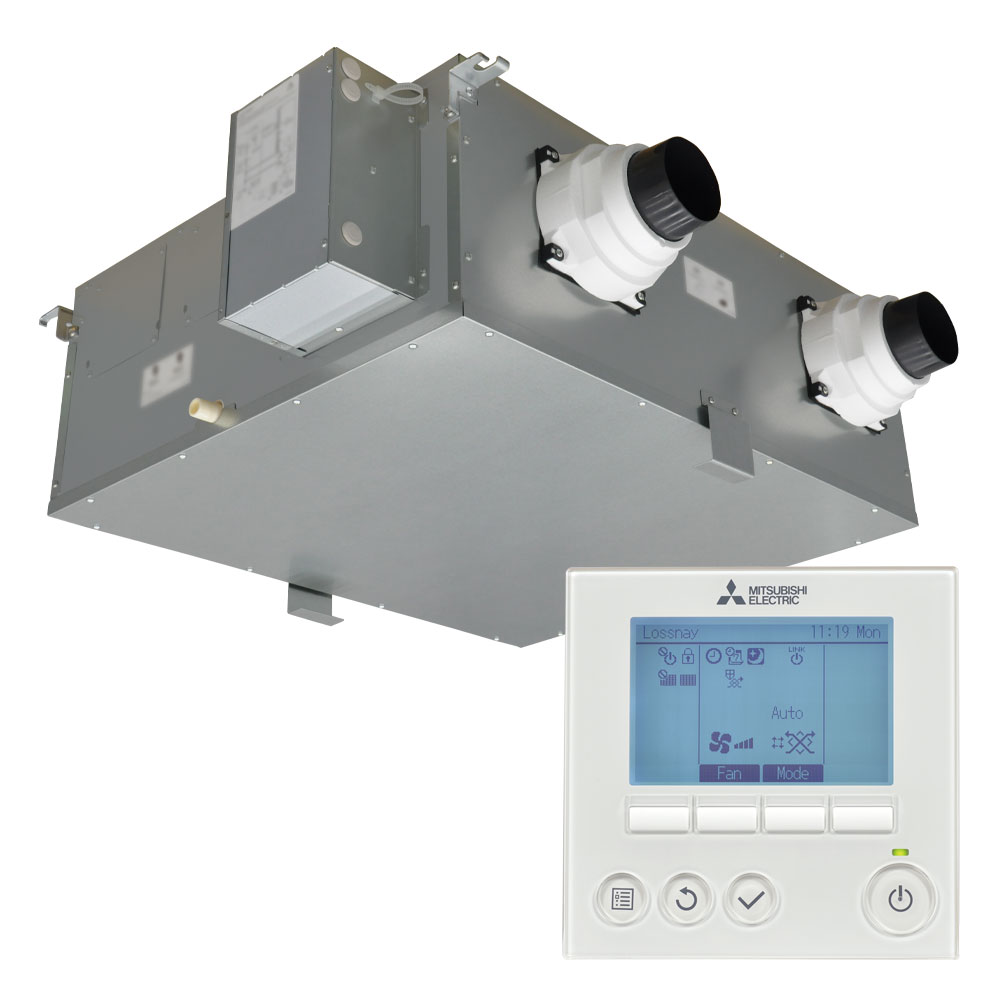
Your Lossnay system gets professional maintenance from a company that doesn't sell units, lock you into filter contracts or push upgrades.
Is this the right service for your Lossnay system?
Your system hasn't been serviced in the last 12 months. Mitsubishi Electric recommends filters checked at least every six months and the heat exchange core inspected regularly, with exact intervals varying by model. If your remote controller is showing a filter reminder, service is due now.
Your rooms feel stuffy or the air doesn't feel as fresh as it used to. Your Lossnay brings in outside air and extracts stale air at matched rates through a shared heat exchange core. When the core or filters load up, both sides of the exchange lose performance at once.
Condensation on your windows has increased. A Lossnay system removes moisture-laden air from your home. If condensation is returning, the system may not be exhausting air at the rate it was designed to. A service checks whether airflow has held up.
You want to protect a system that cost significantly more to install. Lossnay systems are a meaningful investment. The core, fans and duct network degrade faster under restricted airflow. Regular servicing protects that investment and the energy recovery you paid for.
What your Lossnay Ventilation Service includes.
Your Lossnay system has more components than a positive pressure system, and exactly what needs attention depends on which model you have.
The filters
Lossnay units use between two and four filters depending on the model and generation. Older units typically use more filters at a lower grade. Current-generation units use fewer filters at a higher grade. All are replaced with the correct specification for your unit.
The heat exchange core
Your core is where incoming and outgoing air pass simultaneously without mixing. Dust and organic material build up on the surface over time. On VL-250, VL-350 and VL-500 models the core is fully washable and rinsed with clean water. On VL-220 and LGH-series units the core must never be washed and is instead vacuumed with a soft brush attachment. The correct method for your model is used every time.
The condensation drain
VL-220 and VL-250 to VL-500 models have a drain pan or siphon that's checked and cleared at every service. LGH-series units are a dry chassis with no drain pan or condensate line, so this step doesn't apply. Which type your unit has is confirmed on-site.
The filter reminder
Once your filters are replaced, the reminder on your remote controller is reset so it counts down accurately to the next service.
The ducting
The full duct run is inspected for damage, disconnections, restrictions and insulation condition. Where duct insulation has degraded, recovered heat is lost into the roof space before it reaches your rooms.
The diffusers and grilles
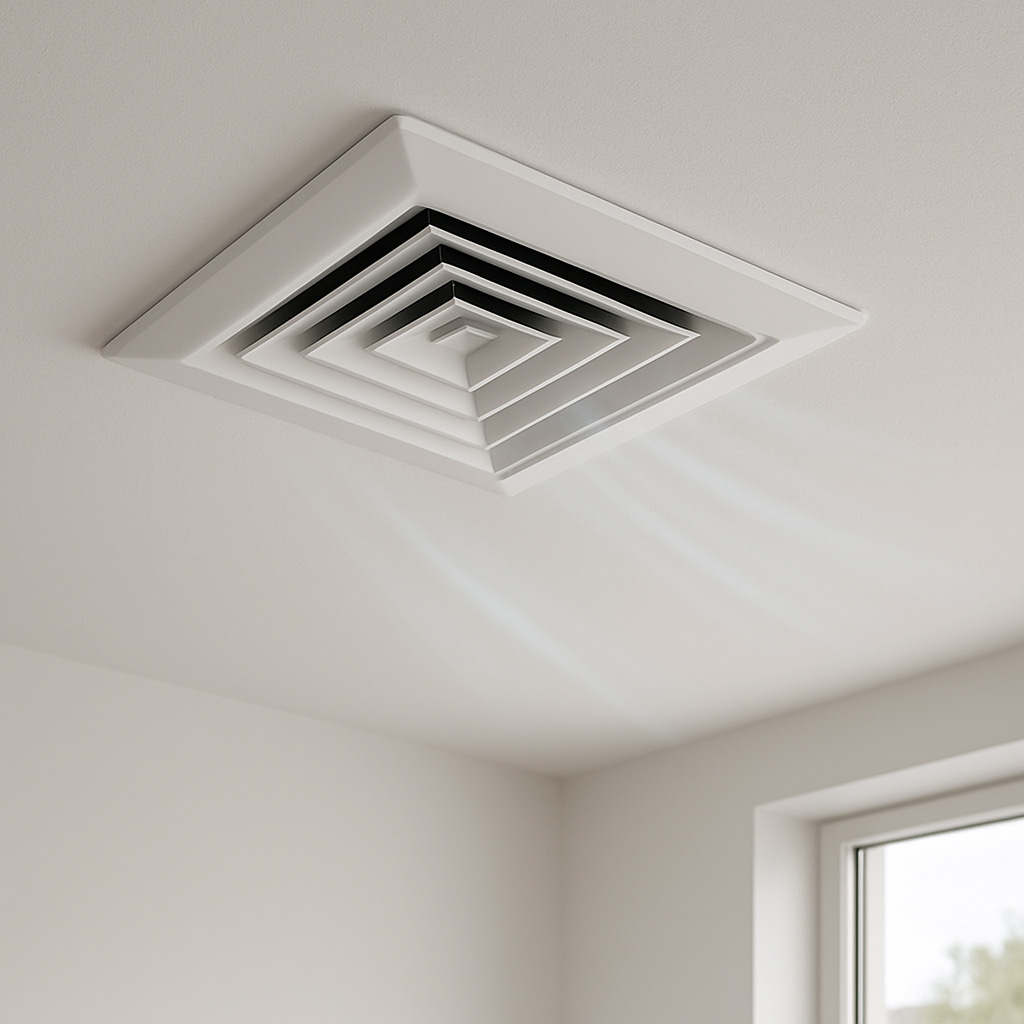
Supply and extract diffusers inside the home are cleaned, along with the external intake and exhaust points, checked for leaf debris and insect build-up.
Airflow verification
Once everything is cleaned and reinstalled, supply and extract airflow is checked against what your system should be delivering.
Book your Lossnay Ventilation Service
What You Receive After Every Service.
You receive a written condition report after every service. It's a documented record of the system's state before the service, the work performed and the measured result. It's the evidence that the service was done and done properly.
Before-and-after photographs of all serviced components
Written notes on every finding, what was done and what needs a follow-up visit
A condition record useful for warranty purposes, insurance or property records


How Would You Like Us to Look After Your System?
Your Lossnay system runs continuously. It's exchanging air and recovering heat around the clock, which means filters, the heat exchange core and ducting accumulate contaminants whether you notice it or not. If you're not sure what condition your system is in, start with a one-off service. If you want it looked after year after year without having to think about it, a care plan is the better option.
Annual Care Plan: Scheduled once per year. Your system runs around the clock and loads constantly. Annual servicing is the standard recommendation, particularly for homes with higher occupancy, pets or coastal exposure.
Biennial Care Plan: Professional service every two years. Suited to holiday homes or low-occupancy properties where the system runs but filter loading is slower. Same process and condition report as the Annual Care Plan.
One-Off Restore: The right starting point if your system has never been serviced or you want to know exactly what condition it's in. No ongoing commitment required.
Not sure if this is your system?
Common questions about Lossnay ventilation servicing in Auckland.
How often should a Lossnay system be serviced?
At least once a year. Mitsubishi Electric recommends filters checked every six months, with the exact cleaning and replacement schedule depending on your model and filter grade.
Does cleaning the core affect the system balance?
No, provided the core is reinstalled correctly and any dampers are left at their original settings. Your system was commissioned at installation with airflow carefully calibrated across the house. A professional service preserves that commissioned state.
How do I know which Lossnay model I have?
A single compact ceiling unit usually indicates a VL-220. A tall, freestanding cabinet indicates a VL-250, VL-350 or VL-500. A rectangular unit fully recessed into the ceiling indicates an LGH-25 or an older SKU-50RJ unit. The nameplate on your unit confirms the exact model, and we're happy to check a photo of it before you book.
What's the difference between an older and current-generation Lossnay?
Mitsubishi Electric has changed the internal design of several Lossnay ranges over time, including a shift to fewer, higher-grade filters on current-generation units. Both older and current-generation units are serviced, and the correct filters for your specific unit are confirmed before work begins.
Why does pricing vary between Lossnay models?
Filter cost and configuration vary significantly across the Lossnay range. Some models use two filters, others use four, and filter grade also differs by model and generation. Pricing reflects the real cost of the correct filters for your specific unit.
Can I service my Lossnay system myself?
You can wipe down ceiling diffusers and check for obvious blockages. The heat exchange core, the filters in the roof space or cabinet, and the ducting inspection need a technician, since the core is a delicate component and incorrect cleaning can damage it.
What does a filter reminder on my controller mean?
It's a scheduled filter reminder, not a malfunction. Once the filters are replaced and the counter reset, it runs again until the next change is due.
How long does a Lossnay ventilation service take?
Typically one to two and a half hours depending on your model and the number of filters and points to check. We'll confirm the expected duration at booking.
Will I need to be home during the service?
Yes. Your unit, exterior grilles and each room need to be accessed to verify airflow at supply and return points. Someone needs to be home for the duration of the visit.
Does my system have a condensation drain?
It depends on your unit's exchanger type. This is confirmed at the start of every service.