Before you go...
We built a free scorecard that shows how your heat pump, ventilation and solar systems are performing. Results are usually surprising.
Get my score
No thanks
We built a free scorecard that shows how your heat pump, ventilation and solar systems are performing. Results are usually surprising.
No thanksWe built a free scorecard that shows how your heat pump, ventilation and solar systems are performing. Results are usually surprising.
No thanks
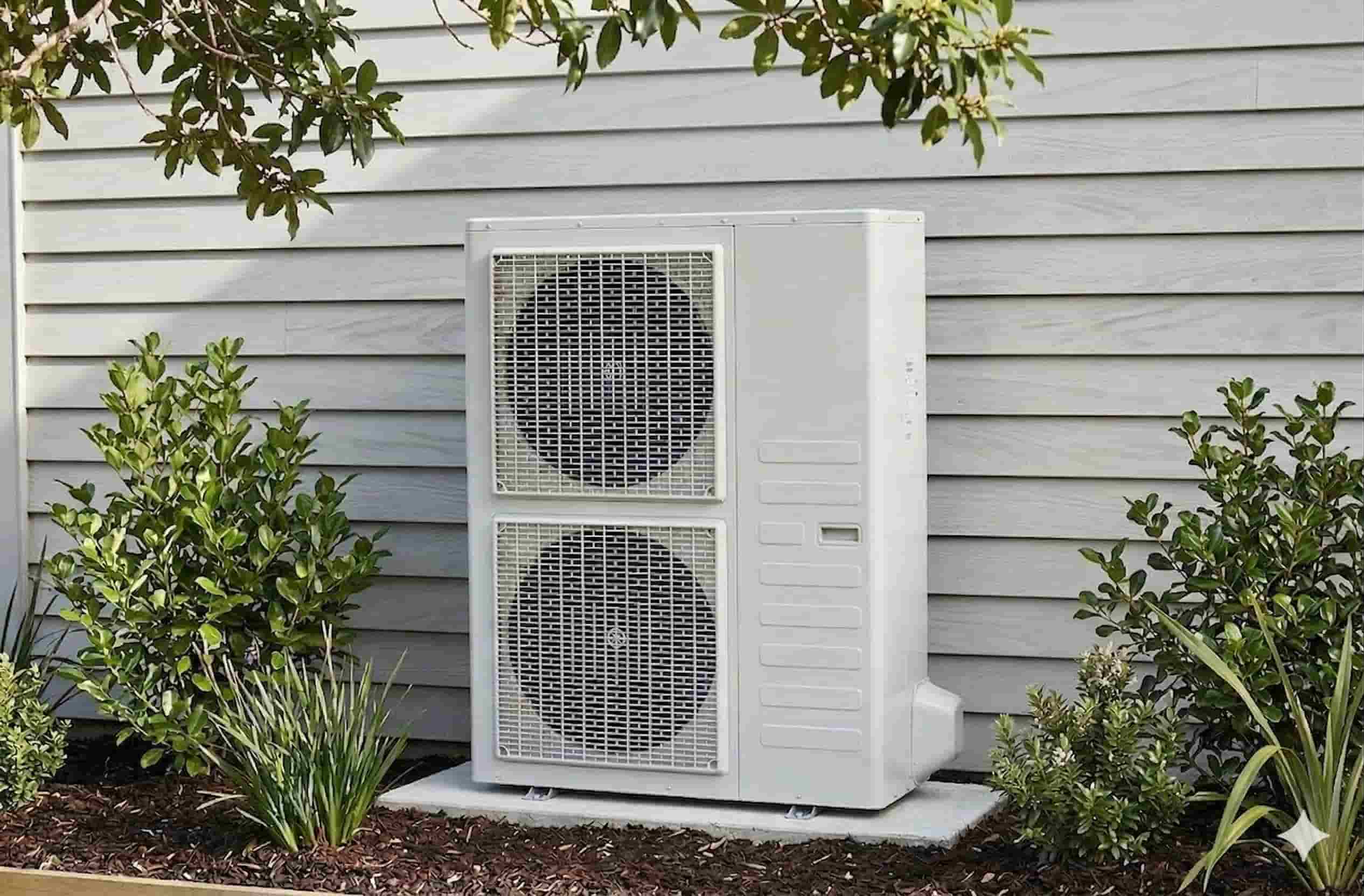
A well-maintained heat pump should last at least 15 years.
Fifteen years assumes regular professional servicing. Without it, the picture changes. Units that have never had a professional heat pump service fail in the 5 to 10 year bracket, well short of what they were built to deliver.
That gap of up to a decade comes down to one thing more than any other: whether the compressor was protected or run into the ground.
Your heat pump's lifespan depends more on the compressor than any other part. It sits inside the outdoor unit and drives the refrigerant circuit that makes heating and cooling possible.
It's also the most expensive component in the system. Replacing a compressor costs roughly half to three-quarters of the price of a new unit. That's before factoring in the complexity of the job. Compressor replacement is difficult work that few companies are willing or able to take on.
When the compressor runs hotter than it was designed to, internal components wear faster than they should. There are several ways a heat pump reaches that point, and most of them are preventable.
If the compressor does fail, the decision that follows is worth understanding before it happens.
Your heat pump's condition after years without servicing follows a consistent pattern. Build-up on the internal coil and internal fan. A layer of organic growth in the drain pan. Internal components caked with dust, grease, hair and pollen.
Your outdoor unit tells the same story. Many outdoor units in New Zealand are installed on the south side of a house to stay out of view. South-facing means no direct sun. Over time, growth accumulates on the casing and across the fins the unit relies on to exchange heat with the outside air.
None of this is unusual. It's what happens to any system that's been used without maintenance, and it all pushes the compressor to run harder than it was designed to.
By the way — we built a free scorecard that shows how your heat pump, ventilation and solar are performing. Results are usually surprising.
Your heat pump may have been working against a shortened lifespan before the first service was ever due.
Two installation issues come up regularly. The first is sizing. A unit that's too small for the space it serves runs almost continuously, trying to reach a temperature it can't achieve. A unit that's too large heats or cools too quickly, switches off, then cycles on again in short bursts. Both patterns place repeated, abnormal load on the compressor.
The second is refrigerant charge. The refrigerant is the substance that carries heat around the system. Too little or too much of it affects how well heat transfers and forces the compressor to operate outside its designed conditions.
Refrigerant leaks are a related problem, and a harder one to catch. Leaks are often gradual. A small hole in the pipework may not cause obvious symptoms for up to a year. Many NZ installers don't pressure test pipework after installation, so small leaks go completely undetected. By the time a system stops heating or cooling properly, the compressor has often been running under stress for an extended period.
These causes sit outside what regular maintenance can fix. A refrigerant issue or a sizing problem requires a qualified refrigeration technician. Regular servicing helps in a different way: it picks up the signs of abnormal operation early, before the damage compounds.
Your heat pump ages faster when it runs for both heating in winter and cooling in summer. Two things drive that.
First, more hours of operation means more wear on every component.
Second, running the unit in cooling mode introduces moisture to the internal components. That moisture accelerates mould and organic growth inside the unit. The build-up forms faster, and the conditions that strain the compressor arrive sooner.
If your heat pump runs year-round, the case for regular servicing is stronger.
Think of your heat pump as a system that needs to breathe. Air flows in, heat gets moved, air flows out. When any part of that process gets blocked, the whole system works harder to achieve the same result.
The filter on your indoor unit is the most common blockage point. It sits at the front of the unit and catches dust, pet hair and airborne particles every time the system runs. When it isn't cleaned regularly, it restricts the air flowing across the internal coil behind it. The internal coil itself can also build up a layer of organic growth over time, which reduces its ability to move heat regardless of how much air is passing through it. Build-up on the outdoor unit's fins creates the same problem from the other direction. Each of these pushes the compressor to compensate.
There's a pattern we see on jobs that makes this worse. When a system can't reach the temperature set on the controller, many homeowners push the setting higher. The unit is already struggling. Running it harder adds more load on top of the strain that's already there.
Every hour it operates that way, the internal components wear faster than they should.
If your heat pump's compressor fails, you'll be weighing up whether to repair or replace the unit. The economics of that decision are fairly consistent.
Replacing a compressor costs roughly three-quarters of the price of a new unit. The job is complex and few companies in NZ are willing or able to take it on, which affects both availability and cost. Because compressor failure is often a symptom of broader system stress rather than an isolated fault, there's no guarantee a replacement compressor resolves the underlying problem. There's no certainty the repair holds long-term either.
There's also a refrigerant factor to understand. Many older NZ heat pumps run on R410a, which is being progressively phased down under New Zealand's HFC reduction programme. The refrigerant required for a compressor replacement on these older units is becoming harder to source and more expensive as that phase-down continues.
When you add those factors together, replacement is usually the more practical decision. For units that have reached this point, heat pump end of life in NZ typically means replacement rather than repair is the better financial decision. A new unit comes with a warranty, runs on a current refrigerant, and gives you a known lifespan to plan around.
Your heat pump's service history is what separates a unit that reaches 15 years from one that fails at seven.
A professional service works through every part of the system that accumulates build-up or restricts performance. The filter gets cleaned. The internal coil gets treated to remove the organic growth that reduces heat transfer. The drain pan gets cleared. The outdoor unit's fins get cleaned so the unit can exchange heat with the outside air the way it was designed to.
What that restores is the operating environment the compressor was built for. It's no longer compensating for restrictions it can't clear. It's no longer running hotter than it should because airflow is blocked or the coil is coated. The hours it logs after a service are hours of normal wear, not accelerated wear.
There's also the early detection factor. A technician who opens your unit regularly builds a picture of how your specific system is ageing. A gradual change in the condition of the coil, signs of moisture where there shouldn't be any, or unusual build-up patterns are all things that get caught on a service visit. Caught early, most issues are straightforward to address. Left alone, the same issues compound.
The 5 to 10 year failure bracket isn't inevitable. It's what happens to systems that never get serviced. A heat pump that's looked after has a straightforward path to 15 years and beyond.
Frequently asked questions
A well-maintained heat pump should last at least 15 years in New Zealand. Units that receive regular professional servicing consistently reach that figure. Units that have never been serviced often fail in the 5 to 10 year bracket. The difference comes down to the condition of the compressor, which is the most expensive and most load-bearing component in the system.
The most common cause of early failure is the compressor running under sustained strain. A dirty filter, a clogged internal coil, or build-up on the outdoor unit all force the compressor to work harder than it was designed to. Poor installation, incorrect sizing, and refrigerant leaks can also shorten lifespan from day one. Refrigerant leaks are particularly common in NZ because many installers don't pressure test pipework after installation, so small leaks go undetected for months.
In most cases, no. Replacing a compressor costs roughly three-quarters of the price of a new unit, and there's no guarantee the repair will hold. For older units running on R410a refrigerant, costs are higher again as supply tightens under NZ's HFC phase-down programme. When you factor in the cost of the job, the uncertainty of the outcome, and the refrigerant situation, replacing the unit is usually the more practical decision.
A 10-year-old heat pump is at the midpoint of its expected lifespan if it has been regularly serviced. If it has never had a professional service, it is approaching the bracket where compressor stress and component wear typically become visible. The right step at 10 years is a professional service that establishes the actual condition of the system. That gives you a clear picture of whether the unit has years of reliable use ahead of it or whether underlying issues are developing.
Age alone is not the deciding factor. A 12-year-old unit in good condition with a clean service history is worth servicing. A 10-year-old unit that has never been professionally serviced and is showing performance problems is a different situation. The practical test is a service visit that establishes current condition. If the technician finds the internal components are in reasonable shape and there are no signs of compressor stress or refrigerant issues, continued servicing makes sense. If the unit is significantly degraded, that assessment gives you the information to make a replacement decision with confidence rather than guessing.
The clearest case for replacement is compressor failure on a unit over 10 years old, particularly if it runs on R410a refrigerant. R410a is being progressively phased down under New Zealand's HFC reduction programme. That means the refrigerant required for a compressor replacement on these older units is becoming harder to source and more expensive over time. A repair that was borderline viable two years ago is less viable today, and that trend continues.
Beyond compressor failure, replacement makes sense when repair costs exceed half the price of a new unit, when the system is consistently underperforming despite servicing, or when the unit is approaching heat pump end of life and a major component fails.
A service visit that documents current condition is the right starting point before committing to either decision. It establishes what you're actually dealing with rather than guessing from symptoms alone.
Yes. Regular servicing restores the conditions the compressor needs to operate within its designed range. It also picks up signs of developing problems early, before they cause permanent damage. For heat pumps used year-round in both heating and cooling, servicing is particularly important because cooling mode introduces moisture that accelerates internal build-up and puts the compressor under additional strain.