Before you go...
We built a free scorecard that shows how your heat pump, ventilation and solar systems are performing. Results are usually surprising.
Get my score
No thanks
We built a free scorecard that shows how your heat pump, ventilation and solar systems are performing. Results are usually surprising.
No thanksWe built a free scorecard that shows how your heat pump, ventilation and solar systems are performing. Results are usually surprising.
No thanks
Most air conditioner smells trace back to something a service reaches, not something broken.
Book an Air Conditioner Service →
You turn the air conditioner on and the smell arrives before the cool air does. Most people check the filter first. That's usually the wrong place to look.
A smell from an air conditioner almost always means something specific is happening inside the unit, in places a filter clean doesn't reach. Musty, burning, chemical, or something closer to rotten eggs, each one points to a different cause. Most of them are also a clear sign the system is overdue for a proper clean, not a broken unit.
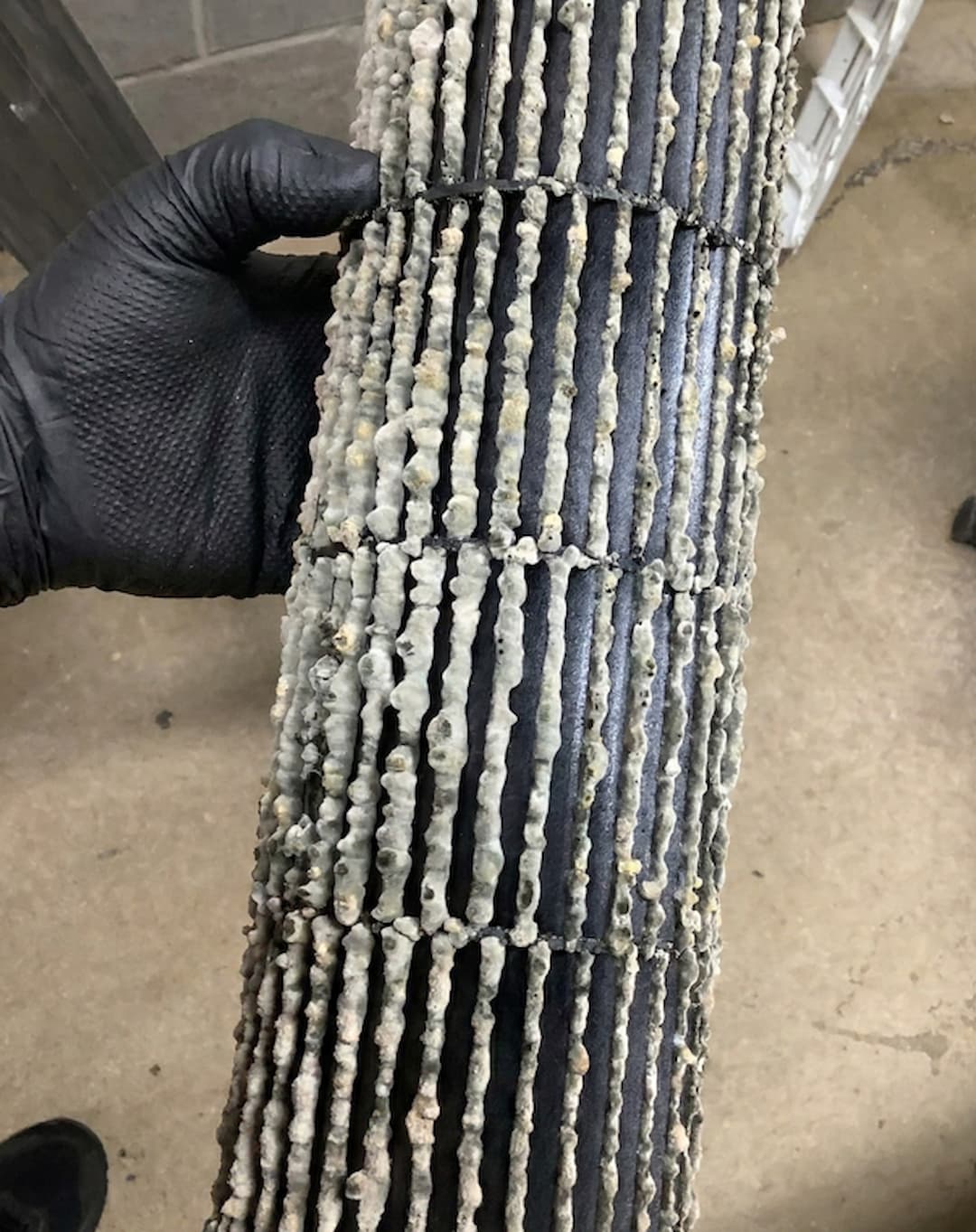
Two components do almost all the work of moving and cooling air: the internal coil and the internal fan. Both stay damp during normal operation, and dampness combined with the dust every air conditioner pulls in is exactly what mould and mildew need to establish.
The drain tray and drain line are the other common source. Moisture condensing off the coil has to go somewhere, and if the line is even partially blocked, water sits rather than clears. Stagnant water in a warm, dark space develops a smell fast. If you're also seeing actual water rather than just a smell, see why air conditioners leak water.
Neither of these is visible from the front of the unit. The grille and the filter behind it are the only parts most owners ever see, which is why a smell can build for months before anyone traces it back.
A musty or mildew-like smell almost always means mould growing on the internal coil, in the drain tray, or on the internal fan. It's the most common air conditioner smell in NZ homes, and Auckland's humidity makes it more common here than in drier parts of the country.
The smell is often strongest right when the unit switches on, particularly after sitting unused for a while. It usually settles slightly once the unit has run for ten or fifteen minutes, but it doesn't go away on its own. It gets worse until the coil and fan are actually cleaned.
A burning or hot plastic smell is one of the few air conditioner smells worth switching the unit off for immediately. It usually points to an electrical fault: a component overheating, wiring under strain, or dust burning off a hot internal part.
New units, and units just out of storage for the season, can produce a faint burning smell in the first few minutes as dust burns off. That should clear within ten minutes and shouldn't return. If it persists, gets stronger, or comes with visible smoke, turn the unit off at the wall and call a qualified technician. This sits outside filter-and-clean territory. See air conditioner repair Auckland for how to tell a fault from a servicing issue.
A sharp, chemical, or unusually sweet smell is the one most likely to mean a refrigerant leak. Refrigerant carries a faint sweet odour on its own, and a leak lets more of it escape than normal operation ever would.
A professional clean doesn't address this. Refrigerant work in NZ requires a licensed technician by law, and MiHT refers this work out rather than handling it directly. If you notice this smell, turn the unit off and get it assessed before running it again.
Auckland air conditioners run through a lot of moisture over a full cooling season. Sludge that builds up in the drain line can sit and dry out over the months the unit isn't used. When the system works hard again, that dried residue reactivates, and a smell that seemed to fade over winter comes back stronger than the owner remembers.
This is one reason a smell that appeared to resolve itself often returns the following year. Nothing was actually fixed. The unit just stopped running hard enough to push it through the room.
A filter clean reaches exactly one component: the filter. It's worth doing between visits, but it doesn't touch the internal coil, fan, or drain system, which is where almost every persistent smell actually lives.
A proper service opens the unit, cleans the coil and fan directly, and clears the drain line and tray rather than checking they're not visibly blocked. On systems that have smelled for a while, that clean often restores noticeably better airflow too. The buildup causing the smell is the same buildup making the fan work harder to reach the same temperature. Full scope covered in air conditioner servicing Auckland.
If your system matches any of the symptoms above, this is the point to book a service rather than keep monitoring it. The smell doesn't resolve on its own, and the longer it sits, the more of the system it affects.
Under the Healthy Homes Standards, landlords are responsible for heating and ventilation systems being fit for purpose, and a mould-affected air conditioner sits inside that obligation. A persistent musty smell is worth reporting, not living with.
A smell like this isn't something to mask or wait out. If you've recognised your system anywhere in this article, book an air conditioner service and get the actual cause cleared out, not just covered up.
A fish-like smell usually points to an electrical issue rather than mould, and often means a component like a circuit board or wiring insulation is overheating slightly without visible smoke yet. Treat it like a burning smell: turn the unit off and get it assessed by a qualified technician rather than booking a standard clean. It won't resolve with a filter change or coil clean, because the cause isn't dirt or mould.
This is almost always something physical stuck in the outdoor unit rather than a fault with the system. Birds, rodents, and insects can get into the outdoor unit or ductwork, and a rotten smell usually means one didn't make it back out. A professional inspection of the outdoor unit and any accessible ductwork is the right first step. It's unpleasant but usually straightforward, and doesn't indicate anything wrong with the system's operation.
Yes, for the first few uses. New units can carry a faint smell from manufacturing residue or lubricant, and it typically clears within a few hours of operation. It shouldn't persist beyond the first day or two, and it shouldn't smell like mould, burning, or anything chemical. If a new unit's smell doesn't fade quickly, or matches one of the other smell types described above, get it checked rather than assuming it will resolve on its own.
A musty smell caused by mould can affect indoor air quality every time the unit runs, and for people with asthma or allergies that can mean more frequent symptoms during use. It's not usually an acute health risk at typical exposure levels, but it's not something to ignore, particularly with children or anyone with a respiratory condition. A chemical or sweet smell is different. It can indicate a refrigerant leak, and exposure at high concentration is a genuine health risk, so that smell specifically warrants turning the unit off.
It usually means the cause sits somewhere the service didn't reach, rather than the service having failed. On ducted systems, mould further along the ductwork can sit outside a standard service's scope. Raise it directly with whoever did the work, or book a follow-up service with a clear description of what's still happening so the technician knows where to look first.
The landlord is. Under the Healthy Homes Standards, heating and ventilation systems in a rental property need to be fit for purpose, and a mould-affected air conditioner falls inside that obligation. Tenants should report a persistent smell rather than living with it. This applies whether the system is called a heat pump, an air conditioner, or an aircon. The obligation doesn't change with the terminology.