
Restore the dry, healthy home your positive pressure system was installed to deliver.
HRV, DVS, SmartVent and other brands serviced across Auckland. Your service covers filters, fans, ducting and diffusers so your system does what you bought it to do. Maintenance only. We don't sell or install new systems.
Book a Positive Pressure System Restore
Your ventilation system gets professional maintenance from a company that doesn't sell units, lock you into filter contracts or push upgrades.

Is this the right service for your situation?
Your system hasn't been serviced in the last 12 months. Your positive pressure system should be professionally serviced at least once a year. If it's been longer than that, filters have loaded, the fan housing has collected organic growth and airflow has dropped. The decline is gradual and the system won't alert you. A professional service returns it to operating condition..
You've noticed a stuffy or stale smell in your home. Your positive pressure system draws air from the roof cavity, filters it and pushes it into your living spaces. If the filter is loaded or the roof space has a history of dust or pest activity, that air carries what it passes through. The stuffy or foul smell is the result. A service addresses the source: the filter, the intake area and the fan housing.
Condensation on your windows has increased. Your system was probably installed to fix heavy window condensation. If it's returning, the system may not be moving enough air to remove the moisture generated by showering, cooking and breathing. A service checks whether the system is delivering the airflow needed to keep your home dry.
What your Positive Pressure Ventilation Restore includes.
Your system's underperformance almost always traces back to the same causes: blocked filters, a fan housing thick with dust and organic growth, or a duct connection that's worked loose.
The filter
Your filter captures dust and particulates from the roof space before air enters your home. Over time it blocks. Airflow drops and your system works harder to deliver less. A filter left unchanged for over a year can become a breeding ground for bacteria in damp conditions. A failed filter stops catching what it should: dust, mould spores and anything else in the roof cavity. Your filter is replaced with the correct grade for your system.
The fan unit
Your fan housing sits behind the filter. It's the part owners rarely see. Dust and organic growth accumulate on the fan blades and inside the casing. Buildup on the blades throws the fan out of balance, which causes it to work harder, draw more power and move less air. The housing is opened, the fan vacuumed and sanitised and the casing cleaned.
The ducting
Your ducting uses flexible connections that can work loose over time, particularly in roof spaces that experience large temperature swings. When a duct separates entirely, the system is pushing air into the roof cavity instead of into your rooms. The full duct run is checked for restrictions, disconnections, damage and any signs of collapse.
The ceiling diffusers
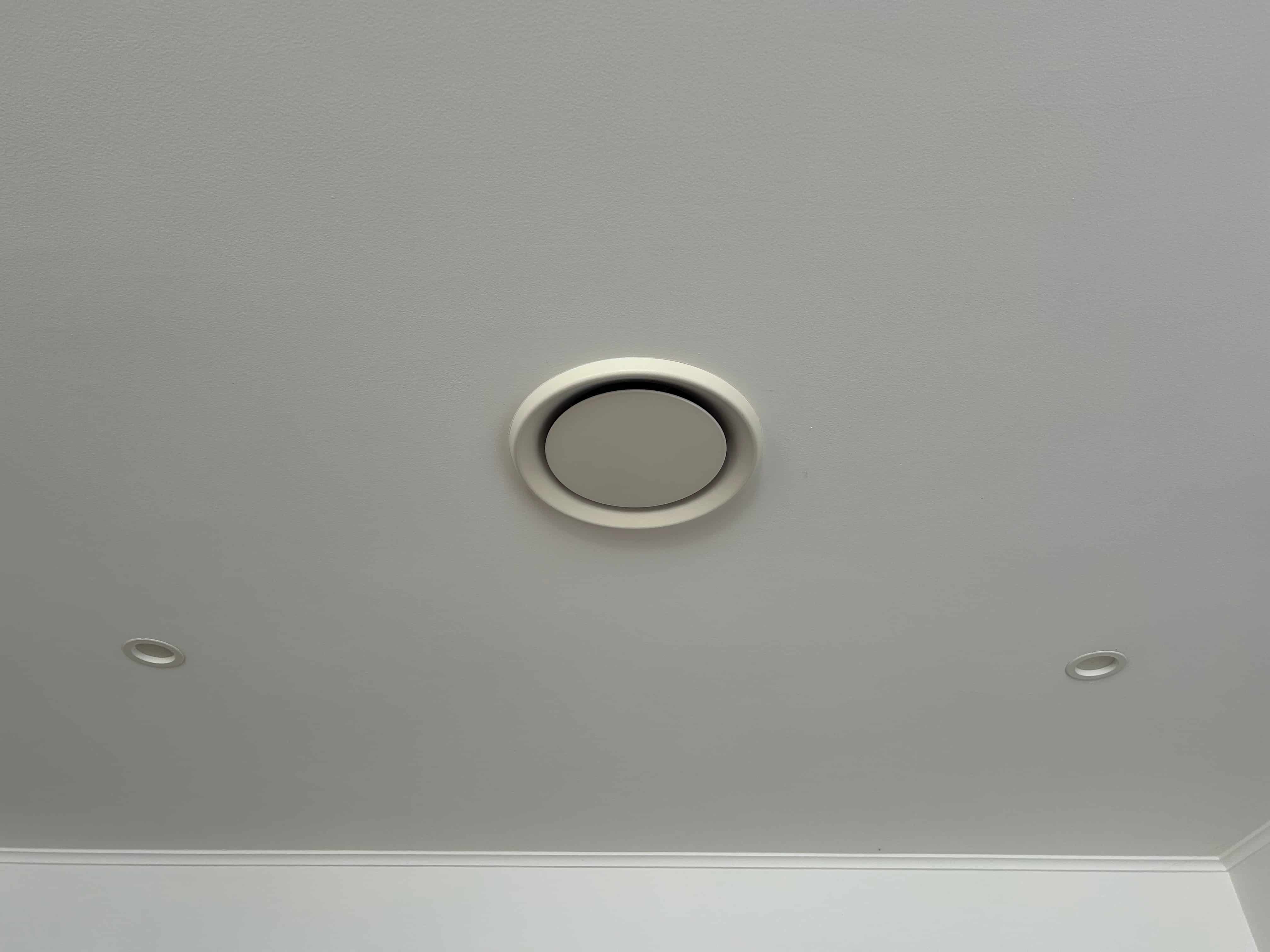
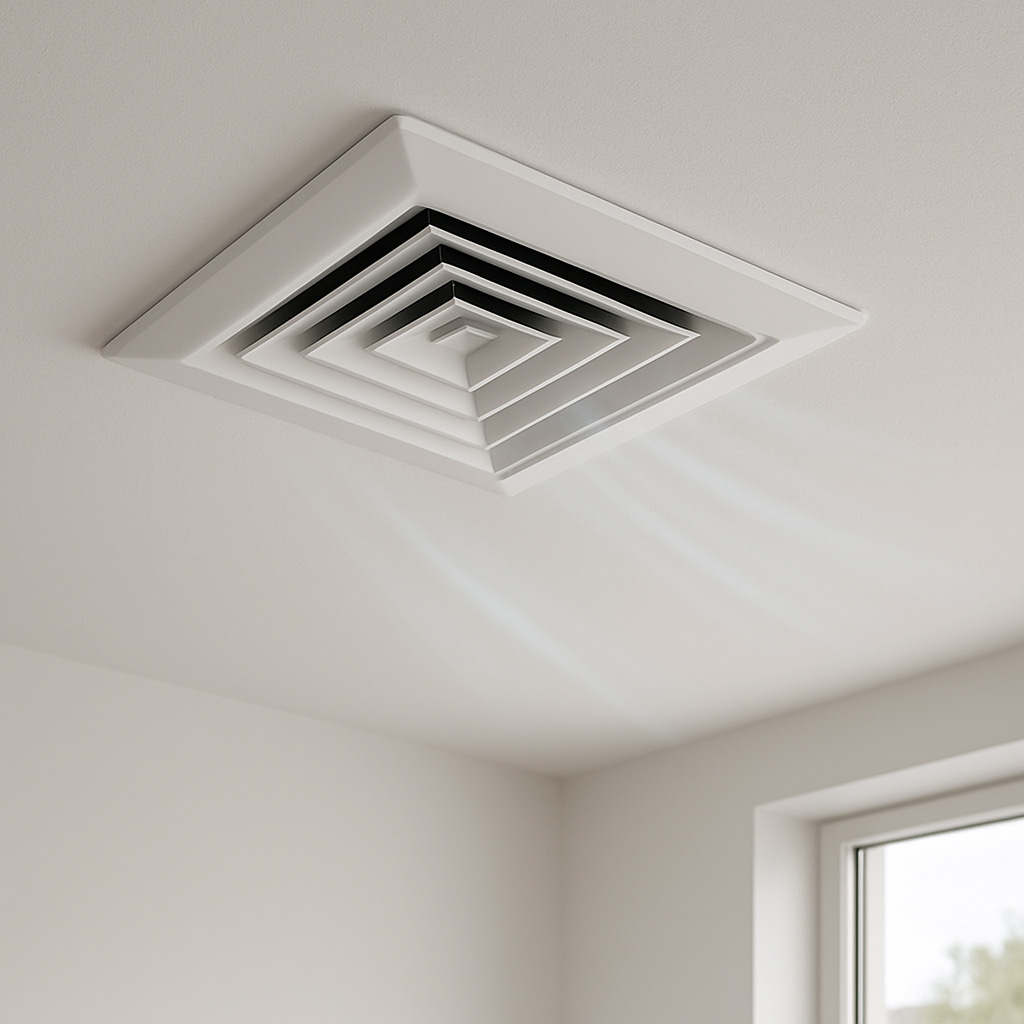
Your ceiling diffusers collect dust on the face and inside the housing. A blocked diffuser restricts airflow into that room regardless of how well the rest of the system is performing. Every diffuser is cleaned.
The intake area
Your system draws its air from the roof cavity. If the cavity has a history of dust, moisture or pest activity, the system can push that directly into your living spaces. The intake area is checked for contamination, pest evidence, blockages and any signs of moisture. If the air source is compromised, cleaning the unit alone won't fix the problem.
Performance check
Your system gets a full airflow check once everything is back in place. Where a vent is performing below the others, we investigate and report on what we find.
What You Receive After Every Service.
You receive a written condition report after every service. It's a documented record of the system's state before the service, the work performed and the measured result. It's the evidence that the service was done and done properly.
Before-and-after photographs of all serviced components
Written notes on every finding, what was done and what needs a follow-up visit
A condition record useful for warranty purposes, insurance or property records
How Would You Like Us to Look After Your System?
Your positive pressure system runs continuously. It's filtering and pushing air 24 hours a day, which means filters, fans and ducting accumulate contaminants whether you notice it or not. If you're not sure what condition your system is in, start with a one-off service. If you want it looked after year after year without having to think about it, a care plan is the better option.
Annual Care Plan: Scheduled once per year. Your system runs around the clock and loads constantly. Annual servicing is the standard recommendation, particularly for homes with higher occupancy, pets or coastal exposure.
Biennial Care Plan: Professional service every two years. Suited to holiday homes or low-occupancy properties where the system runs but filter loading is slower. Same process and condition report as the Annual Care Plan.
One-Off Restore: The right starting point if your system has never been serviced or you want to know exactly what condition it's in. No ongoing commitment required.
Not sure which system you have?
Common questions about positive pressure ventilation servicing in Auckland.
Your system should be serviced at least once a year. If it hasn't been done in the last 12 months, that's the starting point. A technician can assess the current condition and advise on the appropriate interval going forward.
Your SmartVent system gets serviced with genuine SmartVent parts. SmartVent's warranty requires genuine parts to be used, but doesn't restrict who performs the service in the same way HRV does. DVS, Mitsubishi and other brands present no such restrictions. If you're unsure whether your system is still under warranty, check your original purchase documentation or the installation date on the unit.
Your service typically takes 45 to 60 minutes on a single-unit system. Homes with more ceiling diffusers or longer duct runs may take longer. We'll confirm the expected duration at booking.
Yes, if your system is still under warranty. HRV's warranty terms require filter changes to be carried out by authorised HRV personnel using genuine HRV filters. MiHT is not an authorised HRV agent. If your HRV system is within its five-year warranty period, check your warranty terms before booking an independent service. Once the warranty has expired, you're free to use any qualified provider.
Your filter is one component. A full service covers the filter, fan housing, ducting, ceiling diffusers and intake area. Replacing the filter won't clear the organic growth and dust that accumulates in the fan housing, and it won't identify ducting that's come loose or been damaged.
Your wall controller or the unit itself will show the brand name. HRV, DVS and SmartVent systems are most commonly positive pressure. If you only have ceiling vents pushing air into your bedrooms and living areas, with no return vents in wet areas like the bathroom or laundry, you have a positive pressure system. The full guide to ventilation system types explains how to identify yours. [Link to blog article]
Yes. Your ceiling space needs to be accessed for the unit and ducting inspection, and every room needs to be checked for diffuser airflow. Someone needs to be home for the duration of the visit.