
Restore your bathroom fan and rangehood to the airflow that keeps mould and moisture out.
Your service covers grilles, fan housings and ducting so your extraction systems remove moisture and odours as they were designed to. Maintenance only. We don't sell or install new fans.
Book a Extractor Fan Restore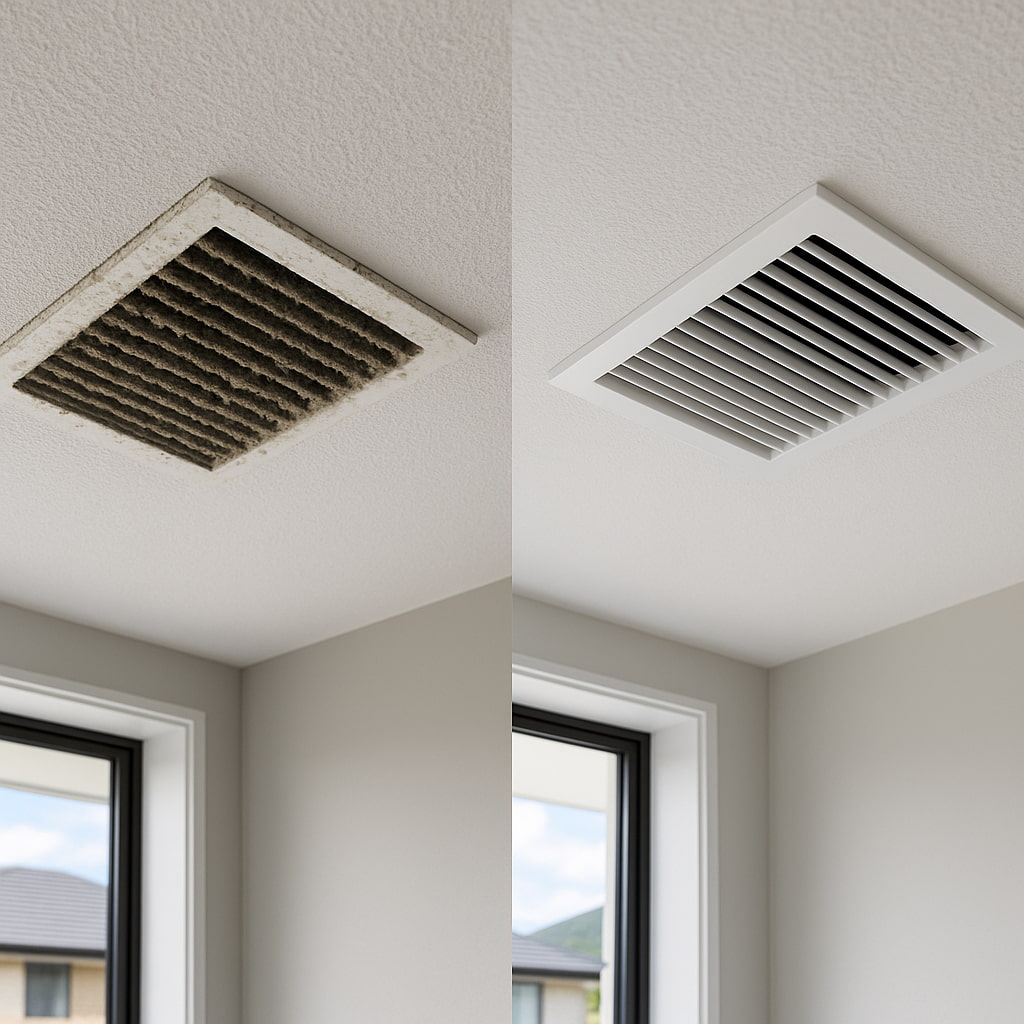
Your extraction systems get professional maintenance from a company that doesn't sell or install new fans.
Is this the right service for your situation?
Your fans haven't been serviced in the last 12 months. Your bathroom fans and rangehood accumulate dust, lint and grease with every use. If they haven't been professionally cleaned in the last 12 months, airflow has dropped and the fans are working harder to move less air. A service returns them to operating condition.
You've noticed mould returning quickly after cleaning your bathroom. Your extractor fan is supposed to remove moisture after every shower. If the fan isn't clearing air at the rate it was designed to, the room stays damp and mould returns faster than it should. A blocked fan is a common cause.
Your rangehood filters are visibly greasy or you can't remember when they were last cleaned. Your rangehood captures grease, steam and cooking fumes every time the stove is on. When the mesh filters are loaded with grease, airflow through the hood drops. Steam and grease that should be exhausted stay in the kitchen and settle on surfaces, splashbacks and cupboards above the stove. A service strips the filters, cleans the fan chamber and restores the extraction rate.
You manage a rental property that needs to meet Healthy Homes Standards. Your rental property's extractor fans in kitchens and bathrooms need to comply with the Healthy Homes Standards. A MiHT service confirms your fans are operating as required and gives you a written condition report for your records.
What your Extractor Fan Service includes.
Your extractor fans fail gradually. Airflow drops as the fan accumulates dust and lint, but the fan still turns on and still makes noise. The decline is easy to miss until the mould appears or the bathroom takes too long to clear after a shower.
Bathroom and laundry fans
Your ceiling grille is removed and cleaned. The fan blades and housing are vacuumed and cleared of dust, lint and any organic growth. Where accessible, the first section of ducting is cleared to ensure air is flowing freely to the outside. Fan operation and airflow are tested before we leave.
Rangehoods
Your mesh grease filters are removed and soaked in degreaser. Disposable charcoal filters are replaced where required. The hood interior and fan chamber are cleaned of accumulated grease and debris. Fan operation is tested and airflow confirmed.
Duct and vent check
Your ducting and external vents are checked for blockages, collapse and loose mounts. Extractor fans should vent moisture to the outside of the building. A fan venting into the roof cavity pushes moisture into the ceiling space instead of out of the house, which creates conditions for organic growth and timber damage. If your venting arrangement isn't right, we'll tell you.
What You Receive After Every Service.
You receive a written condition report after every service. It's a documented record of the system's state before the service, the work performed and the measured result. It's the evidence that the service was done and done properly.
Before-and-after photographs of all serviced components
Written notes on every finding, what was done and what needs a follow-up visit
A condition record useful for warranty purposes, insurance or property records

How Would You Like Us to Look After Your System?
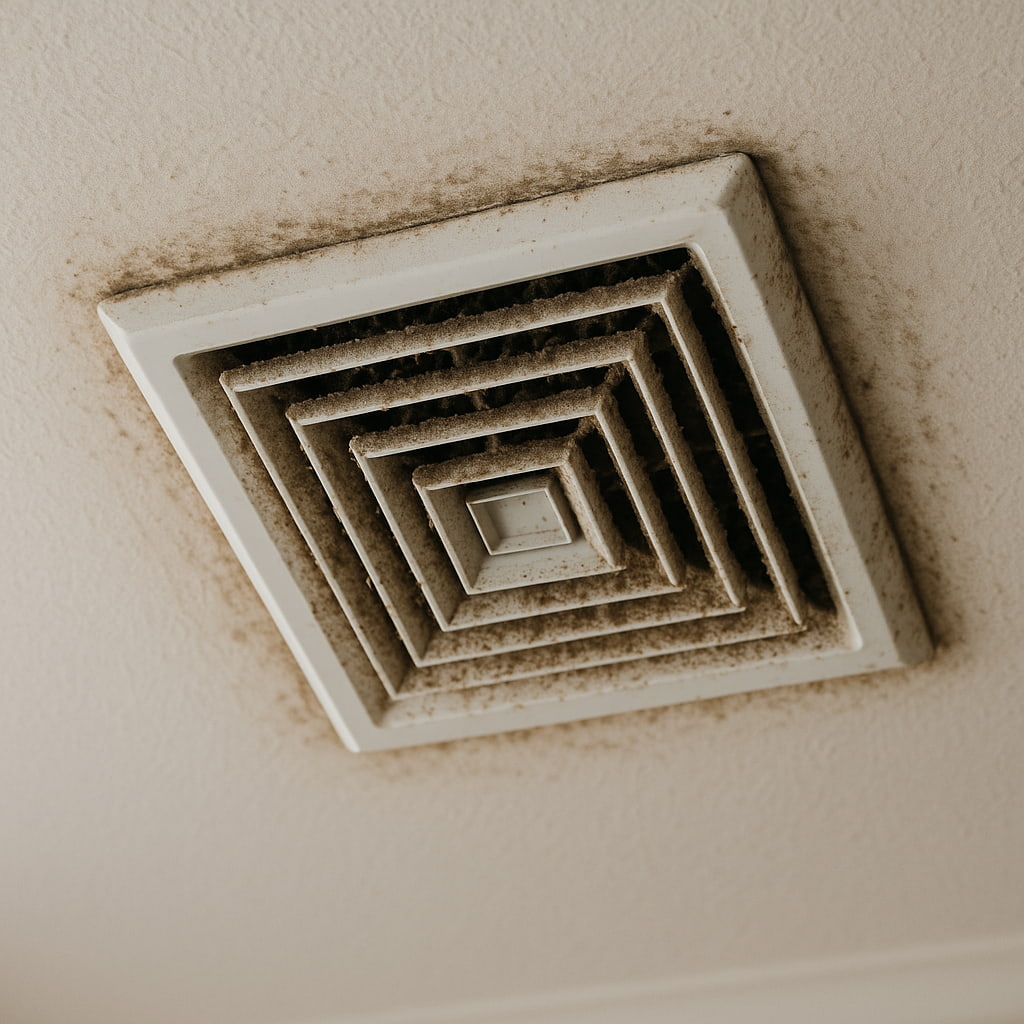
Your bathroom fans and rangehood accumulate buildup with every use. The more your household showers, cooks and runs the laundry, the faster they load. If you're not sure what condition your fans are in, start with a one-off service. If you want them looked after year after year without having to think about it, a care plan is the better option.
Annual Care Plan: Scheduled once per year. Recommended for homes with regular daily use: multiple showers, active cooking, tumble dryers. Most households fall into this category.
Biennial Care Plan: Professional service every two years. Suited to holiday homes, low-occupancy properties or homes where the extractors see lighter use. Same process and condition report as the Annual Care Plan.
One-Off Restore: The right starting point if your fans have never been professionally serviced or you want to know exactly what condition they're in. No ongoing commitment required.
Looking for whole-home ventilation care?
Common questions about extractor fan servicing.
Your system should be serviced at least once a year. If it hasn't been done in the last 12 months, that's the starting point. Some systems benefit from more frequent filter checks depending on occupancy and environment.
Yes. Your rental property needs functioning extractor fans in kitchens and bathrooms under the Healthy Homes Standards. A MiHT service confirms your fans are operating as required and provides a written condition report for your property records.
Yes. Common charcoal filter sizes are carried on the van and can be replaced during your service visit. If your hood uses a less common size, we'll advise you in advance so you can source the right filter.
Your fan turning on doesn't mean it's removing moisture at the rate it was designed to. Accumulated dust and lint reduce airflow without stopping the fan from operating. The fan runs, but the room stays damp and mould returns.
Yes. Your bathroom fans, laundry extractors and rangehood can all be serviced in a single visit. Combined pricing is confirmed at booking.
Your ducted rangehood vents air to the outside of the building through ductwork. A recirculating rangehood filters air through charcoal filters and returns it to the kitchen. Ducted rangehoods are more effective at removing moisture and odours. For recirculating hoods, charcoal filter replacement is the critical maintenance step. We service both types.
Your bathroom fan service typically takes 30 to 40 minutes. A rangehood service takes a similar amount of time. If we're servicing multiple fans and a rangehood in one visit, we'll confirm the expected duration at booking.