
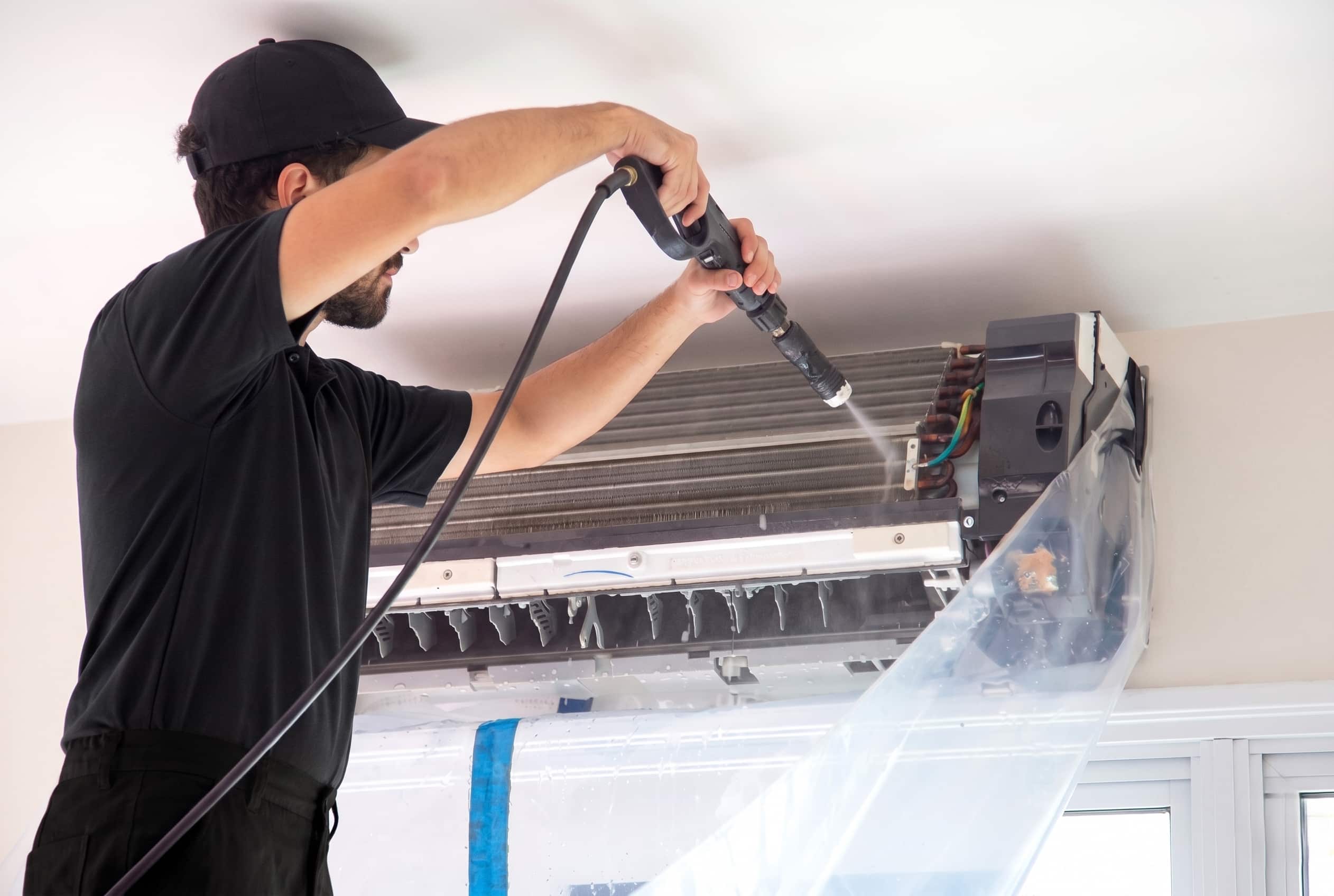
A heat pump clean in Auckland should cover the internal coil, internal fan, drain pan, condensate line, and outdoor unit. Most standard services don't reach all of those components. If yours didn't, you'll know: the smell is back within a few weeks, and the unit's performance hasn't moved.
This article covers what a proper clean involves, what gets skipped on rushed jobs, and what to check before you book anyone.
Most budget heat pump cleans follow the same pattern. The filter is removed, washed, and refitted. A coil cleaner is sprayed onto the internal heat exchanger. The technician is in and out in under 20 minutes.
That scope misses the components where performance loss and smell actually originate.
The internal fan sits behind the internal coil. It's the cylindrical component that draws air across the heat exchanger and pushes it into the room. In Auckland's warm, humid conditions, mould builds up across its surface over time. Every time the unit runs, the air passing over it carries that contamination into the room.
A coil spray doesn't reach the fan. The smell comes back in two weeks because the source was never cleared.
The drain pan is the other commonly missed component. Moisture from the cooling cycle drains through a tray and out through a line in the wall. Both accumulate organic matter over time. A blocked drain backs up into the unit rather than clearing through the wall. Most standard services don't check the drain pan or flush the condensate line.
The outdoor unit rarely gets touched on a budget clean. The outdoor coil and fan accumulate debris, organic matter, and in coastal parts of Auckland, salt residue that restricts heat exchange and places unnecessary load on the compressor.
For a full picture of what's building up inside an unserviced unit over time, see what happens inside a heat pump when it isn't serviced.
A thorough heat pump clean addresses both the indoor and outdoor unit, and every component that affects performance, air quality, and system life.
On the indoor unit: filters are removed and washed, the internal coil is treated with a specialist cleaning solution then flushed with a low-pressure wash, the internal fan is cleaned with a low-pressure wash to remove the mould at source, and the drain pan is cleared with the condensate line checked and flushed.
The outdoor unit is washed to clear debris, organic matter, and salt residue from the coil and fan blades.
Temperature output is measured before the service begins and again once the work is complete. That measurement confirms performance was actually recovered, not just that the filters look cleaner. A properly cleaned system in heating mode shows a measurable improvement in the temperature differential between the air going in and the air coming out.
For a full breakdown of what each stage involves, see what a professional heat pump service includes in Auckland.
The musty smell most Auckland homeowners notice from a heat pump doesn't come from the filter. It comes from mould on the internal fan and inside the unit housing, and from organic buildup in the drain pan and condensate line.
A coil spray applies cleaner to the surface of the heat exchanger. It doesn't flush through the fins, and it doesn't reach the fan. After the service, the unit runs with fresh chemicals inside it and the smell appears to have cleared. A couple of weeks later, once those chemicals have dissipated, the fan continues distributing whatever is growing on its surface. The smell returns.
Eliminating the smell requires physically cleaning the fan, clearing the drain pan and condensate line, and sanitising the unit interior. A service that doesn't include those steps won't resolve a smell issue, regardless of how much coil cleaner was applied.
Why your heat pump smells covers the common causes and what actually addresses each one.
These are the questions worth asking any provider before confirming a booking.
Whether the service includes a low-pressure wash of the internal coil, not just a spray. A spray applies cleaner to the surface. A low-pressure wash forces that cleaner through the fins and clears what's accumulated inside them. These are not the same job.
Whether the internal fan is cleaned as part of the service. Ask directly. It's the most commonly skipped step in the Auckland market and the most common reason a smell returns after a clean.
Whether the service includes the drain pan and condensate line. Skipping the drain is how water damage develops. A blocked condensate line backs up into the unit rather than clearing through the wall.
Whether the outdoor unit is included. If a provider doesn't mention it, it's probably not in scope. Half the system gets left dirty.
Whether the service includes before-and-after temperature measurements. A provider who measures temperature output before and after the service can show you what changed. One who doesn't has no way to confirm the service achieved anything.
Pricing is directly relevant to all of this. The economics of a $99 job leave almost no room for the time each of those steps requires. How much does a heat pump service cost in NZ explains what drives the price range and what the difference between the cheapest and the most thorough services means in practice.
Most heat pumps in Auckland run in both heating and cooling modes year-round. Every cooling cycle passes moisture through the indoor unit. That moisture, combined with warmth, creates the conditions where mould establishes on the internal fan and in the drain system. The rate of buildup is higher here than in drier parts of New Zealand.
Properties close to the coast carry a further factor. Salt in the air deposits on the outdoor coil and accelerates wear on the metal components over time. Parts of Auckland not typically thought of as coastal still carry enough salt to cause accelerated degradation on an outdoor unit that isn't regularly cleaned.
The steps most often skipped on budget cleans are exactly the steps that matter most under those conditions.
For guidance on how frequently Auckland heat pumps need professional attention, see how often should a heat pump be serviced in Auckland.
A properly completed heat pump clean comes with before-and-after temperature readings, written documentation of what was found and done, and a confirmed schedule for the next visit. If none of those were provided, the depth of work done is unknown.
If the smell returned within a few weeks, the internal fan wasn't properly cleaned. If performance didn't improve, the coil wash was either incomplete or the system has an underlying issue that a clean alone won't fix.
Signs your heat pump needs a service covers what the common symptoms point to and when professional attention is due.
If you want to know where your heat pump currently stands before booking anything, the Home Energy Health Assessment takes three minutes and gives you a clear picture of what your system needs.
Take the Home Energy Health Assessment.
A proper heat pump clean covers the filters, internal coil (flushed with a low-pressure wash, not just a spray), internal fan, drain pan, condensate line, and outdoor unit. It should end with before-and-after temperature measurements to confirm performance was recovered. Most standard Auckland services cover the filter and a coil spray only.
Because the internal fan, drain pan, and condensate line weren't properly cleaned. The smell doesn't come from the filter. It comes from mould on the internal fan and inside the unit housing, and from organic buildup in the drain pan and condensate line. A coil spray doesn't reach any of those. The smell appears to clear after the service and returns once the chemicals dissipate.
Confirm the service includes a low-pressure coil wash (not just a spray), internal fan cleaning, drain pan and condensate line inspection, outdoor unit cleaning, and before-and-after temperature measurements. If any of those are absent, the job isn't complete.
It should. The outdoor unit accumulates debris, organic matter, and in coastal parts of Auckland, salt residue that restricts heat exchange and places load on the compressor. A service that doesn't include the outdoor unit leaves half the system dirty. Not all providers include it as standard, so confirm before booking.
Professional heat pump cleaning in Auckland ranges from around $89 to $249 inc GST. The gap reflects what's included. At the lower end, the service typically covers filters and a coil spray. At the upper end, it covers the full scope: coil flush, fan clean, drain service, outdoor unit wash, and a written condition report. For a full breakdown of what drives the range, see how much does a heat pump service cost in NZ.
For most Auckland homes running the unit year-round, annual professional cleaning is the appropriate minimum. Properties close to the coast, high-usage households, and homes with occupants who have respiratory sensitivities often benefit from a service every six months. For a full guide by household type, see how often should a heat pump be serviced in Auckland.